.svg&w=384&q=75 "logo")
Nikita Tszyu Shifts Focus to America After Controversial Fight
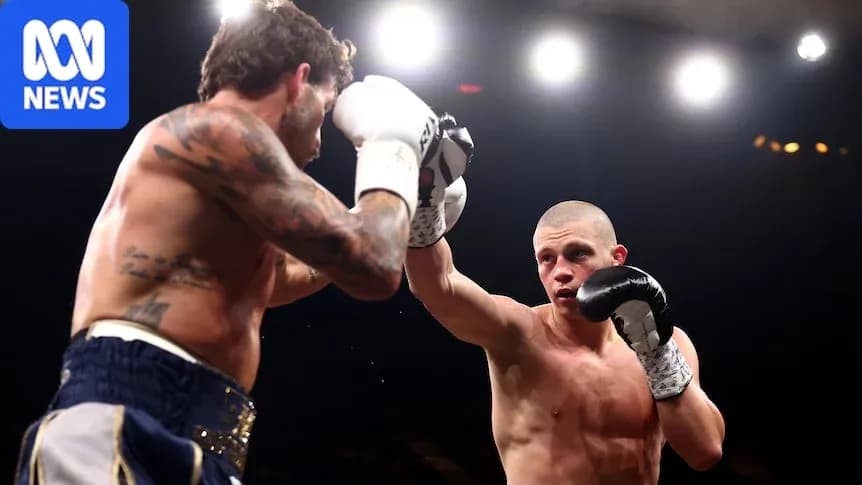
Nikita Tszyu has watched the tape, sat with the doubt and changed his mind. Now he’s changing his plans.
A month after walking out of Brisbane convinced he’d lost to Ben Mahoney, the 29-year-old southpaw has flipped the verdict in his own head and is using the controversy as a launchpad for a long‑planned assault on America.
From “I lost” to “I won”
On the night, with three wildly different scorecards delivering a draw, Tszyu did what few fighters do: he admitted he thought the judges had been kind.
Mahoney celebrated like a new world champion, drawing a sharp response from Tszyu’s brother Tim, whose camp howled robbery. Nikita, though, cut through the noise and said he believed the decision could easily have gone the other way.
Then he went home and hit play.
"I'm not a very good judge," he admitted after revisiting the super-welterweight scrap. This time, round by round, he saw a different fight.
"I scored it 7-3. In a good way, 8-4. I thought I won the majority of the middle rounds. I gave him the first two rounds and the last two rounds, but [I won] everything else in between.
"I don't regret it, because it was what I felt at the time."
The honesty remains. So does the zero in the loss column. Officially, Tszyu stays unbeaten, and in his mind, the Mahoney bout has become less a scare and more a marker of progress.
Domestic chapter closing, eyes on the US
Believing he has settled his business at home, the Sydney fighter is now looking outward. The next target is clear: America.
Tszyu and his team have resisted the temptation to fast‑track him into marquee nights in the sport’s traditional heartland. Twelve wins, one draw, ten knockouts — it has been a careful build, not a rush to cash in on a famous surname.
Now the timing feels right to him, even with the cautionary tale close to home.
Tim Tszyu’s own American campaign has been unforgiving. He surrendered his IBO super-welterweight belt in the US to Sebastian Fundora, then endured a punishing rematch defeat and another brutal world-title loss to Bakhram Murtazaliev. Those nights showed how cruel the American stage can be.
Nikita wants to step onto it anyway.
"I think I can figure it out," he told AAP. The Mahoney fight, he says, changed more than his self‑scoring. It changed his standards.
"This fight was a great learning curve for me and it puts things a lot into perspective. I've got to be a lot more professional with the way I do things.
"I can't be landscaping close to the fight. I can't be doing woodworking close to the fight. Just some bad habits I do.
"Yeah, I've got to be a professional athlete."
That’s the pivot. From talented tradesman-boxer to full‑time contender.
Phoenix on the horizon
The next step might come under the bright lights of Phoenix.
No Limit Boxing is working to land Tszyu on the undercard of the David Benavidez–Michal Cieslak unified blockbuster in Arizona on December 12 — the kind of show that can turn a respected name in Australia into a known quantity in the US.
It would be a significant leap: new continent, new audience, new pressure. The sort of night where a highlight‑reel finish can change a career, and a flat performance can stall it.
If the deal doesn’t land, the plan doesn’t collapse. No Limit has already committed to keeping Tszyu active, confirming he will fight at least once more in 2026 on home soil.
Either way, the direction is set. The days of landscaping and woodworking in camp are over. The next version of Nikita Tszyu will be judged not just by Australian scorecards, but by American eyes.
And if he’s right about that Mahoney fight, he might be heading into that arena with more momentum than the record sheet suggests.