.svg&w=384&q=75 "logo")
Moses Itauma vs Filip Hrgovic: Focused on Victory
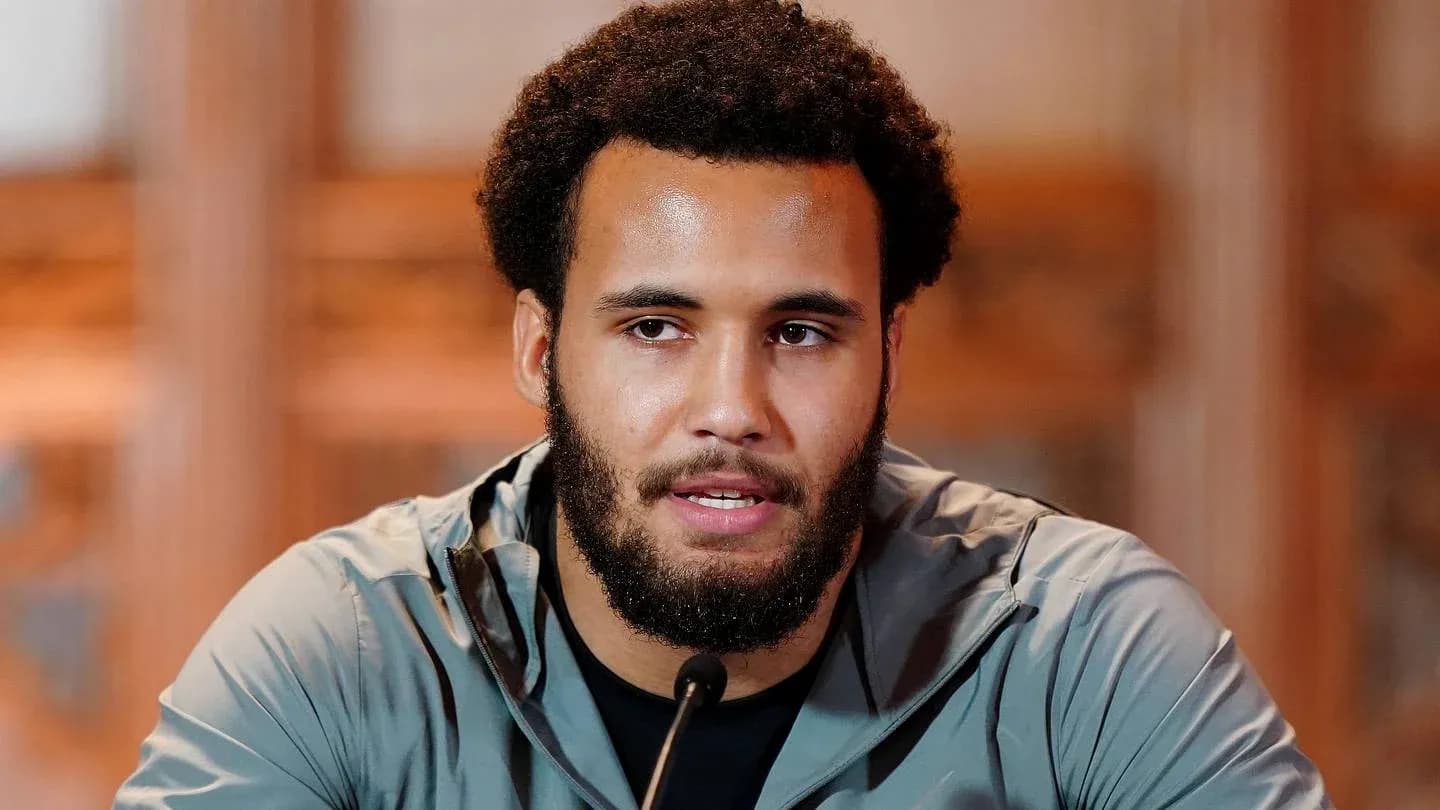
Moses Itauma sat on the top table at the O2’s final press conference and refused to look beyond the man to his left.
The talk of history, of records, of Mike Tyson, can wait. For now, it’s Filip Hrgovic. Only Filip Hrgovic.
On Saturday night, the 21-year-old fights the Croatian for the vacant IBF heavyweight world title, a belt that would propel him into the sport’s record books as the second-youngest heavyweight champion in history, behind only Tyson, and the youngest British heavyweight champion of all time.
He doesn’t want to hear it.
“I’m not trying to become the second-youngest heavyweight champion in the world,” Itauma told the media. “I’m trying to beat Filip Hrgovic. This fight is what I wanted. I think it’s a style match-up that I reckon I can thrive on.”
That has been the constant theme of his short, violent rise. Strip away the hype, deal with the man in front of you, move on.
A prodigy who skipped the queue
Itauma’s ascent has been brutally efficient. Fourteen professional fights. Thirty-three rounds. No defeats. Every step up in class has looked like a mismatch once the first bell rang.
Jermain Franklin was supposed to ask questions. Dillian Whyte, a former interim belt-holder and world title challenger, was supposed to drag him into deep water. Instead, each became another marker on a fast-track route to a world title shot, another name folded into a growing resume.
This is not some manufactured contender. As an amateur, Itauma was a standout, emerging from the youth ranks unbeaten. In another era, he would almost certainly have been paraded at an Olympic Games before turning professional. That path is fading now. The money and the opportunity come earlier, and Itauma took them at 18.
Three years on, he stands on the brink of a world title with the composure of a veteran and the mileage of a novice. It is a dangerous combination.
Blocking out the noise
The sport has noticed. Promoters, pundits, and former champions have queued up to anoint him as a potential all-time great if he stays on course. The kind of talk that can intoxicate a young fighter.
Itauma insists it won’t.
“When your talent is being recognized, obviously it's good,” he said. “But when I hear things like that, I kind of have to put it in the back of my mind, I don’t want to become too big-headed.”
He speaks quietly, almost flatly, the opposite of the noise that now surrounds him. No chest-beating. No rehearsed bravado. His words land like his boxing: economical, precise, with very little wasted.
The focus, he says, is simple.
“A world title is an achievement and an accolade, but that’s a plus one – my sole focus is Hrgovic and if I’m unable to beat Hrgovic it doesn’t matter about the world title, it doesn’t matter about the noise, it doesn’t matter about nothing, so my focus is just to be victorious on fight night.”
Hrgovic’s barbs, Itauma’s shrug
Not everyone is buying the story of the humble prodigy. Hrgovic has been vocal in his belief that Itauma has enjoyed preferential treatment because he is British, a home fighter with powerful backing and a clear promotional push.
The Croatian has fired barbs throughout the build-up. Itauma hasn’t bitten.
“Talk is cheap,” he said, brushing off the criticism. “He’s just got schoolboy banter, and that’s it you’ve got to keep rolling.”
There was no change in tone, no rise in temperature. Just a short dismissal and a line that sounded like it could have been rehearsed in the gym between rounds.
“Same script different story.”
The script, on paper, is familiar: the seasoned contender against the fearless young upstart, the proven world-level operator against the man who has never been beyond the fringes of danger. The story will be written under the O2 lights, one punch at a time.
For Itauma, it won’t be written in terms of records, history, or legacy. At least not yet.
First, he has to solve Filip Hrgovic. Everything else can wait.