.svg&w=384&q=75 "logo")
Moses Itauma's Heavyweight Lesson Against Filip Hrgovic
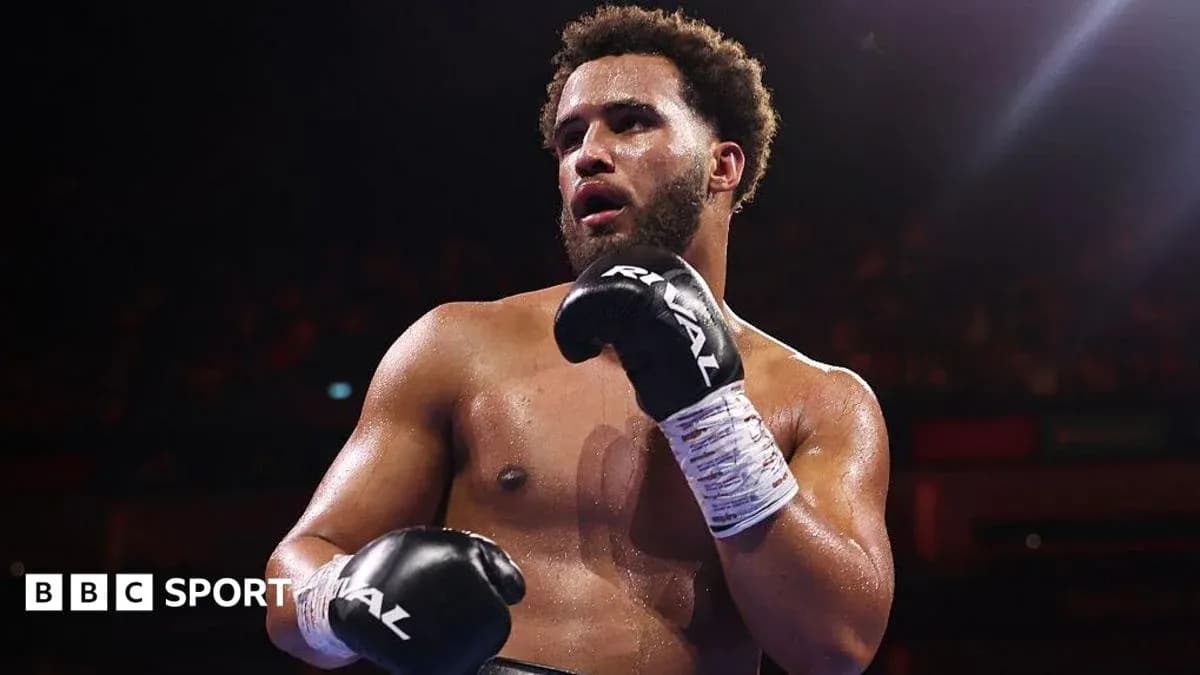
Moses Itauma used to walk into boxing gyms in his school uniform and humble grown men. On Saturday night at the O2 Arena, the roles flipped. The 21-year-old was the one being taught.
Filip Hrgovic, all hard edges and hard miles, dragged the gifted Briton into deep water and kept him there, claiming the vacant IBF heavyweight title when Itauma’s corner threw in the towel in the ninth round. The referee waved it off as the youngster sagged, spent, his body finally cashing the cheques his talent had been writing all night.
For long stretches, though, it didn’t look like a lesson. It looked like a coronation.
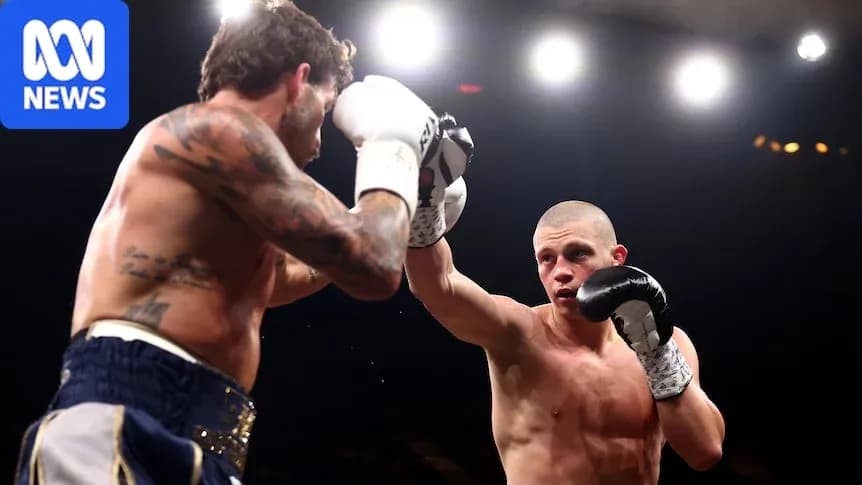
Itauma was sharp, quick, composed. The southpaw left hand kept spearing through Hrgovic’s guard. He beat the Croatian to the punch, circled with confidence, and showed the kind of poise that had convinced so many that he was not just a prospect, but a future ruler of the division. On the cards, he was winning rounds. On the eye test, he belonged.
Yet as the fight wore on, something else crept in. Not panic. Not fear. Something more insidious: inevitability.
His mouth hung open as he hunted for oxygen. The bounce drained from his legs. The shoulders that had snapped out combinations so freely early on began to look heavy. Across from him, Hrgovic barely blinked. This was familiar terrain for the 34-year-old: a hard, fast, unforgiving heavyweight fight that refused to bend to talent alone.
He simply stayed there and waited for the younger man’s body to betray him.
When it did, the picture turned grim. Itauma, beaten for the first time in his 15-fight professional career, left the arena on a stretcher and was taken to hospital.
"It's precautionary that he's gone to the hospital. That's what we always do to make sure because the most important thing is the boxer's health," said promoter Frank Warren. "He's done something to his leg as well and he was quite tired. It was a high paced, fast fight for both the guys."
This cannot be filed under “exposed”. Not on the evidence of the boxing itself. Itauma’s skill set held up under the harshest spotlight he has known. What cracked was not his technique, nor his chin, but the invisible elements that separate raw world-level talent from a finished world champion: conditioning, experience, and the cold craft of managing a 12-round title fight.
Hrgovic’s Hard Lessons
To reduce Hrgovic’s victory to mind games would be lazy. But he did not arrive at fight week to play nice.
He poked at Itauma’s age, called him "just a kid", and did it repeatedly. The barbs stuck. As the days passed, Itauma’s calm began to fray. At the weigh-in, he snapped, shoving Hrgovic, who replied with a slap. The veneer of total control slipped, if only for a moment.
Itauma prides himself on being a thinking heavyweight. He reads psychology and self-help books, speaks about sharpening his mind, dissects himself in a way few 21-year-olds do. That introspection is part of what makes him so intriguing. It also carries a risk: the line between thinking and overthinking is thin, and brutal sports like boxing punish hesitation and emotional leakage without mercy.
Whether the pre-fight needling truly unsettled him only Itauma will know. What became obvious once the bell rang was his intention. He wanted to end it early.
"Someone said to me he doesn't feel like he'd win a world title unless he knocks him out. I didn't like that," Warren admitted afterwards.
The urge made sense. Itauma had been blowing men away. The knockout felt like his natural language. But the man in front of him was not another overmatched opponent. Hrgovic is an Olympic bronze medallist, a heavyweight who has already gone 12 torrid rounds with Zhilei Zhang and pushed Daniel Dubois to the brink, leading on two of the three cards before cuts ended his night.
“El Animal” has been hurt. He has been tired. He has been in fights where things go wrong and you still have to stay there and trade. He understands crisis. Itauma, until Saturday, did not.
The eighth round captured the story in microcosm. Itauma let everything go, throwing more punches than in any other session of the fight, desperate to shift a man who had shown he is almost impossible to shift. The ambition was admirable. The timing was disastrous.
"He was throwing too much. He was fighting like an amateur," Hrgovic said. "I knew I needed to endure it. I need to stay there. He will get tired and I'll get him in the later rounds."
The prediction landed as cleanly as any right hand.
Questions in the Gym, Answers in the Ring
The post-mortem will not stop at the fighter. It cannot.
Itauma had never been past six rounds as a professional. Before this, he admitted he had never even sparred 12. For a world-title shot, that is staggering. His conditioning was plainly short of what a championship fight demands, and that burden is shared by the experienced team that guided him into this opportunity.
They know now what the rest of the world saw: the dazzling tools that shredded lesser opponents still work against elite company. His chin held. There was no single shot that revealed fragility. His hand speed troubled Hrgovic. At times, he made the Croatian look slow and ponderous.
But when the pace stayed high and the rounds stacked up, the foundation buckled.
That is the gap to close. Not between talent and talent, but between talent and preparation.
Where He Goes From Here
So what next for the young heavyweight who looked unstoppable until the night he wasn’t?
Hrgovic, now champion and vindicated, offered advice with the cool detachment of a man who has already walked through his own storms.
"Don't give up. Don't lose confidence. Get a few easy fights, easy wins. Build again and learn off these mistakes. You can't box like an amateur. It's a 12-round fight, you need to pace yourself."
Warren remains adamant that Itauma is one of the most exceptional fighters he has promoted. He points to Daniel Dubois, who rebuilt from painful defeats to become a two-time world champion, as a living template for how a heavyweight career can bend, break, and then straighten again.
British boxing, though, has seen the other side. David Price once carried the aura of the next great heavyweight hope. Successive defeats chipped away at that image until it never quite returned. Hype, once punctured, is hard to re-inflate.
Itauma now walks that tightrope. Every move will be examined. Viewers will watch his breathing, count his punches, measure how he paces a fight. The air of invincibility has gone, replaced by something more human, more vulnerable—and, for many, more compelling.
Because this is where the story gets interesting. The prodigy phase is over. The schoolboy who used to turn up in uniform and hand out lessons has finally been given one.
What he does with it will define whether this night becomes a footnote on the way to greatness, or the moment the ceiling quietly lowered on a career that once looked limitless.