.svg&w=384&q=75 "logo")
Moses Itauma: Aiming for Heavyweight Glory Against Filip Hrgovic
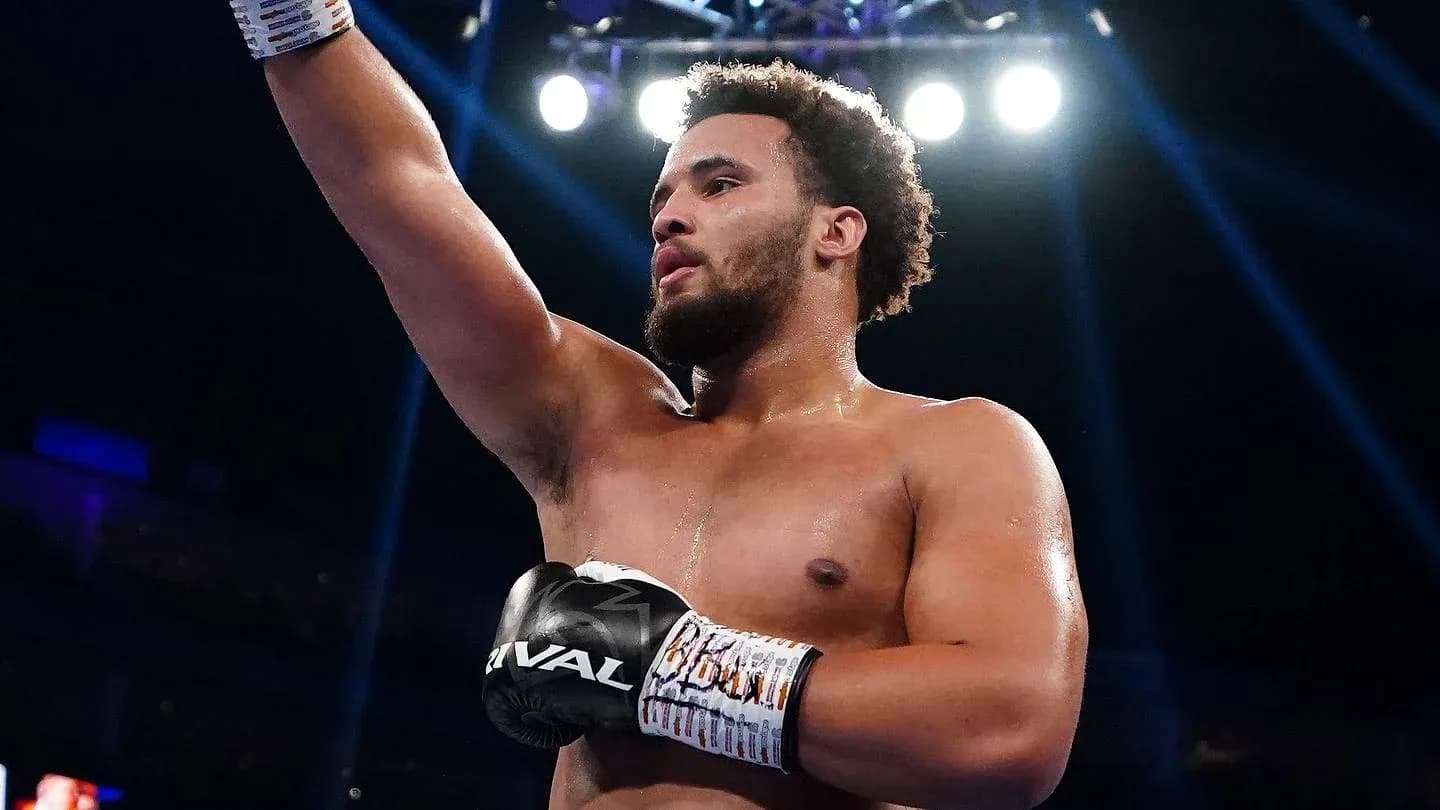
Moses Itauma is 21 years old and staring straight at boxing history.
Beat Filip Hrgovic at the O2 Arena on Saturday night and he becomes the youngest world heavyweight champion in British boxing history. Not just a rising prospect anymore. A champion. The kind whose name gets stitched into the sport’s fabric, not just splashed across a few viral clips.
The stage is loaded. A partisan London crowd. A seasoned contender in the opposite corner. And a narrative that’s been simmering all week.
A prodigy under fire
Hrgovic hasn’t just been selling the fight; he’s been poking at Itauma’s identity.
Privileged. Spoiled. Handed everything.
That’s the picture the Croatian has tried to paint of the British prodigy in the build-up. In Hrgovic’s version, Itauma is the golden boy of Queensberry, ushered into the spotlight, protected on his way to a title shot that others had to crawl toward.
Most young fighters ignore that kind of talk, or pretend to. Itauma didn’t.
He met it head-on, pointing to the cold, violent evidence he’s already left behind: the destruction of opponents like Jermaine Franklin, the highlight-reel knockouts that have carried him from prospect to genuine threat. For Itauma, those finishes are his résumé. Proof that he’s not some manufactured star, but a real heavyweight with real consequences in his fists.
He insists the core of his rise isn’t comfort, it’s work. The conditioning, the punishing training camps, the grind that doesn’t show up on Instagram but does show up when the bell rings.
Shared roots, different stories
Strip away the trash talk and there’s a strange symmetry between the two men.
Both come from Balkan backgrounds, from regions where boxing lives in the shadows of football and basketball. Neither grew up in a system overflowing with money or structure. Yet Hrgovic has tried to draw a sharp line between their journeys, casting himself as the man who clawed his way up, and Itauma as the one who had the ladder lowered for him.
Itauma rejects that picture outright.
“I don’t get treated the way I am for no reason; there's obviously something about me that Queensberry pushes,” he said, leaning into the idea that his backing is an investment, not a gift. “And it’s not what I have done, but what I could do. And I feel like with every fight I have, I’m proving to them that I can do it; I am capable of what they think I’m capable of.”
Then came the question that cuts to the heart of Hrgovic’s accusation.
“Have I been treated like a golden child? I wouldn’t say so, because it’s not for no reason.”
The suggestion from Hrgovic is simple: Itauma’s had it easy. The reply from Itauma is just as clear: if doors have opened, it’s because he’s kicked them down.
Turning the accusation back
When Itauma really got going, he flipped the argument on its head.
Hrgovic, he pointed out, arrived in the professional ranks with something priceless: an Olympic medal. A built-in platform. A ready-made reputation.
“He also had an Olympic medal, which obviously, they don’t just hand them out,” Itauma said, acknowledging the achievement but not the narrative attached to it. “With that Olympic medal, there came already a bit of a head start. Whereas there are certain guys that would have had to start from scratch. Small hall shows, probably even unlicensed and XYZ.”
That medal didn’t just sit in a display case. It opened doors. It got Hrgovic TV dates, bigger purses, better opportunities.
“Filip Hrgovic still started with a head start because of an Olympic medal, which he did achieve, which he did earn,” Itauma continued. “But I wouldn’t say that he has had the toughest route to where he's got to. I think he was very fortunate to get the decision of Zhilei Zhang. Had he not got that decision, would he have got all the fights that he’s had now? Do you know what I mean?”
It was a sharp reminder that careers can pivot on a single scorecard. Hrgovic’s narrow, debated win over Zhilei Zhang didn’t just pad his record; it preserved his trajectory. In Itauma’s eyes, that’s not a tale of hardship. That’s a stroke of fortune.
The stiffest test, the clearest answer
Strip away the talk, and the reality is simple: Hrgovic is the hardest opponent Itauma has faced.
The Croatian is battle-tested, durable, and mean. He’s heard the hype about the 21-year-old across from him and made it his mission to puncture it. The barbs about privilege and pampering are part of that plan, an attempt to needle a young fighter under the brightest lights of his life.
If it’s rattled Itauma, he hasn’t shown it. He’s answered with words this week, but the sense is that he’s itching to answer with his hands.
On Saturday, the microphones go quiet. The entrances are over. The lights hit the ring, and the noise from the O2 will close in around them.
One man walks out with a belt and the right to say, “I told you so.” The other leaves with his story rewritten.
Is Moses Itauma the pampered prodigy Hrgovic insists he is—or the youngest world heavyweight champion Britain has ever seen? The truth is waiting in the space between the first bell and the final punch.