.svg&w=384&q=75 "logo")
Michael Carrick Refuses to Succumb to Pressure at Manchester United
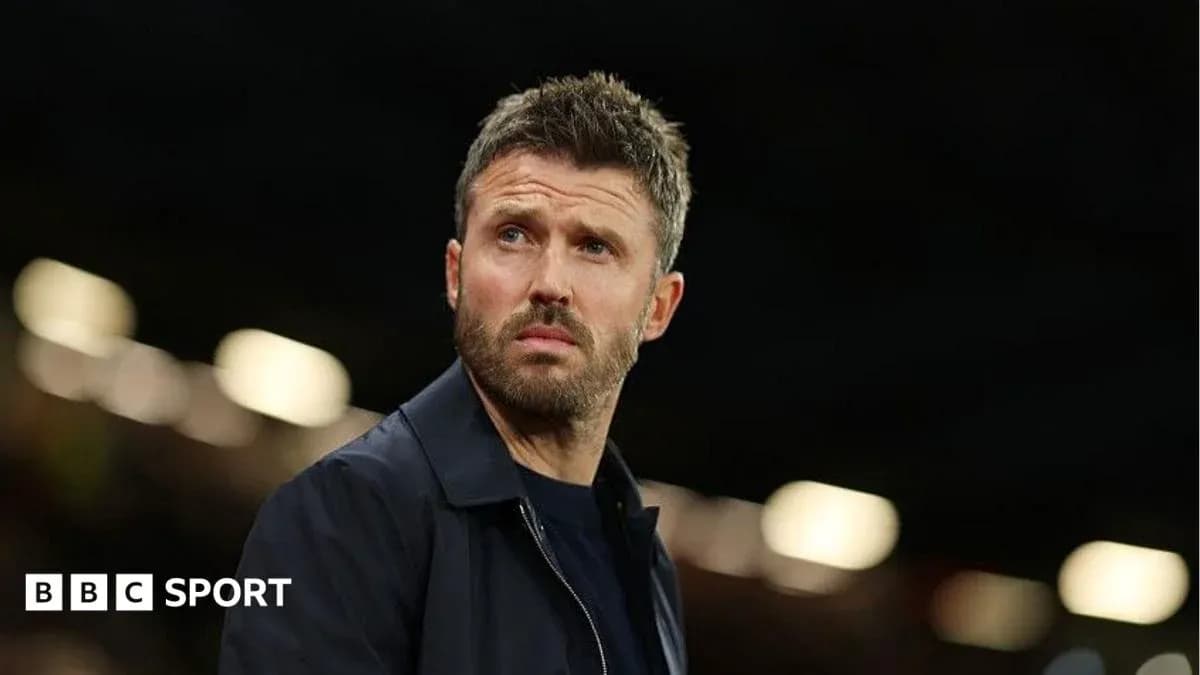
Michael Carrick is not entertaining the doomsday talk.
“Ridiculous,” he called it – the idea that two or three bad results should have him counting down the days in the Manchester United job. The word landed with a firmness that told its own story. United are wobbling, the noise is rising, but their manager is refusing to live week to week.
He has had to answer for an awful week. A home defeat by Manchester City, who played with 10 men from the 23rd minute. Then the midweek collapse: Brighton becoming the first team in 50 years to come from two goals down to win at Old Trafford in a domestic cup, this time in the Carabao Cup.
The reaction was instant and raw. Boos at full-time. Chants against the team ringing out around the stadium. Old Trafford, never shy of judgement, made its feelings clear.
Carrick, though, has drawn a line.
“I know the club, I know the role, I know what's expected here in terms of playing to a certain standard and achieving certain things on the pitch,” he said before Sunday’s trip to Fulham. He spoke like a man who understands the weight of the badge and the job – and refuses to be crushed by a bad week.
“In terms of future and ownership and how long I've got in the job, that's totally not in my thinking. It's ridiculous to think that way in the position I'm in, that's just not on the radar.
“It's two or three games. It's two or three games too many because I really hate losing, but that doesn't mean the world caves in. In some minds it does, it can't for us.”
A club that magnifies everything
Inside the club, the mood is calmer than the headlines. Senior figures at United are not briefing that Carrick is under threat. Their concerns lie elsewhere: with a squad that, in their view, is underperforming compared to the standards it set under the same manager only months ago.
Carrick’s record in the second half of last season is the context they cling to. United won 12 of 17 games in that spell, form that suggested a platform, maybe even the start of something more stable.
This season has broken that rhythm. Two wins from six games is a stark drop-off, even if the bare numbers carry their own stories. One came against newly promoted Ipswich, a match in which United had to come from behind. The other arrived in the Champions League against Sabah FK, the champions of Azerbaijan.
“It’s not a catastrophe or a disaster,” Carrick insisted. “It’s not the end of the world.”
At most clubs, he would be right and the conversation might end there. At Manchester United, the volume dial never stays low for long. A poor week feels like a crisis, a poor fortnight like a full-scale inquest.
Carrick knows this. He lived it as a player, winning titles and riding out storms in the same stadium where he is now being judged as a manager.
He accepts the distortion effect.
Issues at Old Trafford, he said, are often amplified until they look bigger than they really are. A bad performance becomes a symbol. A selection call becomes a referendum. A cup exit becomes a verdict on a project.
And yet, in the middle of it, he sounds like a man who still relishes walking into Carrington every morning.
“There's great feelings, and there's obviously disappointments, and sometimes the smaller disappointments lead to being a little bit bigger,” he said. “It's just part of coping and being at this great football club.
“I wouldn't want to be anywhere else, genuinely.
“It's the best place for me to be, in part because of the times when it's maybe not going to plan. Sometimes they are best times to work your way through, to find out a few things and come out an awful lot stronger.”
Blame, recruitment and the search for solutions
Outside the dressing room, the conversation has splintered into familiar themes.
Recruitment sits near the top of the list. Questions swirl around the squad build, with particular frustration aimed at the lack of a left-back signing, a position where United look exposed. The club’s finances and debt levels remain a constant backdrop, a reminder that every transfer window is a balancing act.
Carrick himself is under the microscope too. His relative inexperience at this level is being re-examined, as is that of his backroom staff. Only assistant Steve Holland brings long, high-end coaching mileage to the bench. The rest are learning on the job under the harshest floodlights in the league.
Carrick, though, is not interested in pointing fingers away from himself.
“It's not a blame game,” he said. He even offered himself up as the lightning rod. “We all search for things to look at and point at, or whatever reason it may be and find a blame. Blame me. No problem. I will take the responsibility.
“But it's not about blaming people. It's about us, it's about us finding solutions and being better. That's as a whole football club.”
There were at least hints of better news on the team sheet. Luke Shaw and new signing Carlos Baleba “have a chance” of being fit for the visit to Craven Cottage, Carrick revealed. United have missed Shaw’s balance and experience on the left, and any fresh option in midfield feels welcome in a side searching for control.
Fulham away will not define Carrick’s future, no matter how loudly some might frame it. But it will say plenty about his players. A response is overdue. The manager has made it clear he is not running from the pressure. The question now is whether his squad can match that stance when the whistle blows in west London.