.svg&w=384&q=75 "logo")
Kawhi Leonard Signs $115 Million Extension with Raptors

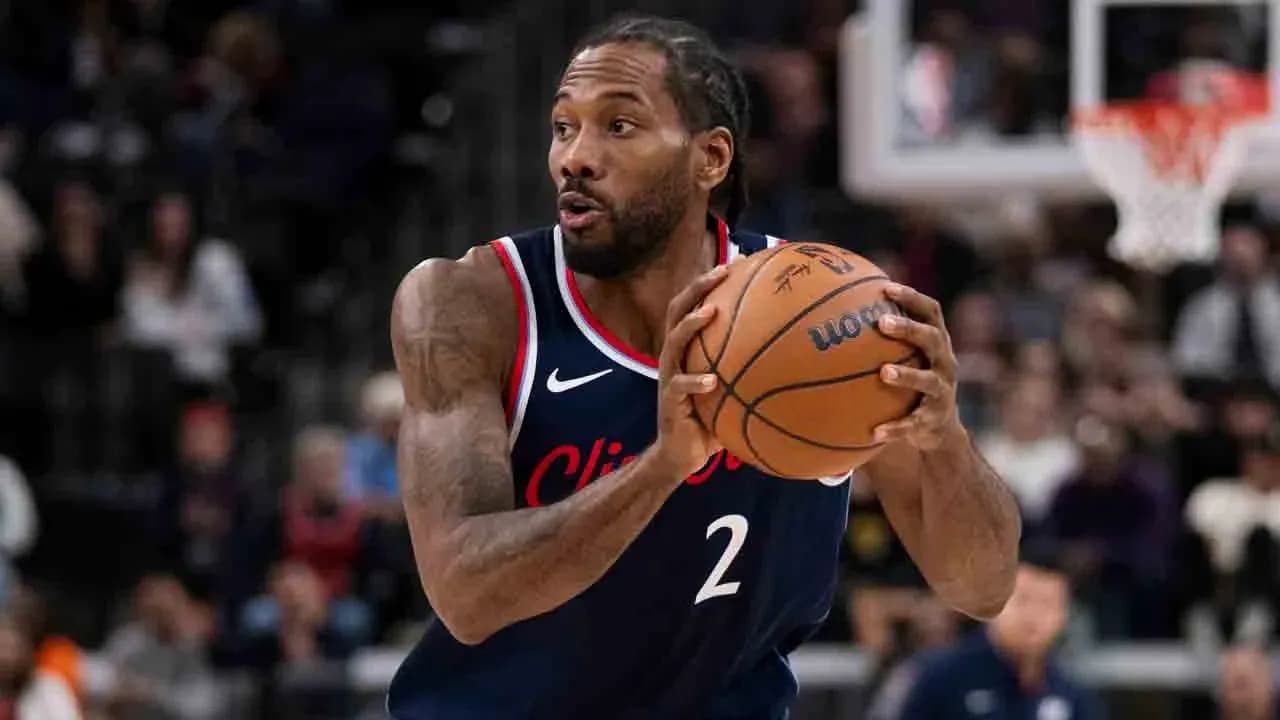
Kawhi Leonard spent the summer in limbo, waiting on the NBA to decide whether he could even suit up for the team that had just traded for him. Now, after months of silence and suspicion, he’s tied to Toronto again — this time, on the richest terms the franchise has ever put in front of him.
Leonard has agreed to a two-year, $115 million contract extension with the Raptors, a deal that includes a player option for the 2028-29 season, according to a person with knowledge of the agreement. The contract has not been officially announced, but the message is unmistakable: the Raptors didn’t wait out this storm just to let him walk.
A blockbuster, then a standstill
The extension lands only eight days after Toronto finally completed its trade for the 35-year-old star, a blockbuster agreed to on June 30 and then left in a holding pattern for more than two months. On paper, the deal was aggressive and clear: the Raptors sent Brandon Ingram, Gradey Dick, unprotected first-round picks in 2031 and 2033, a 2027 pick swap and second-rounders in 2030 and 2033 to the Los Angeles Clippers for Leonard.
Then, on July 9, Toronto hit the brakes.
The NBA had opened an investigation into whether the Clippers used outside endorsement money to pay Leonard beyond what the salary cap allowed. Until the league finished digging, no one in Toronto could be sure whether the player at the center of their franchise reset would be suspended — or for how long. The Raptors went quiet and stayed that way the rest of the summer.
This wasn’t just due diligence. It was existential. They had already watched Leonard deliver a title in 2019 and leave a month later. This time, they needed certainty before they pushed all their chips in.
The report that blew it open
The investigation traced back to a story published in September 2025 by reporter Pablo Torre. In it, Torre detailed a $28 million endorsement deal Leonard held with Aspiration, a climate-focused financial company. Former employees told him the deal demanded almost nothing from Leonard and was effectively a workaround to funnel extra money to the star.
The key detail: investors tied to Clippers owner Steve Ballmer had put money into Aspiration.
That allegation turned a creative endorsement deal into a potential cap-circumvention scheme. The league had no choice but to dig, and when it did, it found far more than one suspicious contract.
What the NBA uncovered
On Sept. 2, the NBA released its findings. The language was stark. Investigators said they had uncovered a “pattern of misconduct and multiple significant rules violations.”
According to the league, the Clippers had arranged endorsement deals for Leonard with four different companies, leaned on those businesses by offering team-related opportunities, and covered personal expenses for him. It was the kind of systemic maneuvering that cuts at the heart of the salary cap’s integrity.
The punishment reflected that.
The Clippers forfeited five first-round picks, from 2029 through 2033, and were fined $30 million. Ballmer received a one-year suspension. Gillian Zucker, the team’s president of business operations, was handed a one-year unpaid suspension. Lawrence Frank, president of basketball operations, was suspended without pay for six months. Dennis Robertson, Leonard’s uncle and business manager, was banned from dealing with NBA teams for five years.
Leonard himself was fined $700,000. Crucially for Toronto, he was not suspended.
In a statement, Leonard said he accepted “full responsibility for lapses in judgement by people within my inner circle,” while maintaining that he had signed his Clippers contract and endorsement deals in good faith. The league’s decision not to suspend him cleared the final obstacle for Toronto.
The Raptors, who had been frozen by uncertainty, suddenly had clarity — and a star fully available.
Toronto’s gamble, part two
Toronto is not bringing back the same Leonard it first fell in love with. This version is older, heavier with miles, but still devastating when healthy.
Last season, Leonard played 65 games, a significant jump from the 37 he managed the year before. He averaged 27.9 points and 1.9 steals, form good enough to land him on the All-NBA second team. For a Raptors team that went 46-36 and bowed out in seven games to Cleveland in the first round, that level of production is the difference between respectability and relevance.
To make the trade happen, Leonard waived his full 15% trade kicker — a sizable bonus many veterans cling to when they’re moved. That concession helped grease the financial mechanics of the deal and signaled something else: he wanted the move.
The Raptors’ front office read that as an opening and moved quickly once the NBA’s report dropped. Eight days later, the extension was in place. The franchise that once watched Leonard raise the Larry O’Brien Trophy and then vanish to Los Angeles now holds contractual leverage it never had before.
A city, a star, and unfinished business
The last time Leonard wore a Raptors jersey, he turned Toronto into a basketball capital and rewrote the franchise’s history in one spring. Then he left, and the city lived off that run while drifting back toward the middle of the pack.
This time, the dynamics are different. There’s no mystery about his intentions for free agency next summer — at least not in the short term. The player option for 2028-29 gives Leonard future flexibility, but the two-year, $115 million extension plants him firmly in Toronto’s plans.
The cost to acquire him was enormous. The picks, the swap, the young talent in Gradey Dick, the established scorer in Brandon Ingram — all gone. The Clippers, stripped of future draft capital by the league, paid a heavy price of their own. The fallout from the investigation will shape both franchises for years.
Toronto, though, walks away with the one asset that still bends the league: a top-tier two-way star who has already proven he can carry this city to the top.
The question now isn’t whether Kawhi Leonard is coming back. It’s whether, with everything that’s happened and everything Toronto has paid, he can do it again.