.svg&w=384&q=75 "logo")
Katie Taylor's Journey: From Quitting to Croke Park Glory
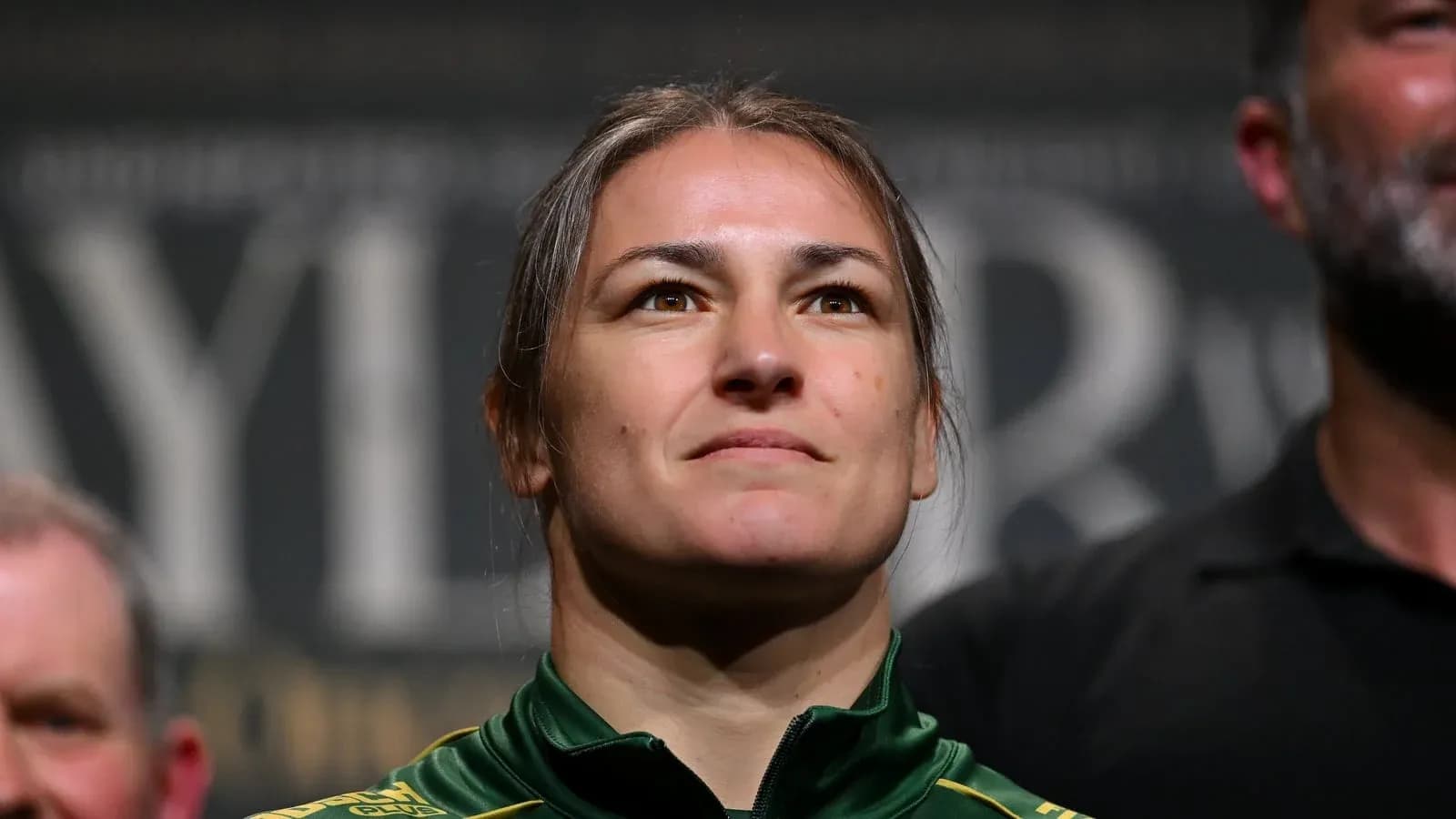
Katie Taylor once thought about walking away before the world ever knew her name.
Long before sold‑out arenas and world titles, before London gold and Madison Square Garden, she stood at a crossroads in a sport that barely wanted her. Now, on the eve of a farewell fight at a packed Croke Park against Flora Pili, she can finally admit how close she came to quitting.
A dream with no stage
In 2006, Taylor was rising fast through the amateur ranks, already a force in a sport that barely recognised her existence. The International Olympic Committee had just announced new events for the 2008 Beijing Games. Women’s 3000m steeplechase. Women’s BMX. New women’s fencing events. Women’s marathon swimming.
No women’s boxing.
Years of lobbying had been brushed aside by doubts over the sport’s global appeal. For Taylor, then in her early twenties and chasing an Olympic dream that still lived only in her imagination, the blow cut deep. Another four‑year wait, at least, before she could even try to qualify. If the sport ever got in at all.
She admits that was the moment the thought of walking away felt real.
This was a fighter who had started out as a nine or ten‑year‑old in a country where women’s boxing wasn’t even sanctioned. She had to pretend to be a boy just to get bouts. Now the Olympic door was being slammed in her face.
She kept going, but the doubts followed her around the gym.
Quiet work, loud impact
Taylor chose a simple response: keep her head down and fight.
She decided early that she wouldn’t talk her way into opportunities. She would force them open with her performances. While others argued the case in meeting rooms, she argued it in the ring. Her excellence, not her voice, would carry the message.
The doors did begin to open. People watched her fight and could no longer ignore what they were seeing. At her back stood a fiercely committed family, pushing, persuading, fighting for her chance while she fought for every point on the scorecards.
It was still brutal at times. There were nights when she was convinced the Olympics would never come. She was told women’s boxing would be in Beijing. Then came the news: it wasn’t.
That, she says, was the closest she has ever come to walking away from the sport altogether. Instead of stepping into the ring in China, she ended up analysing the boxing for RTÉ, looking on from the outside at the stage she believed should have been hers.
She wondered if it would ever happen. Four more years is an eternity in an athlete’s life. Many never get that second window.
She chose to wait.
History finally opens the gate
Beijing came and went. A year later, the breakthrough arrived. Women’s boxing was finally added to the Olympic programme for London 2012.
Even then, Taylor needed a slice of fortune. The women’s competition would feature just three weight classes, compared to six in Paris 2024. Lightweight, at 60kg, made the cut. So did Katie Taylor.
The rest, as she says herself, is history.
In London, she didn’t just win gold. She detonated an atmosphere that changed the perception of women’s boxing in real time. Her quarter‑final win over Great Britain’s Natasha Jonas produced a noise level of 113.7 decibels inside the arena – not far off a jet engine’s roar.
From that moment, Katie‑mania was no longer a niche Irish story. It became a global one.
From heartbreak to headliner
The support never left her side. It travelled with her through the disappointment of Rio, when the defence of her Olympic title ended in heartbreak. It followed her into the professional ranks, across continents and time zones.
Wembley. Madison Square Garden. Boston. Brooklyn. Dallas. Manchester. Leeds. New York. Every step of the way, an Irish core followed, flags raised, anthem ready.
Now they will fill Croke Park.
The stadium is steeped in boxing history thanks to Muhammad Ali’s 1972 bout with Alvin Lewis, but even Ali drew “only” 18,000. Taylor has blown past every projection, selling out the home of the GAA with a speed that mirrors the combinations that made her a star.
For her, the reaction was never in doubt. In Ireland, she believes, they back their own, male or female. Eighty thousand tickets gone in minutes is the proof.
She speaks of being “blown away” by that support, but it’s more than a passing phrase. She talks about a nation that has walked every step with her – from the amateur days before London, to the moment Amhrán na bhFiann rang out in the ExCeL Arena, to the pain of Rio, to the bright lights of the pro circuit.
They have been there in the good nights and the grim ones. They will be there again on Saturday.
A nation in her corner
Taylor is adamant that Ireland hasn’t just cheered her on; it has helped build an entire sport. You cannot have a professional career in a vacuum. You need tickets sold, arenas full, noise, colour, momentum. You need people willing to travel the world to watch you fight.
She believes this nation has done exactly that, and in doing so has played a major role in establishing female professional boxing on the global stage.
Now, as she prepares for what she calls her last fight, she talks not about legacy, but responsibility. She wants a performance that matches the scale of the occasion and the loyalty of the people in the stands. A career‑best display, on home soil, in front of the crowd that refused to let her journey fade when the Olympics shut the door in 2008.
From a little girl hiding her identity just to step into a ring, to a woman who can fill Croke Park in minutes, Katie Taylor has already changed the sport.
On Saturday night, in front of 80,000, she gets to close the circle on her own terms.