.svg&w=384&q=75 "logo")
Katie Taylor's Croke Park Farewell: A Historic Boxing Event
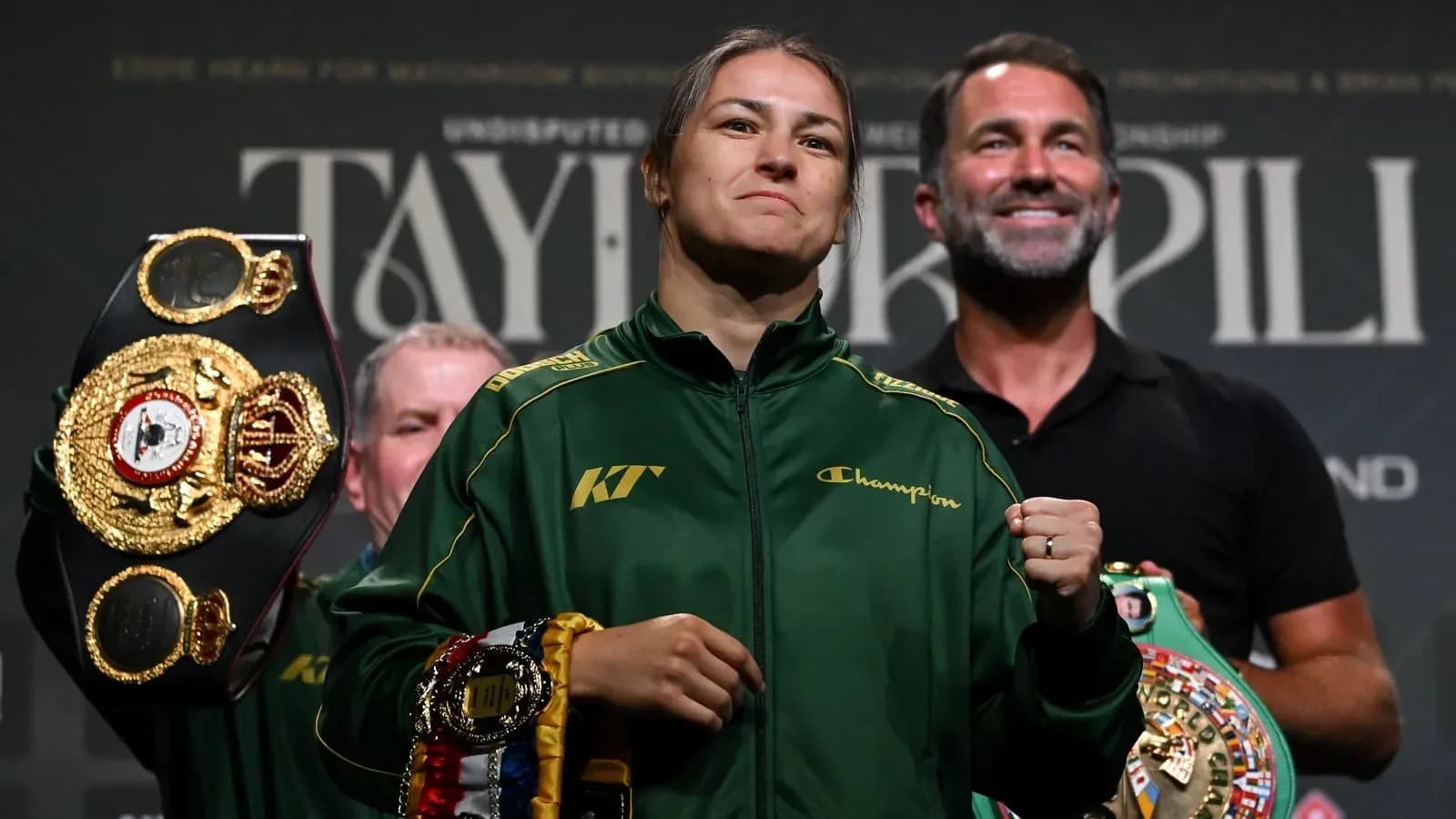
Four days out from Katie Taylor’s long‑awaited Croke Park farewell, her camp is walking around in a kind of dazed delight. The hard part is done. The dream is real. The anxiety has melted away and been replaced by something softer, more sentimental.
Tuesday’s press conference felt like a sequel rather than a fresh production. Same lines, same cast, just a different stage. Back in June they gathered in the Hogan Stand’s premium level; this time the circus pitched up at the Helix Theatre on the DCU campus, where students drifted past outside with headphones in, oblivious to the fact that Ireland’s most decorated fighter was inside talking about the end.
Inside, it was a curious mix. GAA reporters who usually worry about half‑forwards and sweepers found themselves shoulder to shoulder with Matchroom and DAZN staff, their London accents cutting through the Dublin hum. Over the speakers, that familiar tin‑whistle loop from Croke Park played yet again, the soundtrack to so many All‑Ireland Sundays now repurposed for a different kind of headliner.
The big change from June was obvious. No one was sweating ticket sales anymore.
Back then, there were mutterings about price points, about timing, about whether the Irish public would really fill a stadium for a women’s boxing main event. Those doubts look faintly ridiculous now. Half of the 80,000 tickets disappeared in pre‑sale. The rest went in 17 minutes on 28 July. Croke Park, for Katie Taylor’s last dance, is sold out.
Taylor will be the first boxer to top a bill at Croke Park since Muhammad Ali fought Al “Blue” Lewis in 1972. It is the kind of historical comparison that makes promoter Brian Peters grin and, if he’s honest, probably makes him want to say that Ali is the one in exalted company here. The numbers certainly back that up. Ali drew only around 18,000 to Jones’s Road that night, and the GAA hierarchy later tore strips off the promoter for overpricing the event.
No such problems this time.
Hearn’s regret and redemption
Before the live‑streamed top table session, 18 journalists were squeezed into a tiny dressing room to wait for Eddie Hearn. When he finally ducked through the door, he stopped, looked around and laughed.
“Wow, blimey! This is small!”
He has never been short of a line. Or a story. Or a confession.
Reflecting on the ticket frenzy, Hearn admitted there was a nagging regret. They could have done this sooner. They should have done this sooner.
In June, he’d played the genial pal with Croke Park’s commercial director Peter McKenna – “Peter, me old mate, me old mucca!” – but on Tuesday he allowed a little of the old frustration to surface. Those long, grinding negotiations with Croke Park left a mark.
“People can sort of deflate your spirit, which is quite unusual for me,” he said. “They did deflate my spirit a bit over the years. They made me question whether we could do it or whether it would actually work.
“I’m disappointed with myself that I allowed that to happen because maybe we could have done it earlier.
“If Croker had originally gone, ‘Yes, this is going to be massive!’, we would have done it.
“But they was like, ‘Hmm... I dunno’. And it was like, well blimey, if they’re not sure, do we really want to be gambling with these costs?
“Listen, they [Croke Park] helped out as well, they were fantastic in the end.”
The promoter’s patter is as relentless as ever. Hearn Jr has clearly inherited Barry Hearn’s love of a yarn and a microphone. His father built his name promoting some of the most memorable nights in Irish boxing, including Chris Eubank’s 1995 trip to fight Steve Collins, when Noel Smith famously sold him the idea that Millstreet was “just around the corner” from Cork Airport. It wasn’t. “IT WAS ABOU’ AN ’OUR ’N A ’ALF FROM CAAAUK AIRPORT!!!” is still the family punchline.
Yet when Katie Taylor first appeared on the Matchroom radar, Barry Hearn was a sceptic.
From six grand to 80,000 seats
The story has been told often, but it still lands. Taylor and Brian Peters climbed the stairs to Hearn’s office after the disappointment of the Rio Olympics, pleading their case for a professional career that could be both meaningful and marketable.
Matchroom took the gamble, but only just.
“We decided to headline her in November [in 2016],” Eddie Hearn recalled. “I think we paid her – she’s still having a go at me about this – six grand for her debut. For a four rounder.
“Which at the time, in women’s boxing by the way, was a lot of money.
“I said to my Dad, I’m going to put Katie Taylor on last. And he’s like, ‘What? A women’s fight?’
“I was like, ‘yeah, dad, like she’s unbelievable. You’ve got to watch her.’
“He said, ‘No one’s interested in women’s boxing, son.’ It’s the same sort of thing Frank Warren would say – or anyone from that era. And he [Barry Hearn] watched her and went ‘oh my God!’”
From six thousand pounds and a four‑rounder to 80,000 people in Croke Park. From being told nobody cared about women’s boxing to shutting down ticket sites in under 20 minutes. That arc, more than any belt on the table this weekend, is what they were really celebrating at the Helix.
The build‑up had the feel of a corporate victory lap as much as a fight week. The language kept drifting towards deals done, obstacles cleared, doubters silenced. More Art of the Deal than Rocky.
‘She sold the tickets’
On the top table, promoter Peter Aiken tried to bat away the praise. This wasn’t his triumph, he insisted. “She [Taylor] sold the tickets.”
Brian Peters, as ever, played the role of chief evangelist. Less teary than in June but no less fervent, he declared Taylor the greatest Irish sportsperson of all time. “No disrespect to Roy Keane, you get a good second,” he said, a line guaranteed to light up radio phone‑ins across the country.
He even found time to hand out awards of his own, nominating Barry Keoghan for an Oscar for his turn in the promotional material and announcing, with a straight face, that he’d arranged with “God almighty” for there to be “no rain after 5 o’clock” on fight night.
The challenger, Flora Pili, walked into this theatre of adoration with admirable calm. To the wider public she is still a mystery guest, the “AN Other” on the poster opposite the national icon. At the Helix she was greeted with polite applause as she emerged, dreadlocks dyed in the French tricolour, a splash of colour on a stage that already belonged to someone else.
Ireland's fight fans with long memories may recall her last visit to Dublin: a low‑key international round‑robin at the National Stadium in the spring of 2017. It did not go well. She lost to Kellie Harrington and then to Italy’s Irma Testa.
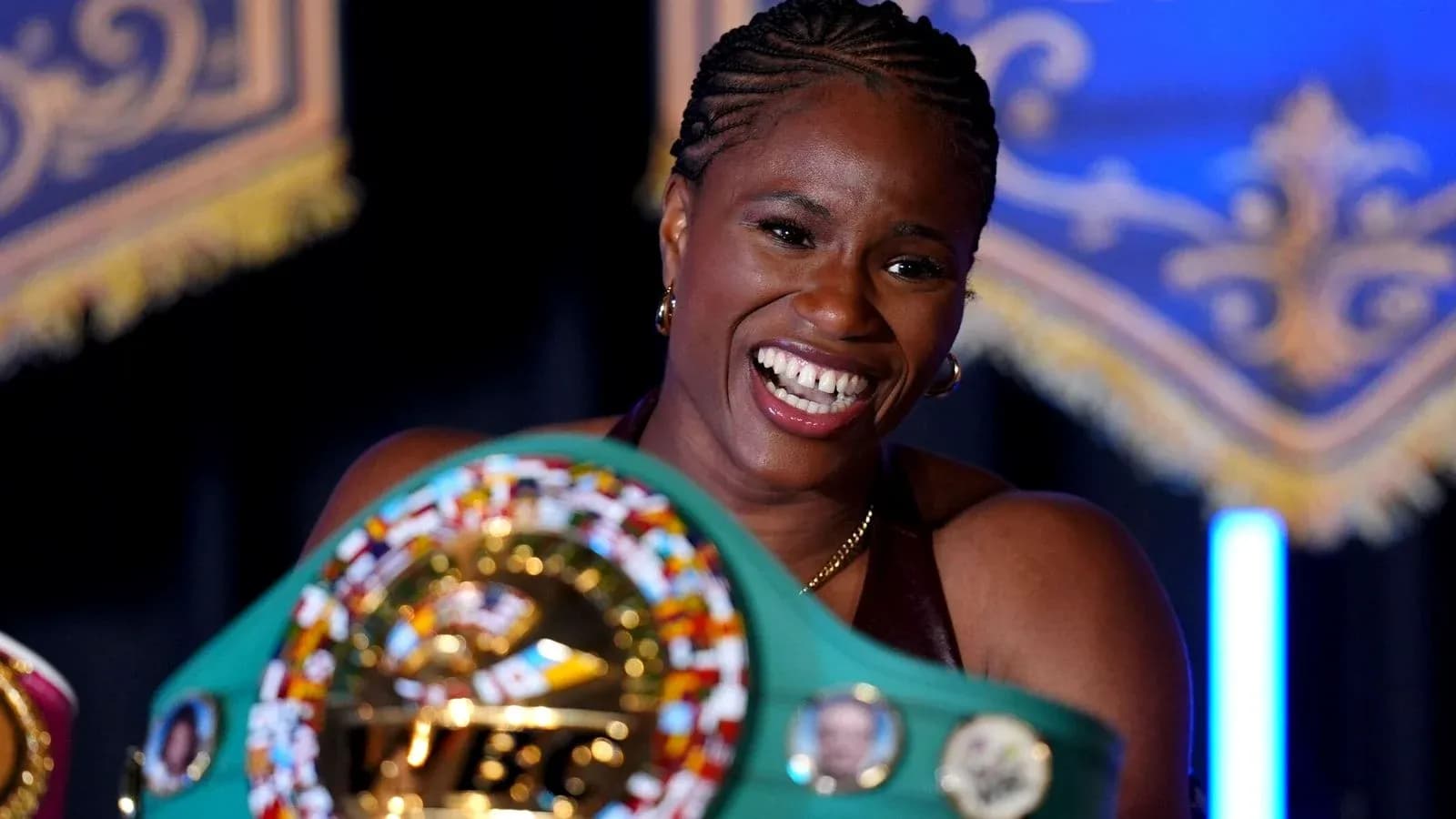
The professional ranks have been kinder. Pili arrives at Croke Park with a perfect 12‑0 record and, crucially, a world title belt of her own – the IBO super lightweight strap that Taylor vacated in late 2025. That matters. It gives the night a sporting edge amid all the nostalgia.
Several times, as the room threatened to drift into pure self‑congratulation, Hearn and others were careful to drag it back.
“This is a real fight,” they repeated. Not a testimonial. Not a parade. A world‑level contest against an unbeaten champion.
Legacy in the rafters
Taylor did not sit with the press pack on Tuesday, but when she spoke from the stage her words cut through the glitz. She thanked the Irish public again, as she has so often, but this time the scale of it all seemed to catch in her throat.
“I’m not sure there’s another country in the world where 80,000 people would turn up for a female athlete,” she said.
Then she went back to where it began.
She talked about walking into boxing gyms as a child, hair tucked away, trying to pass as a boy so she’d be allowed to spar. About the sniggers and the sideways looks. “Who’s this girl trying to be a boxer?” About having to earn respect one round at a time, in rooms where nobody thought she belonged.
“I was walking into some boxing gyms as a young girl, being sniggered at and laughed at. Who’s this girl trying to be a boxer? I had to earn people’s respect along the way.
“I’m so delighted that these young girls coming through now don’t have to go through the same struggles and adversity that I had to go through. The door is actually opened for them.
“You walk into every boxing gym now and it’s packed with female fighters. That to me is the greatest part about this legacy.”
That is the measure Taylor cares about. Not just belts or gates or broadcast numbers, but the sight of girls lacing up gloves without having to explain themselves.
On Saturday, Croke Park will roar for her one last time. The numbers will be trumpeted, the business will be hailed, the night will be sold as a once‑in‑a‑lifetime spectacle. But when she walks out under those lights, past the hill and the stands where GAA legends are usually made, the question will hang in the Dublin air:
How do you say goodbye to a fighter who has already changed everything?