José Mourinho's Return to Real Madrid: Clásico Showdown with Barcelona
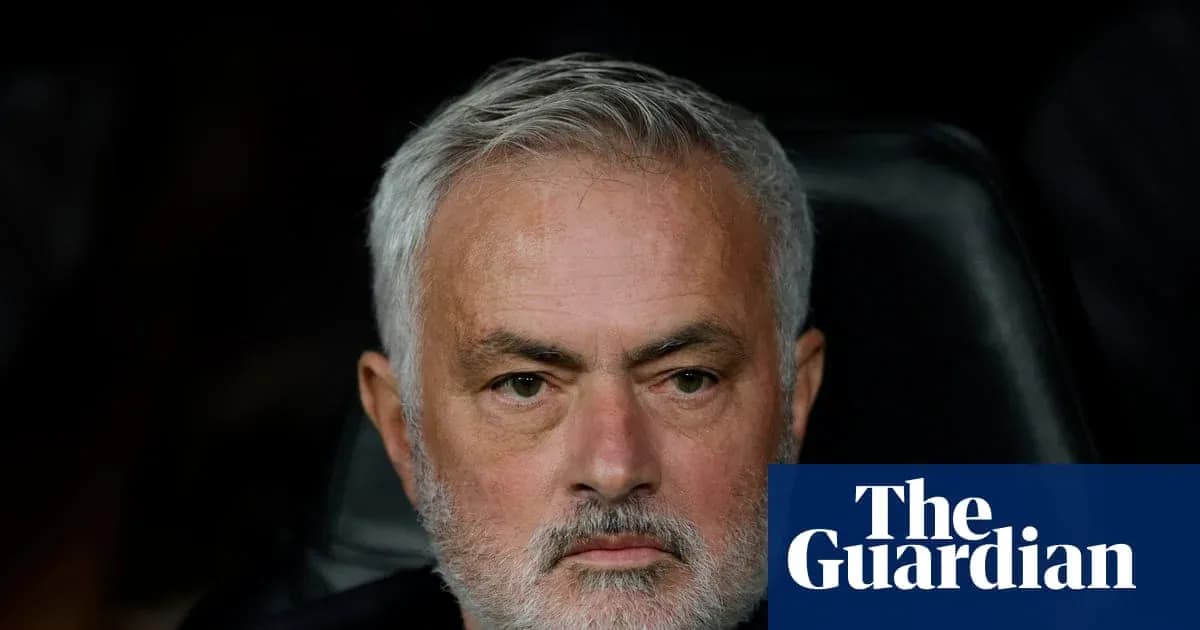
José Mourinho has already done the por qué?, the brandished printout and the press-conference no-show – and he’s only been back at Real Madrid three months. The classics are all there, even though he hasn’t yet walked into an actual clásico. That comes on Sunday night, when he steps back into the stadium where he first arrived 30 years ago as Bobby Robson’s bright young translator, and last departed in 2013 as the most divisive, and probably the most famous, manager in football.
This time he returns as the man charged with something he once swore he would only ever do from the other side: bring about the destruction of Barcelona.
Mourinho, Barcelona and a rivalry that never healed
“Today, tomorrow and always, Barcelona in my heart,” Mourinho once said, years before he promised he would only join Real Madrid to destroy them. Both declarations now hang over this week like storm clouds. The nostalgia is real, yes, but so is the animosity that shaped his first spell in Spain and never really went away.
“The clásico is just another game in the championship but to say it’s a game like any other would be to lie, totally unreal,” he said on Wednesday. Few men alive understand that better.
On the other side, Barcelona’s new idol cannot wait to feel the heat. “I love the needle,” Lamine Yamal admitted. “The Mourinho-Guardiola era, I loved all that. That’s football. Sport is serious but I want a show and we have more fun.” A teenager, already asking for chaos.
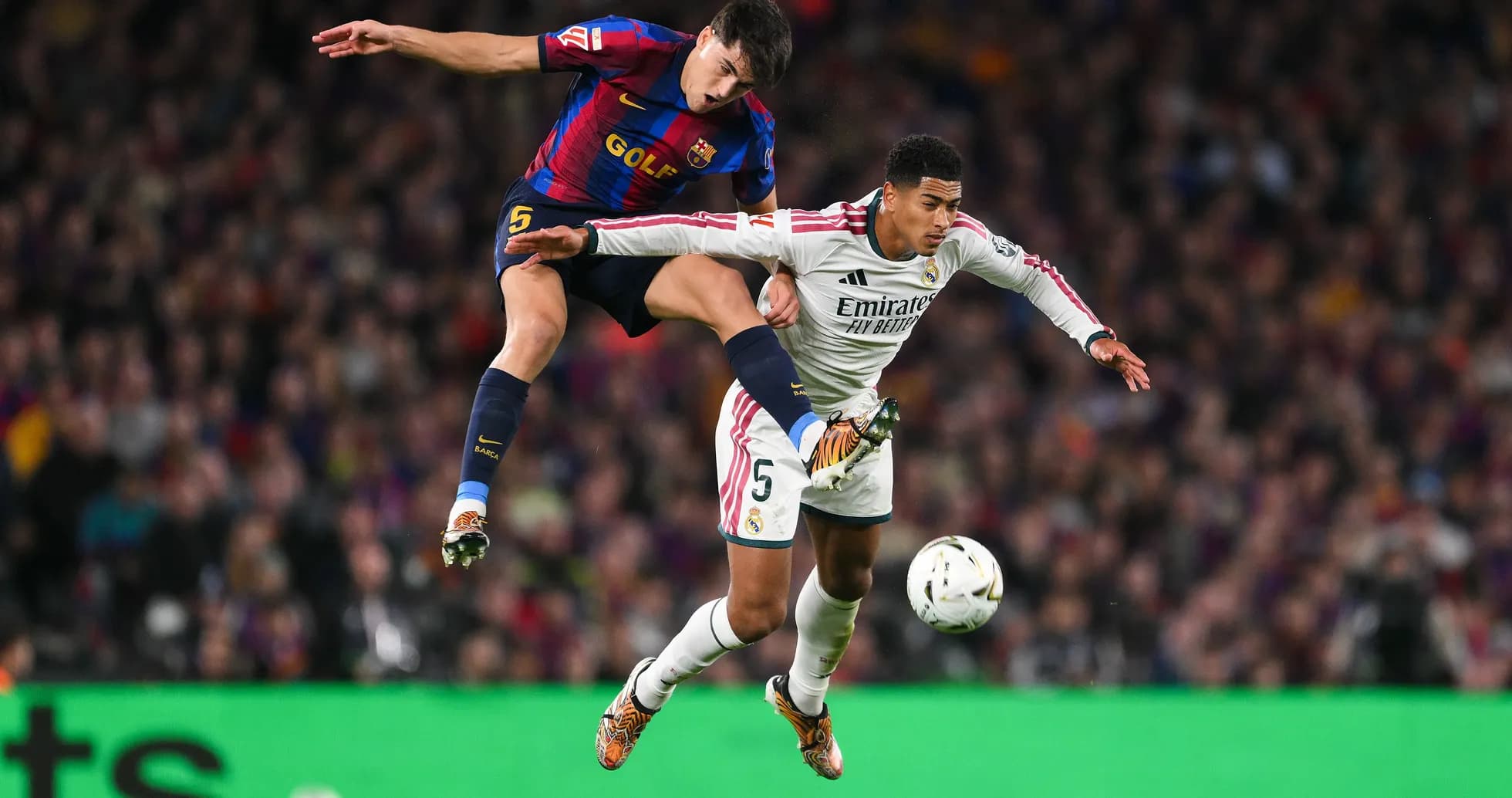
For more than a decade, the real superpower in Europe has been Madrid’s Champions League machine, whirring on long after Mourinho’s departure. Since he left, they have turned the elusive décima into an avalanche: the 10th, then the 11th, 12th, 13th, 14th and 15th in 10 years. Barcelona have watched that from the outside. There has not been a European clásico since the 2011 semi-final, when Pep Guardiola called Mourinho the puto amo and Mourinho responded with his por qué monologue, accusing UEFA and referees of tilting the field in Barcelona’s favour.
Yet this week, everything – even the Champions League – has been framed around Sunday. Barcelona travel to Paris, Madrid host Leipzig, but the conversations all end in the same place: the clásico and the man at the centre of its most toxic chapter.
Pérez’s chosen warrior, again
When Mourinho first arrived in 2010, the story started not with his unveiling but with that semi-final at the Camp Nou. Sprinting across the pitch, finger in the air, he celebrated Inter’s resistance as if he had personally unplugged the Barcelona juggernaut. At the Bernabéu, they watched in relief. Barcelona had been denied the chance to lift the European Cup in Madrid’s own stadium, and a blueprint for stopping them had been drawn.
As Mourinho left the Bernabéu that night in Florentino Pérez’s car while his players flew back to Milan, the president had already seen enough. This was the man who could drag Madrid out of Barcelona’s shadow.
Pérez had returned in 2009 after the first galáctico era fizzled out. He had the stars again but no trophies. Barcelona dominated Spain and Europe, built around the core that would win the 2010 World Cup: six starters in the final came from the Camp Nou. Madrid needed more than talent. They needed a warlord.
“This year’s galáctico is José Mourinho,” Pérez declared.
The marriage was always going to be combustible. By the time Mourinho left, those “three intense, almost violent years,” as he later described them, had scorched the club from the inside as much as they had scorched the clásico. He clashed with opponents, referees, the media, and eventually his own dressing room. Yet Pérez never truly fell out of love. If anything, the president seemed drawn to Mourinho’s belligerence, seeing in it a reflection of his own defiance.
Mourinho, Pérez insisted, had returned Madrid to their rightful place. Each time Madrid lifted another European Cup, the president called to remind him: you started this.
The record is messy, but it bites both ways. Mourinho’s first clásico ended in a 5-0 humiliation. His final season brought no trophies. Guardiola won twice as many titles during their parallel tenures. And yet, of the four competitions Guardiola failed to win at Barcelona, Mourinho took three away from him. That is the part Pérez remembers.
New crisis, old solution
Fast-forward to now. Time has passed, faces have changed, but the pattern feels familiar.
Madrid have gone two seasons without a trophy. In the first of those, Barcelona walked to the league with two games to spare, completing a domestic treble and hammering Madrid four times, scoring 16 goals. Last season they sealed the title with three weeks left, clinched by a clásico so one-sided it felt like a changing of the guard. Madrid’s internal fractures were laid bare. Spain then won the World Cup with eight Barcelona players in the squad; Madrid’s only representative, Marc Cucurella, joined the club after the tournament had already started.
For a club that measures itself against Barcelona before anyone else, this was a crisis. And when Madrid sense crisis, they tend to reach for the loudest answer in the room.
Nostalgia did the rest. The flaws, the feuds, the fallout – all softened by time. What remained was the image Pérez likes best: a manager with the authority to dominate the dressing room and the personality to go to war. With rivals, with institutions, with anyone who gets in the way. Especially Barcelona.
Listen back to Pérez’s furious rant in May – the conspiracies, the political undertones, the open campaigning – and Mourinho’s return feels inevitable.
Negreira, paranoia and a familiar script
This time, Madrid’s sense of grievance has a concrete focal point: the still unresolved Negreira case. Barcelona paid José María Enríquez Negreira, the former vice-president of the referees’ committee, more than €7m between 2001 and 2018. Barcelona deny corruption, insisting Negreira worked as an adviser, but the scandal has become the centrepiece of Madrid’s narrative.
It is a long way from the days when both clubs stood shoulder to shoulder, clinging to the Super League project. Now Madrid’s official channels push the Negreira story relentlessly, even as the league president compares their TV output to Joseph Goebbels’ propaganda. Every refereeing decision is filtered through suspicion. Every mistake, and even calls that are not mistakes at all, are framed as part of a grand design.
Into that atmosphere walks Mourinho, insisting he is older and calmer. He said it when he arrived. Then the defeats started.
After losing to Betis, he rolled out the por qué again, questioning decisions that the rulebook backed up. After losing to Atlético, he turned up in the press room with a printout in his hand, a physical symbol of his persecution complex. When he sprinted on to the pitch to embrace Vinícius Júnior after a goal against Villarreal, only to see it ruled out and Vinícius sent off for pulling Nathan Saliba’s hair, the fallout brought a four-game ban for his forward.
Mourinho skipped the next press conference. Not out of contrition, but calculation. He did not want to risk a suspension that would rule him out of the clásico. Everything is subordinate to Sunday.
A team finally taking shape
For a while, it felt like the old fury was all he had. Barcelona opened the league season with 11 wins from 11, scoring at will – more than four goals a game – with Lamine Yamal leading the charge. Most people wrote the script: Barcelona would win the clásico, the title race would be over before winter, and Mourinho’s Madrid would be left picking through the wreckage of another failed experiment.
Madrid had already lost twice. The football was thin. The problems – reliance on Vinícius, a lack of control in midfield, defensive uncertainty – looked stubbornly familiar. There was noise, plenty of it, but not much substance.
Then something shifted in Rome.
Madrid came back from 3-1 down at Roma to win 4-3 in the final seven minutes. On the surface, it felt like another of those inexplicable European turnarounds that Madrid seem to summon at will. Look closer and the pattern was different. Arda Güler was on the pitch. Yan Diomande was on the pitch. Fede Valverde was at right-back. Vinícius was not involved.
It looked obvious. It looked repeatable. Mourinho thought so too.
He kept the structure and the personnel. Madrid put four past Sevilla on Sunday, three of them outstanding goals. They then scored four more against Leipzig on Wednesday, Diomande smashing in a superb volley after Vinícius had gone off. While Madrid were rediscovering their punch, Barcelona were conceding four at the Parc des Princes.
Hansi Flick, for his part, made his priorities plain. He rotated for Paris, leaving out Rodri and taking off Pedri and Raphinha early to protect them for the clásico, a game that tends to shape everything that follows. He has problems of his own: injuries at the back, a defensive record that reads 15 goals conceded already. He has warned his players that such generosity will not survive a night at the Bernabéu.
Mourinho, naturally, has already found a grievance. Madrid have one day less rest than Barcelona before Sunday, he complained, ignoring the fact that his team played at home while Barcelona had to travel to Paris. The excuse is already on the table, another brick in the narrative of a world aligned against him.
A clásico with something at stake again
“We need to cut the gap and we can only do that by winning,” Thibaut Courtois said of the six-point deficit at the top. “We’re going with confidence.” For the first time in weeks, that does not sound like blind faith.
There is a title still to chase, a season still to define, and suddenly something resembling a team emerging from the noise. Young players have stepped forward. Old patterns have been challenged. The clásico does not feel like an execution any more.
“I had to get to know them,” Mourinho said on Wednesday night. “I’ve only been here 105 days; it’s not long.”
One hundred and five days, and already the old theatre is back: the conspiracies, the complaints, the late comebacks and the looming showdown with Barcelona. Now comes the part Madrid hired him for.
On Sunday, in the stadium where his story in elite football truly began, we find out whether nostalgia has brought back a myth – or a manager still capable of bending a season to his will.