.svg&w=384&q=75 "logo")
José Mourinho's Beautiful Defeat at Camp Nou
On 28 April 2010, José Mourinho walked into the Camp Nou with a two-goal cushion and walked out with a defeat he would baptise as “the most beautiful” of his life. Inter Milan had dismantled Barcelona 3-1 in the first leg in Milan. Now came the siege.
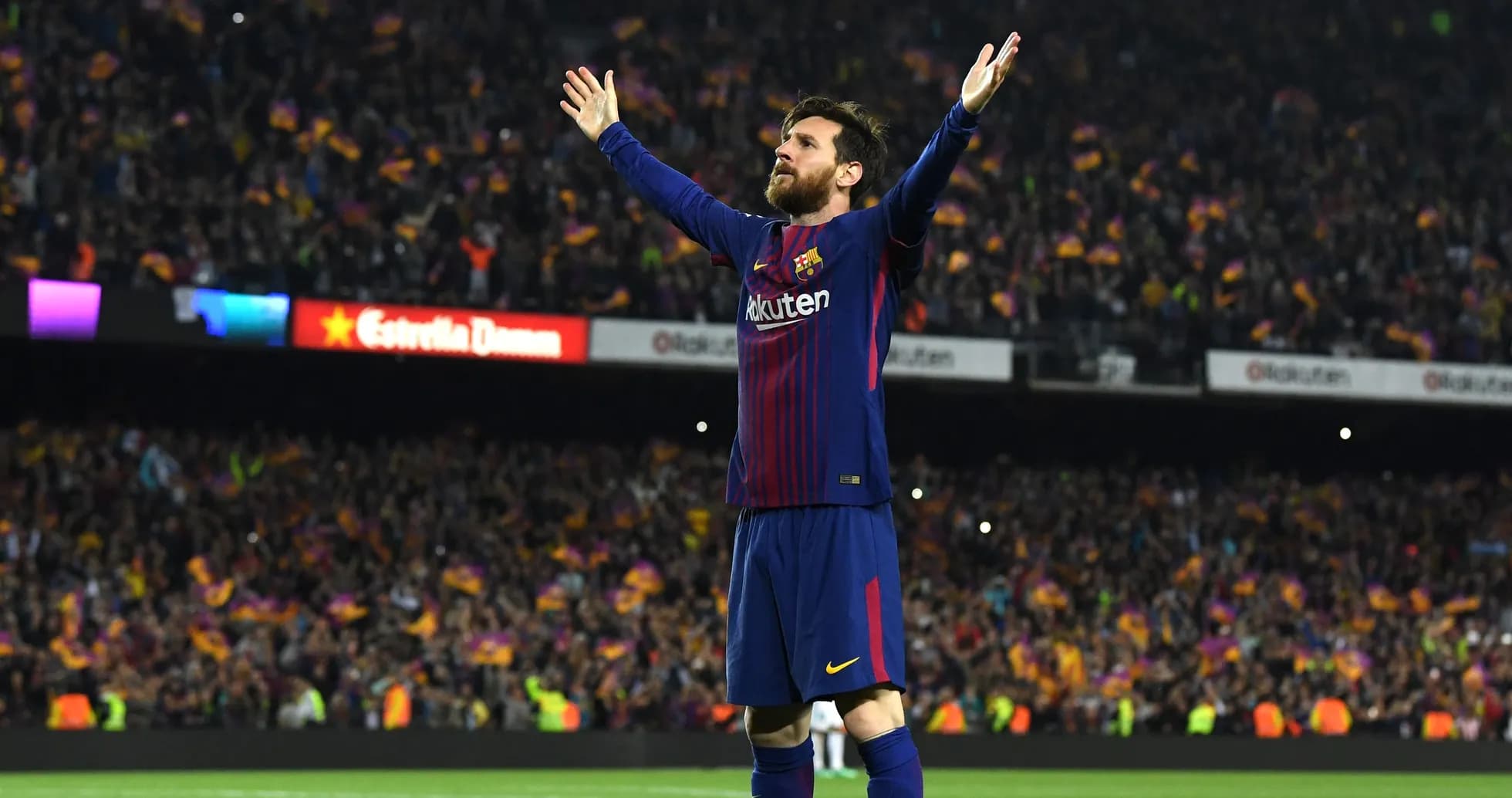
Defending champions. Overwhelming favourites. Lionel Messi at full tilt. Everything about the night was set up for Pep Guardiola’s Barcelona to restore order.
Mourinho had other ideas.
His plan was brutal in its clarity: stop Messi, strangle the spaces, live with the suffering. Inter were reduced to 10 men after just half an hour when Thiago Motta saw red, leaving them a man down for roughly an hour against one of the most devastating attacking sides the game has seen.
The Camp Nou expected a comeback. What it got was a blockade.
Barcelona pushed, probed, and pinned Inter back. Yet for all the possession and pressure, the scoreboard barely moved. Guardiola’s team could only force a 1-0 win. Over two legs, it was not enough. Inter’s 3-1 victory in Milan carried them through to the Champions League final.
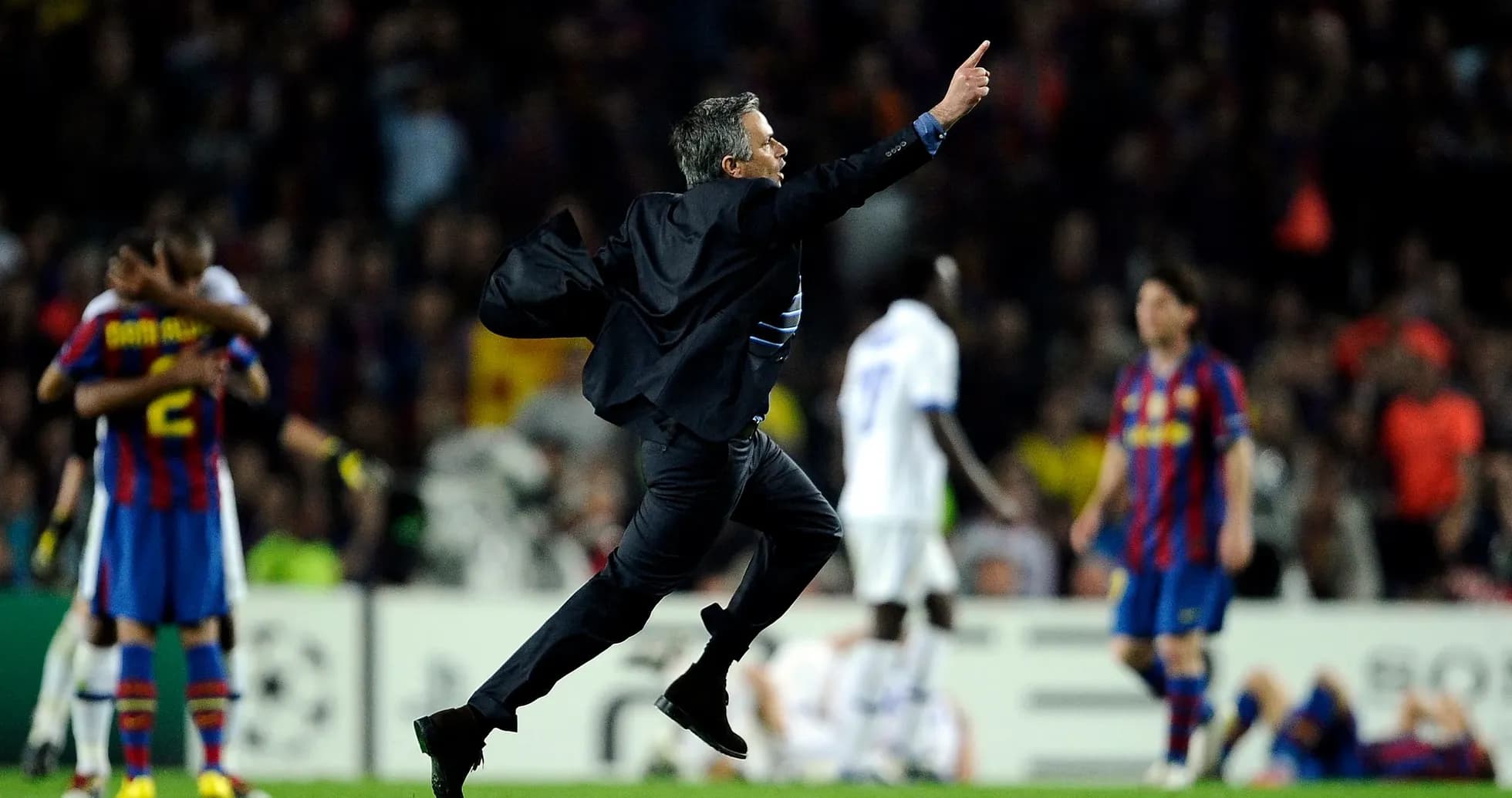
Mourinho’s response at the final whistle turned into instant folklore. Index finger raised, he charged onto the Camp Nou pitch, a solitary figure cutting through a wall of whistles and fury, celebrating wildly with his players. To some in Catalonia, it felt like a taunt. The sprinklers came on, water spraying across the turf, as if to douse Inter’s joy and flush Mourinho and his men from the scene of their triumph in defeat.
It only added to the theatre. The Portuguese coach, soaked and defiant, had just engineered what he would later call a “historic miracle”.
A few weeks later, the job was finished. In Madrid, Inter wrapped up the treble with a 2-0 win over Louis van Gaal’s Bayern Munich in the final, lifting the European Cup and sealing one of the great modern club campaigns.
That night in Spain, though, also planted a different seed. The man who had conquered Europe with Inter would soon cross the touchline to the other dugout.
Mourinho left Milan in 2010 for Real Madrid, taking over the club that measures itself by European Cups. His first spell at the Bernabéu ran until 2013, years defined by an intense rivalry with Guardiola’s Barcelona and a relentless push to end Madrid’s Champions League drought. Domestic trophies came. The big one did not.
Now, at 63, he is back in the Spanish capital for a second spell with the record champions, still chasing the one prize he never quite managed to deliver in his first stint with Los Blancos.
The pull of that history has followed him everywhere. It even turned up in a press room in Madrid.
Italian journalist Tancredi Palmeri once set himself what he called a near-impossible mission: hand Mourinho a gift in front of the cameras. “The mission is very difficult. It is almost impossible to present Mourinho with a gift here,” he said into his mobile phone, filming the attempt. “It is difficult, but we will try.”
This time, the plan worked. Mourinho accepted the present, shook Palmeri’s hand and left the room with a smile, a small, human moment from a man more often cast as villain or mastermind than willing recipient.
On Tuesday, the story loops back on itself. Real Madrid face Inter on the opening matchday of the new Champions League league phase, a meeting between Mourinho’s present and his past.
He has already carved his name into Inter’s European history. Madrid’s is richer, heavier, more demanding. The question that lingers over this latest chapter is simple: can the coach who once celebrated a “beautiful defeat” in this competition finally deliver the only version the Bernabéu truly accepts – a victorious one?