.svg&w=384&q=75 "logo")
Ireland’s Nations League Fixtures Amid Political Storm
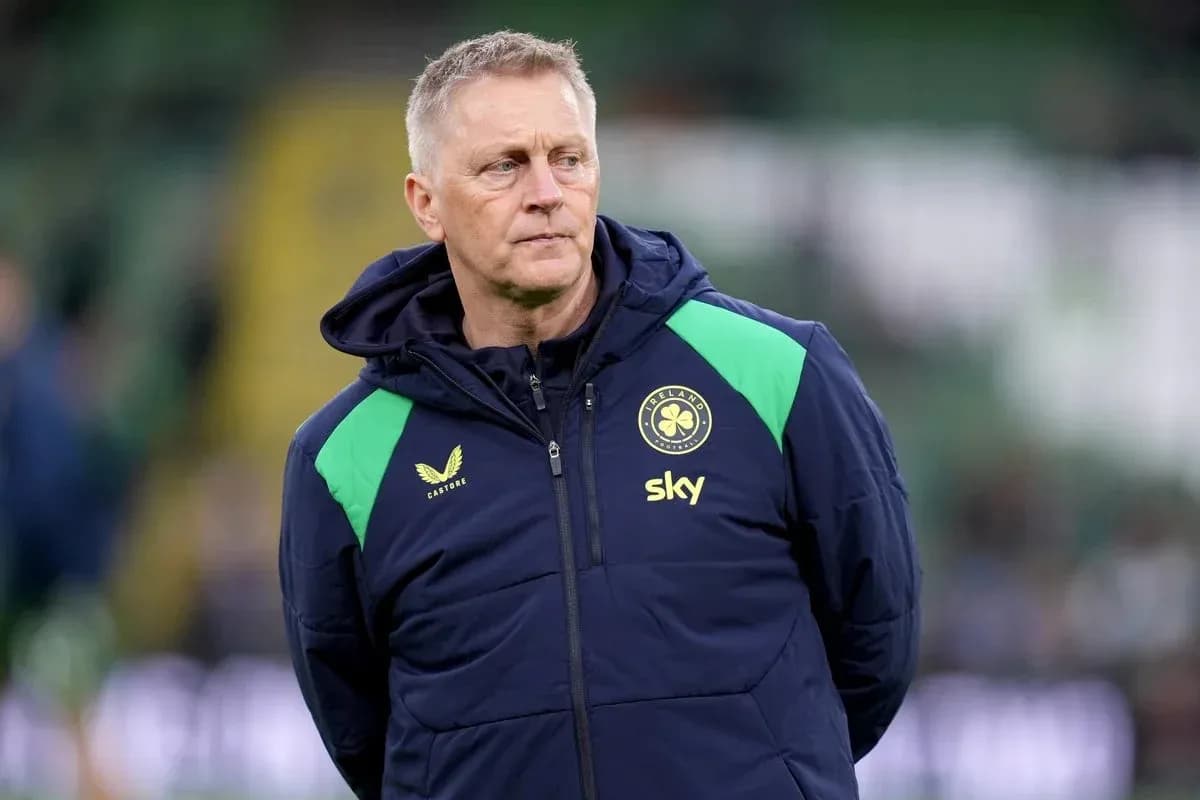
The Republic of Ireland’s Nations League campaign has been dragged into the centre of a political storm, after Israel’s football authorities branded Ireland head coach Heimir Hallgrimsson “hypocritical and stupid” over his comments on the war in Gaza.
What should have been a routine discussion about squad selection has spiralled into a furious diplomatic row, with a pair of fixtures now carrying a weight far beyond promotion or relegation.
“Playing against genocide”
Ireland and Israel have been drawn together in the Uefa Nations League, with the FAI confirming they will fulfil both fixtures despite growing calls at home to boycott the games. Security concerns mean neither match will be played in either country: the first is scheduled for Hungary on 27 September, with the return game in Serbia.
Speaking after naming his squad at the weekend, Hallgrimsson did not hide his discomfort.
“None of us feel comfortable playing in these games,” he admitted. Asked how his players could focus amid the domestic pressure to withdraw, he drew a stark line.
“We’re not playing with genocide, we’re playing against genocide. We’re playing against Israel, we’re not playing with Israel.”
Those words detonated in Tel Aviv.
Israel FA hits back
On Monday night, the Israel Football Association issued a scathing response on social media, turning Hallgrimsson’s phrase back on him and launching a personal attack rarely seen at this level of the game.
“We have contributed to the world and humanity in countless fields, earning an impressive number of Nobel Prizes along the way,” the statement read. “Unfortunately, we have not yet found a cure for stupidity, ignorance and hypocrisy displayed by @IrelandFootball team coach.
“We're not playing with ignorance, hypocrisy and stupidity, we're playing against the coach who embodies them.”
The FAI has not responded publicly to the remarks.
Behind the anger lies a conflict that has reshaped politics and sport alike. The Israeli government has vehemently rejected accusations of genocide since its military response to the 7 October attacks almost three years ago, when about 1,200 people were killed by Hamas and 250 taken hostage. More than 70,000 Palestinians have since been killed in Gaza, according to figures cited by the United Nations.
FAI walks a tightrope
The Irish governing body has been under sustained pressure for months. Campaigners have demanded a boycott of Israel across multiple sports; football, as ever, is the most visible stage.
The FAI has argued that refusing to play would come at a heavy cost. Forfeiting Nations League points could damage Ireland’s chances of qualifying for Euro 2028 — a tournament they will co-host — and future World Cups. The association has framed the decision as one that could have a “profound impact on the whole of Irish football”.
This is not a federation that has stayed silent on the broader issue. Last November, the FAI wrote to Uefa calling for the immediate suspension of the Israel FA. It has since asked European football’s governing body to keep Ireland and Israel apart in future draws. That request was rejected on the grounds that the two countries have “never been in direct conflict”.
Uefa, for its part, has stuck to its usual language of process and risk assessment. A spokesperson said decisions to avoid certain match-ups are based on “several factors, especially conditions between the two countries leading to structural risks for security,” adding that each case is handled “very carefully on its own merits”.
So the fixtures stand. The venues are neutral. The politics are anything but.
Athletes and ex-players join the protest
While administrators talk of regulations and consequences, the pressure from within Irish sport has intensified.
Over 160 Irish sportspeople have signed an open letter from the Irish Sport for Palestine Group urging the FAI to reverse course and refuse to play Israel. Their message is blunt.
“This is a significant moment and with this moment you have an opportunity to do the right thing,” the letter states. “Not playing the game would be the most sporting thing you could do.”
Former Republic of Ireland international Kevin Kilbane has added his voice, writing in the Irish Times that Ireland “should not be playing Israel. Not in Dublin, not in Hungary, and definitely not a ‘home’ match in Serbia. Not while Israeli forces are committing genocide.
“We as Irish people could have faced down the consequences together. The FAI would have had my support as a former international.”
On Monday evening, the anger moved from print and petitions to the streets. A group of protesters gathered outside the Ireland team’s hotel in Dublin, demanding the FAI overturn its decision and accept whatever sanctions follow.
A game that cannot be just a game
For Hallgrimsson and his players, the build-up to a Nations League tie now runs through a minefield of geopolitics, ethics and public opinion. Every training session, every team announcement, every word in front of a microphone is being weighed against events in Gaza and the decisions of administrators in Dublin and Nyon.
The fixtures will go ahead, unless something dramatic changes. They will be played in empty-feeling neutral stadiums, hundreds of miles from Dublin and Tel Aviv, under a spotlight that has nothing to do with tactics or form.
When Ireland walk out in Hungary on 27 September, they will not just be facing Israel. They will be walking into a judgment that stretches far beyond 90 minutes — and far beyond football.