Holger Rune's Comeback Journey: From Injury to Resilience
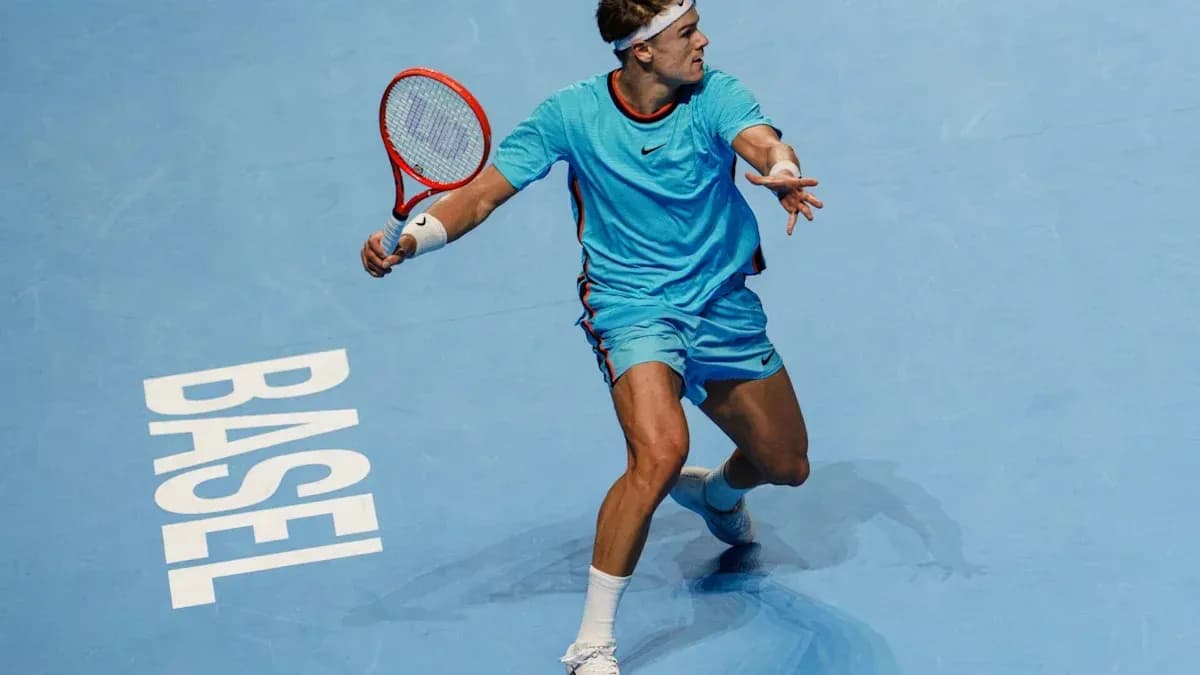
Holger Rune is still counting tournaments, not trophies, on his comeback trail. Three ATP events into his return from a brutal Achilles injury, though, the numbers already tell a story that matters far more than rankings or seedings: he’s moving, he’s competing, and the edge that once terrified locker rooms is starting to flicker back into life.
From Davis Cup cameo to a harsh reality check
Rune’s first steps back came in the cocoon of the Davis Cup, a softer re-entry before the unforgiving glare of the ATP Tour. The real test arrived in Japan, where the 23-year-old officially resumed his campaign and ran headlong into the sharp reality of top-level tennis after nearly a year out.
Kyrian Jacquet didn’t just beat him. He swept him aside.
It was a convincing defeat, the kind that strips away any illusions about how simple a comeback might be. Rune knew it, too. The performance stung enough to prompt an apology from the Dane, a public admission that he was nowhere near the standard he expects from himself.
Shanghai didn’t offer much comfort on paper either: another first-round exit. But this time, the match carried a different tone. The timing was a little sharper, the resistance stronger, the court coverage less laboured. Small things, but for a player rebuilding after an 11‑month layoff, those details matter.
The results were still ugly. The tennis, slowly, was not.
Basel: glimpses turn into substance
The first real breakthrough came in Basel, where the hints of progress finally hardened into something more tangible.
Skipping Brussels had already looked like the right call. No bravado, no rushing back into a packed schedule just to prove a point. Rune and his team chose patience, and Basel showed why that decision was universally accepted.
His first tour-level win since the injury did not come easily. Quentin Halys pushed him all the way, forcing a deciding-set tiebreak. That was exactly the kind of moment that exposes a player still unsure of his body. Instead, Rune dug in. He outlasted Halys, claimed the tiebreak, and with it ended a 373-day drought at ATP Tour level.
The rust, at least in that moment, gave way to something more familiar: grit.
Then came the statement win. Hubert Hurkacz arrived in form, armed with the kind of serve that usually punishes any hesitation or sluggish footwork. Rune went with him shot for shot, again dragged the contest into a third-set tiebreak, and again found the answers when the margins tightened.
Two matches, two deciding sets, two tiebreaks. Both in his favour. If his fitness work needed a verdict, Basel delivered it.
A three-set loss to Valentin Vacherot followed, but it did little to dim the mood around him. By then, the narrative had already shifted. Rune was no longer the player tentatively testing his Achilles. He was the competitor back in the grind, measuring himself against the tour’s standard and holding up well.
The long road back: 348 days of waiting
To understand why each of these wins feels significant, you have to go back to where it all broke.
Stockholm, October 18, 2025. Rune was leading Ugo Humbert by a set in the semi-final when his season – and almost a full year of his career – snapped with his Achilles. The injury was horrific, the kind that doesn’t just end a tournament but rewrites a calendar.
From that moment to his first official ATP match back on October 1 this year, 348 days passed. Eleven months and 13 days between tour appearances. In a sport where weeks off can feel like an eternity, that is a lifetime.
During that span, the conversation around injuries focused heavily on others. Carlos Alcaraz’s five-month absence drew constant attention. Jannik Sinner shutting down his season early became another major talking point. Both stories mattered, but quietly, almost in the background, Rune was dealing with an even longer exile.
And unlike a minor setback, an Achilles tear isn’t just physical. It challenges movement, confidence, and the instinct to push off, to sprint, to trust that your body will hold when the point tightens.
That’s why Basel resonated. It wasn’t just about shot-making. It was about seeing him throw himself into third sets and tiebreaks and not flinch.
Australia on the horizon
Rune’s season will not be defined by what happens in these few late-year events. The real target lies ahead.
With a proper off-season finally in front of him – not one spent in rehab rooms and on restricted workloads, but on court, training with purpose – the outline of 2026 starts to look very different. The tools that made him one of the most dangerous young players on tour haven’t vanished. The flashes in Basel proved that.
The question now isn’t whether Holger Rune can come back.
It’s how dangerous he’ll be in Australia once he’s had a full winter to sharpen the edge that injury tried, and failed, to dull.