.svg&w=384&q=75 "logo")
Harry Kane's Ballon d'Or Chances: Goals vs. Trophies
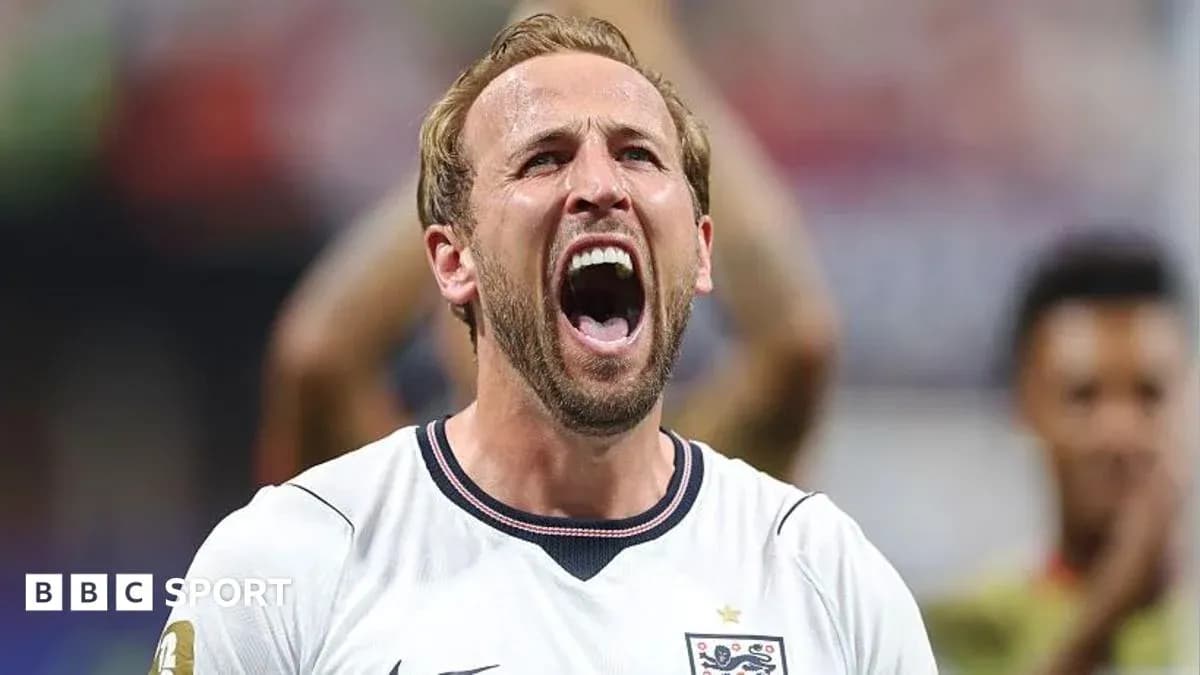
Harry Kane stands on the brink of the biggest individual prize in football, the bookmakers’ clear favourite before the Ballon d'Or shortlist drops on Tuesday. Goals have dragged him here – a flood of them for club and country.
History, though, usually demands more than a goalscoring avalanche.
Since 1956, when Sir Stanley Matthews took home the first Ballon d'Or, the award has rarely been a simple referendum on who scored the most. It has been shaped, time and again, by what happens on the grandest stages: World Cups, European Championships, Champions League finals. The biggest nights, the heaviest shirts, the trophies that define eras.
World Cup years, in particular, have left a trail that is hard to ignore. When the sport gathers under one flag and one anthem, the winner of the Ballon d'Or has almost always been there at the sharp end.
Raymond Kopa set the early tone in 1958, becoming the first World Cup-year Ballon d'Or winner after leading France to the semi-finals. Decades later, France Football went back and asked a simple question: what if the award had always been open to every nationality? In its 2016 retrospective, it concluded that a 17-year-old Pele, who inspired Brazil to their first World Cup title in 1958, would have walked away with the trophy.
The pattern repeated.
In 1962, Josef Masopust officially claimed the Ballon d'Or after captaining Czechoslovakia to the World Cup final. Yet again, France Football’s review pointed to a Brazilian. Garrincha, the genius who drove Brazil to back-to-back World Cup crowns, was judged the true standout.
By 1970, the verdict was even more emphatic. Pele, orchestrating Brazil’s third World Cup triumph, was deemed the obvious choice had the rules allowed it. Alongside those reassessments sit the official winners whose medals needed no reinterpretation: Bobby Charlton in 1966, Paolo Rossi in 1982, Lothar Matthaus in 1990, Zinedine Zidane in 1998, Ronaldo in 2002, Fabio Cannavaro in 2006. All World Cup winners. All Ballon d'Or winners.
Even when the trophy escaped the hands of the world champions, it rarely strayed too far. Johan Cruyff’s 1974 run to the final with the Netherlands still redefined how the sport was played. Luka Modric’s 2018 campaign carried Croatia, improbably, to the last match in Moscow. Both lost the final. Both lifted the Ballon d'Or.
There have been exceptions to World Cup supremacy, but they underline the rule.
Kevin Keegan claimed the 1978 award despite England not even reaching the tournament. France Football’s retrospective, though, argued that Mario Kempes – top scorer and talisman of Argentina’s home World Cup win – would have been the rightful winner. The same logic applied when the magazine revisited 1986 and 1994: Diego Maradona and Romario, the faces of World Cup-winning South American sides, were judged the best in the world.
Taken together, that review painted a stark picture: had the Ballon d'Or always been open to every player, every South American World Cup-winning team between 1958 and 1994 would have produced the winner.
And it is not just the World Cup that bends the vote.
Modern history has hardened the link between major trophies and the Ballon d'Or. In the last 19 editions, only four winners failed to lift at least one of the Champions League, World Cup, European Championship or Copa America in their winning year.
Those four names tell their own story: Lionel Messi and Cristiano Ronaldo, at the peak of their powers, bending the rules by sheer force of performance. Messi won in 2010 despite Argentina going out in the World Cup quarter-finals, then again in 2012 and 2019 without a major international or continental title. Ronaldo did the same in 2013, Portugal stuck in the World Cup play-offs, his season with Real Madrid too spectacular to ignore.
Others have discovered how unforgiving the voting can be. Wesley Sneijder’s treble with Inter Milan and run to the 2010 World Cup final. Franck Ribery’s central role in Bayern Munich’s 2013 treble. Mohamed Salah’s record-breaking 2017-18 with Liverpool. Seasons that would define careers, but not enough when voters chose different narratives.
This year, that tension between individual brilliance and collective glory returns – and Kane is right in the middle of it.
He arrives with a season that would make any forward jealous, the sort of numbers that usually plant a player firmly in the conversation. Yet the field around him is stacked with players whose years have been framed by medals and finals.
Rodri stands as perhaps his most serious rival. Already a former Ballon d'Or winner, he was Spain’s metronome and enforcer at the World Cup, the player who seemed to be everywhere at once. He left the tournament with the Golden Ball and a second World Cup winner’s medal for his country, a combination voters have rarely ignored.
Lamine Yamal brings a different kind of story: a World Cup winner’s medal as a teenager, part of a Spain side that conquered the world, layered on top of a season in which he helped Barcelona reclaim La Liga. The Fifa Young Player Award, though, went to his team-mate Pau Cubarsi, whose composure and performances lit up the tournament.
Then come the familiar giants of the modern era.
Kylian Mbappe finished as the World Cup’s top scorer with 10 goals, and still found time to claim both the Champions League Golden Boot and La Liga’s top scorer award. He did all that without France reaching the final and with Real Madrid ending the season empty-handed in terms of major honours.
Messi, at 39, remains impossible to ignore. He captained Argentina to a second straight World Cup final and scored eight times at the tournament, stretching his relevance at the top of the game into a third decade.
Against that backdrop, Kane’s candidacy becomes a test of what the Ballon d'Or truly values.
If he wins, he will be only the fifth Englishman to do so, following Matthews, Charlton, Keegan and Michael Owen. He would also break new ground for the Bundesliga, becoming the first player representing a club from Germany’s top flight to lift the trophy since Matthias Sammer in 1996.
The weight of history leans away from him. The pattern says: win the biggest prizes, then collect the golden ball. Kane’s case says something else – that one of the most prolific goalscoring seasons of the modern era should be enough on its own.
Now the decision falls to the international jury, one journalist from each of the top 100 nations in the men’s game. They must choose between the old logic of trophies and the raw, relentless numbers of a striker at his peak.
Is this the year the Ballon d'Or bends for the goalscorer who did almost everything – except lift the biggest cup?