.svg&w=384&q=75 "logo")
Germany's Goalkeeper Debate: Who Will Succeed Neuer?
When Jürgen Klopp steps in front of the cameras on 17 September to unveil his first Germany squad, the usual debates about full-backs and forwards will fade into the background. The real fight is in goal.
Who follows Julian Nagelsmann’s brief Manuel Neuer encore as the new No. 1?
Nübel’s case grows in Istanbul
For Thomas Helmer, European champion in 1996 and long-time Bayern defender, the picture is already coming into focus.
“Looking at it right now: Nübel, who is playing sensationally in Istanbul and simply has match practice, is certainly a candidate,” he told Sport1.
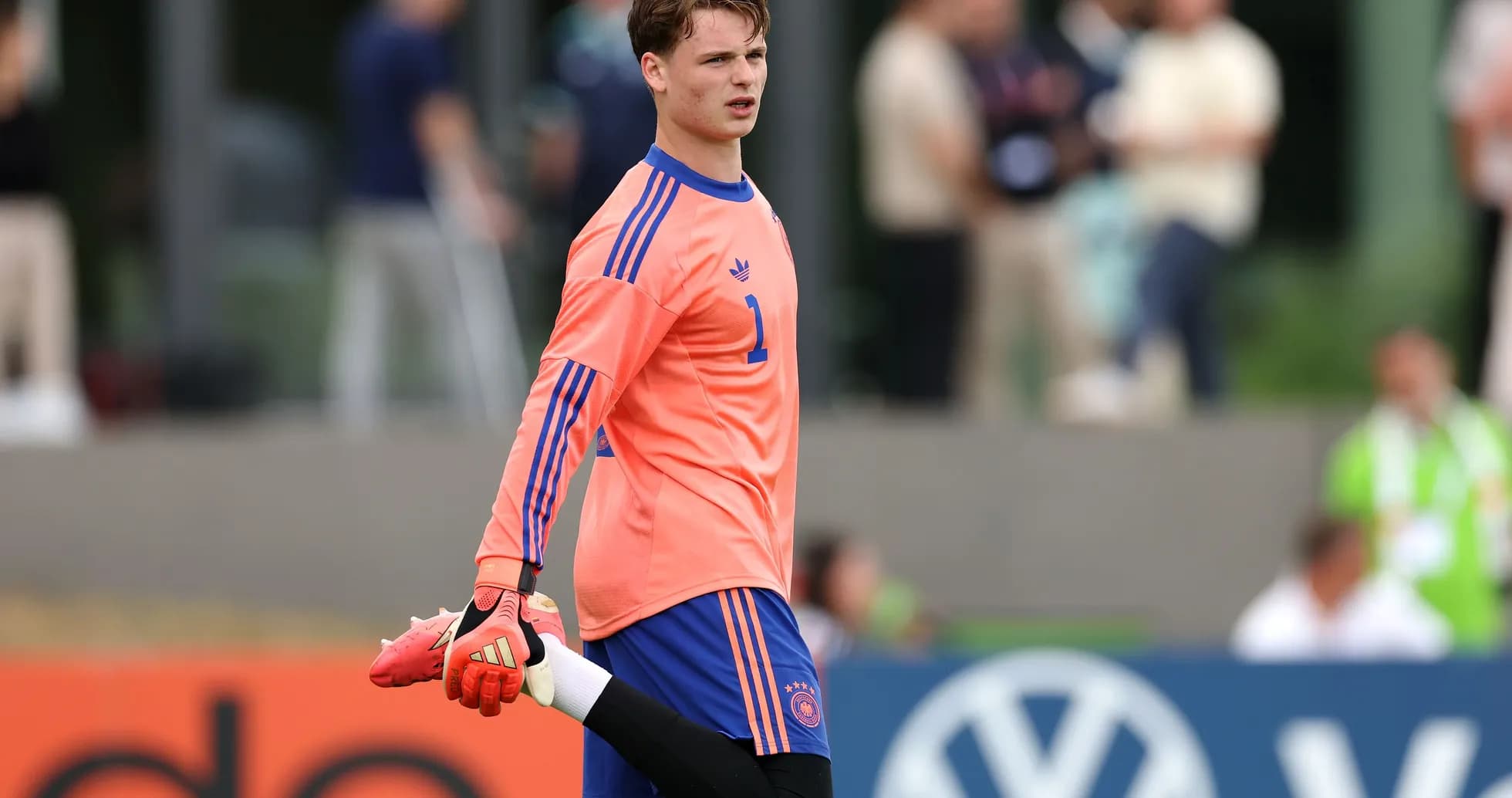
Alexander Nübel has done exactly what every restless No. 2 dreams of: he left Bayern Munich, took a risk, and is now thriving at Besiktas. Six clean sheets in his first nine competitive games – those are not the numbers of a stopgap, they’re the numbers of a goalkeeper playing with authority.
The performances have pushed him to the front of the conversation. Yet even Helmer, as impressed as he is, refuses to call the race.
It remains, he says, a “big question” who will ultimately succeed Neuer.
Life after Neuer
Germany have lived in a goalkeeping era defined by one man for more than a decade. Neuer briefly returned for a last tilt at the 2026 World Cup, wrestled back his starting spot from Oliver Baumann, and restored a familiar hierarchy. Then came the final decision: retirement, this time for good.
The throne is empty. The names keep coming.
Plenty of experts are already pushing Jonas Urbig, Neuer’s designated heir at Bayern. The young keeper travelled to the World Cup as a training goalkeeper, working alongside Neuer, Baumann and Nübel, but never made the official squad list. Still, his presence in that inner circle has only fuelled the belief that he is next in line.
Helmer is not convinced.
Urbig’s minutes under scrutiny
“The question is how much playing time he will really get under Vincent Kompany,” Helmer warned. It is a pointed question, because the answer so far is brutally simple: not much.
Just one cup game against Osnabrück. That is Urbig’s tally at senior level for Bayern at this stage. Helmer stressed he meant no disrespect to the opposition, but the conclusion is unavoidable: that sample size is far too small for anyone who wants to guard Germany’s goal.
At Bayern, the line is clear. Club officials insist Urbig will get his minutes behind first-choice goalkeeper Neuer. The plan sounds logical on paper: learn from the master, grow in training, ease into the role.
Helmer doesn’t buy that as a route to the national team’s No. 1 shirt.
“In the goalkeeping position, you need someone who plays all the time,” he said. Training sessions and occasional cup outings do not win you the trust of a nation.
A door opens for the old guard?
As the debate rages around Nübel and Urbig, another name hovers in the background: Marc-André ter Stegen. Long cast in the shadow of Neuer at international level, the Barcelona keeper suddenly finds a familiar door opening again.
The DFB has made no declarations yet, but with Neuer gone and Klopp starting from scratch, the conversation inevitably drifts back to the most experienced active alternative. A potential DFB comeback for ter Stegen now feels less like a romantic notion and more like a realistic option on Klopp’s desk.
Klopp’s first squad will not just reveal his taste in systems or his attitude to veterans. It will show how ruthlessly he values match rhythm over potential, form over reputation.
Nübel is playing. Urbig is learning. Ter Stegen is waiting.
On 17 September, Germany will find out which of those profiles Klopp trusts to carry a new era.