.svg&w=384&q=75 "logo")
Filip Hrgovic Shocks Moses Itauma at O2 Arena
Filip Hrgovic tore up the script at the O2 Arena, dragged a young star into deep water and left Moses Itauma’s world-title dream in ruins.
For eight rounds, the night looked built for the 21-year-old. The story was written, the coronation seemingly a formality. A heavy favourite, unbeaten in 14, talked up as the next great heavyweight force, Itauma appeared to have too much speed, too much snap, too much swagger.
Then the tank emptied. And Hrgovic, hardened by years at the elite level, was still there.
A blistering start, a brutal finish
The build-up had crackled all week. Itauma had shoved Hrgovic, the Croatian had slapped him back, and the verbal back-and-forth left no doubt: this was personal. When the fighters finally emerged, the arena chose its side early.
Hrgovic walked in first, draped in Croatia’s red-and-white checks, greeted by a wall of boos. Moments later, Itauma arrived to a thunderous roar, soaking up the adulation, a young man entirely at ease with the idea that this was his stage and his era.
He began like it, too.
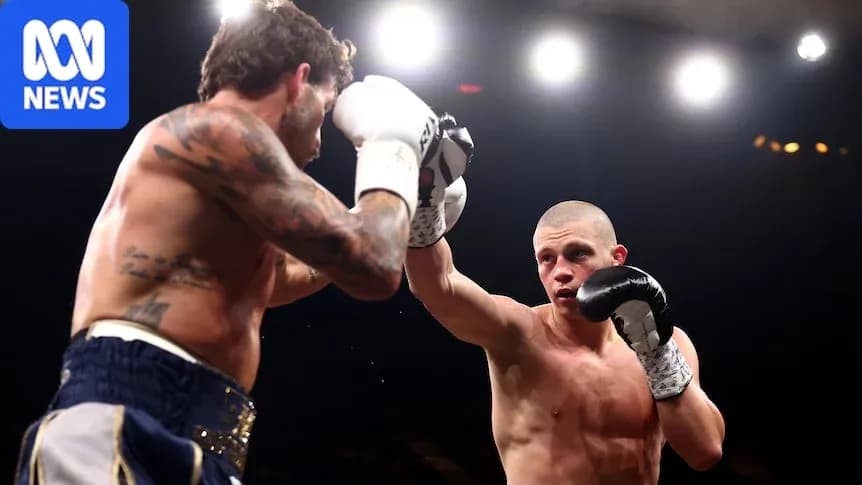
From the opening bell, Itauma came out with intent, sharp from his southpaw stance, spearing straight lefts through Hrgovic’s guard. The Croatian, renowned for his durability, struggled to live with the Briton’s early pace. Itauma’s hands were quicker, his feet lighter, his work rate relentless.
Early in the second round, the arena erupted. A right hook from Itauma clipped Hrgovic, sent him off balance, and his glove brushed the canvas. It was ruled a knockdown. Oasis star Noel Gallagher and Prince Naseem Hamed watched on as every Itauma punch drew gasps, whether it crashed home or sliced through thin air.
The momentum felt one-way. The hype looked justified.
But there was a tell.
By the end of the third, Itauma’s chest was heaving. He had boxed just 26 professional rounds before this, his first world-title shot. He was dominating, but he was burning fuel at a frightening rate.
Hrgovic noticed.
Experience bites back
Questions had hovered over Itauma’s chin, not because it was suspect, but because no one had really touched it. Hrgovic began to test it, dropping in the odd heavy shot. Itauma took them well, snapping back with combinations, refusing to yield an inch.
A brief scuffle in the crowd stole attention in the fifth, but Itauma dragged it back with a crisp uppercut in the closing seconds. The pattern remained the same: Itauma letting his hands go, Hrgovic absorbing, assessing, surviving.
The sixth and seventh brought a subtle shift. Itauma still landed big rights, including a huge one on the bell in the sixth and another in the seventh, but Hrgovic barely blinked. He just walked through them, his feet plodding forward, his expression unchanged.
On the cards, Itauma was in control. He could have boxed his way home, managed the distance, taken the belt the safe way. Instead, he kept chasing the emphatic finish, the knockout to match the noise around him.
The cost was obvious. Between exchanges, he grimaced, his face tightening, his breathing ragged. The combinations that had flowed early now looked laboured. His shoulders sagged on the stool.
The danger, by then, was flashing in neon.
The storm turns
In the eighth, Itauma summoned one more surge. A flurry of punches forced Hrgovic back to the ropes, the Croatian briefly in trouble. The crowd sensed the moment and rose with him, but the effort drained what was left in the youngster’s legs. The punches no longer had the same snap. The arms looked heavy.
Hrgovic, an Olympic bronze medallist whose only professional defeat had come against Daniel Dubois, had seen this movie before. He had felt Itauma’s best, ridden it out, and now he could smell the fatigue.
He came out for the ninth with a different purpose.
A thudding right hand crashed through Itauma’s guard and sent him staggering backwards, almost tumbling through the ropes. Somehow, he stayed upright, but his legs betrayed him. They wobbled, then stiffened, then seemed to disappear altogether.
Hrgovic did not hesitate. He pressed forward, punching with cold clarity as Itauma swayed, his body folding into the corner, his defences all but gone. The Briton, who had looked untouchable for so long, now appeared utterly spent.
His corner saw what he could not fight through. The towel flew in.
The referee waved it off. The arena, stunned, fell into a confused mix of silence and scattered applause. The script had been torn to shreds.
A lesson at the highest level
Itauma received medical attention in the ring before being taken out of the arena on a stretcher, a sobering image on a night that had promised a coronation. The IBF heavyweight title, vacant and there for the taking, slipped away. A win would have made him the second-youngest world champion in the division’s history. Instead, it became a harsh education.
Hrgovic, booed on his way in, left with a different kind of respect. He had been under fire early, dropped in the second, outworked for long stretches, but he never lost his composure.
“He is the best I have been in the ring with, but he needs more experience,” Hrgovic said afterwards. “I knew I was losing the round, but I knew that I had the pace in my favour. He needs more experience, but he is one of a kind.
“From the first round, I saw his gassing out. He started fast. I knew he was going to gas out. I knew when my chance came I needed to push. That is what I did.”
On a night built to launch a new superstar, it was the seasoned contender who showed the value of patience, resilience and timing. Itauma had the talent. Hrgovic had the years, the scars, the understanding of what 12 rounds at world level really demand.
The belt now moves on with Hrgovic. The questions, though, will follow Itauma. How quickly can he turn a brutal first defeat into the foundation of a better, more complete fighter—and how long before he dares to climb back to this level again?