.svg&w=384&q=75 "logo")
Champions League 2024: Can PSG Achieve a Three-Peat?
The Champions League anthem is about to roll around Europe again, and on 5 June in Madrid one club will climb the steps and grab the trophy that defines seasons and careers. The question, as ever: who survives the chaos to get there?
PSG chase history. Arsenal smell opportunity. Bayern lurk. Barcelona are gathering speed. And a handful of rising stars and ambitious outsiders believe this might just be their year to crash the party.
Can anyone stop PSG’s three‑peat dream?
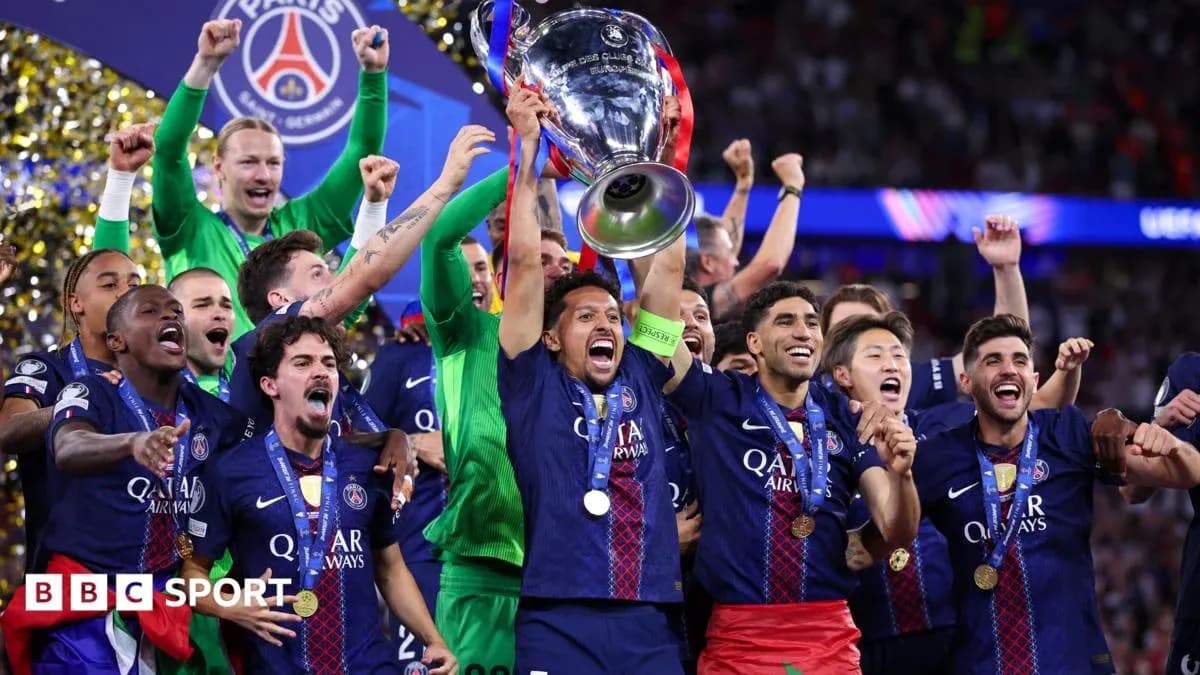
Paris St‑Germain walk into this new league phase with a target on their back and a chance at immortality. Two titles in a row have turned them from Champions League punchline into the benchmark. A third would be unprecedented in the modern era.
Julien Laurens does not see it happening.
“If PSG do the three-peat, it would be an incredible achievement. I don't think they will do it,” he says. Two in a row is already rare air. Three? That’s the realm of dynasties built around players like Cristiano Ronaldo. PSG don’t have him. They do have depth, experience and a manager in Luis Enrique who refuses to stand still, but Laurens still draws the line at the semi-finals.
He expects them to go deep again, to at least the last four. But to go all the way for a third straight season? “Tough,” he says, and he means it.
Guillem Balague sees the strain too. PSG’s start to the domestic season has flickered rather than roared. Luis Enrique is pushing them to play at the cutting edge – dynamic, aggressive, with a pressing game that drains legs and minds. The league phase, in his eyes, becomes a laboratory: a place to experiment, to suffer a few odd results, to get the details right before January turns the temperature up.
The spine is there, the know-how is there. Balague expects them “very close” to the trophy again. But even for champions, the margin for error is shrinking.
Arsenal and Bayern circle the throne
If PSG wobble, who steps in?
Laurens keeps coming back to two names: Bayern Munich and Arsenal. Not because they shout loudest, but because their work over the past two seasons has given them a serious body of evidence.
He does not buy fully into the Jose Mourinho–Real Madrid project yet. The pedigree is obvious, the club is built for nights like these, but belief in that particular mix of coach and squad is not universal. So Laurens looks elsewhere for his finalists.
Bayern and Arsenal, he argues, have “deserved to be there the most in the past two seasons” outside of PSG. Bayern have retooled around Harry Kane, whose numbers and consistency keep him right in the Ballon d’Or conversation. The club’s style suits him perfectly: crosses, cut-backs, constant service. He will not lack chances; he rarely wastes many.
Arsenal, though, are Laurens’ pick to win it all.
He points at the thing that often decides Champions League ties when the noise dies down: defending. “They have the best defence in Europe by far and that's what wins you titles,” he says. Last season’s run to the final broke a psychological barrier. Now they know the route, the rhythm, the pressure. Now they arrive as contenders, not tourists.
Laurens’ podium is clear: Arsenal to lift the trophy, Bayern as “close runners-up”, PSG again among the last four.
Balague largely agrees on the hierarchy. For him, Arsenal have found something intangible but vital: the habit of winning. That weight off their shoulders has released them. Players look freer, decisions sharper, performances more mature. He expects them in the semi-finals.
The other usual suspects hover. Real Madrid, even in transition, never really leave this competition. Manchester City remain capable of beating anyone over two legs. Balague sees those three – Bayern, Real, City – as fighting for the fourth semi-final spot, draw permitting.
Barcelona rising under Flick
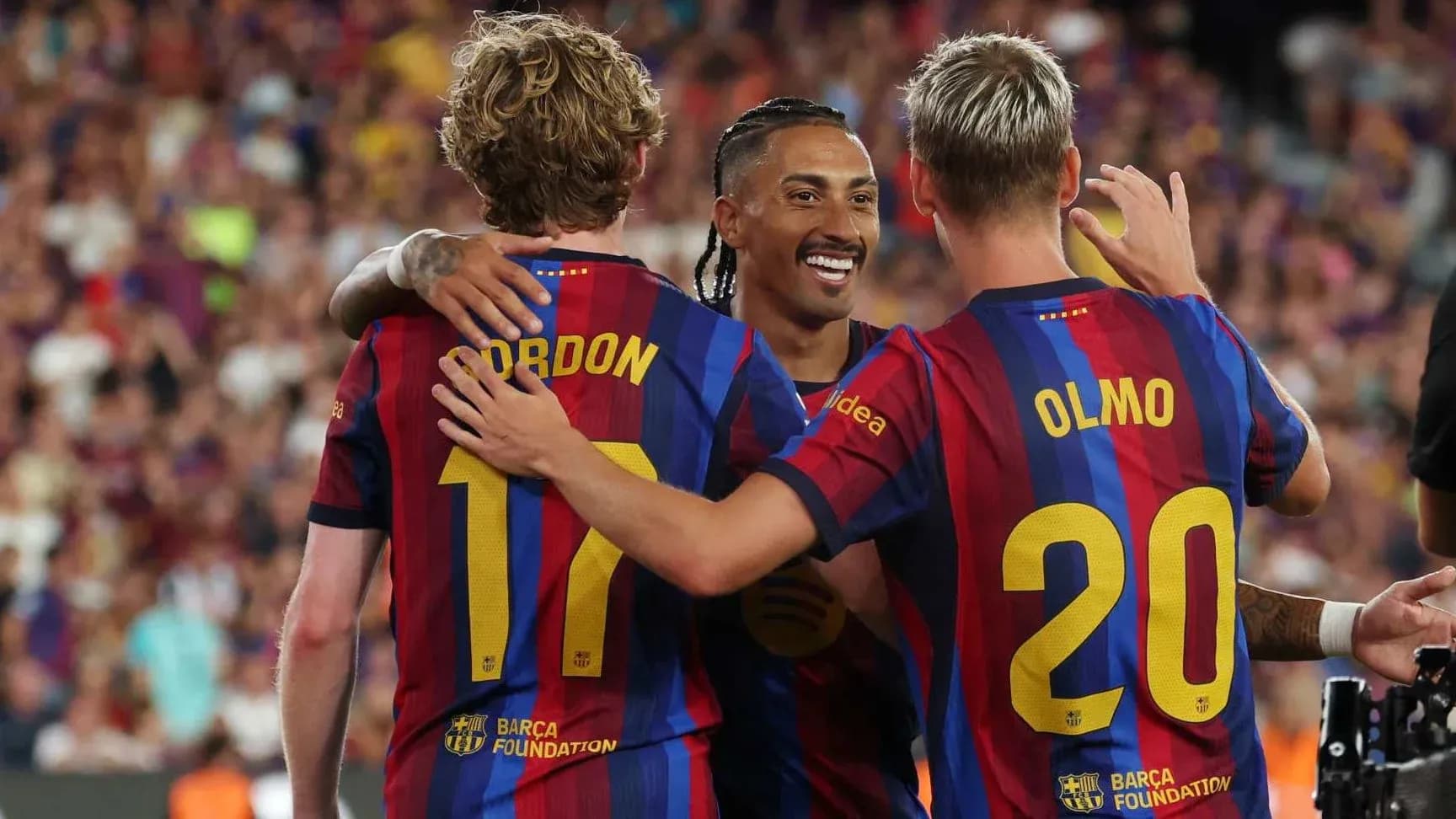
One club arrives with a different kind of energy. Barcelona are not just winning; they are “flying”, in Balague’s words.
Hansi Flick wants more: another centre-back, a true number nine. The wish list is clear, the gaps obvious. Yet he already feels his team is climbing towards the top regardless. The plan is bold – defend high, defend with emotion, suffocate opponents – and it suits the emerging core.
Teenager Lamine Yamal embodies that new wave. He is not satisfied with cameos or potential. He wants the Champions League, now. Flick’s high line and aggressive press give him space to run at tired defenders and games to tilt with a single action. Balague sees a player “hungry for more”, and a coach intent on building the stage around him.
Barcelona are not as complete as some rivals, but they are dangerous, and they know it.
Stars to shape the season
Laurens and Balague both circle names who could bend this Champions League to their will.
For Laurens, Jude Bellingham sits at the top of that list. Stationed as a number 10 under Mourinho at Real Madrid, he carries the momentum of a standout World Cup into a role that seems built for his timing and temperament. This is a “very big season” for him, individually and collectively. Laurens expects goals, leadership, decisive moments.
Then there is Como’s Nico Paz. Number 10, heartbeat, creator. Como are debutants in the Champions League, coached by Cesc Fabregas and committed to playing with style. Paz is “at the heart of everything they do with the ball” and, in Laurens’ eyes, a star in the making who will not stay under the radar for long.
Khvicha Kvaratskhelia needs no introduction now. “Mr Champions League,” Laurens calls him. The Georgian has been electric for PSG over the past two campaigns, especially last season on that left wing. He can cut inside, go outside, finish with either foot. He scores spectacular goals, he beats men for fun, he drags fans to the edge of their sofas. Laurens has him firmly in the Ballon d’Or conversation.
Balague agrees: Kvaratskhelia has “another level” to hit. With PSG expected to go far again, he sees the winger rescuing games, deciding ties, winning the sort of nights that stick in voters’ minds. For him, it is a matter of time before Kvaratskhelia wins the Ballon d’Or.
Laurens also flags Lens centre-back Ismaelo Ganiou. Just 21, strong, quick, comfortable on the ball, he was crucial as Lens pushed PSG hard in Ligue 1 last season. Back in the Champions League, he looks destined for a move – Laurens expects a big Premier League club to come calling next summer.
Then there is Donyell Malen. Since leaving Aston Villa for Roma, he has transformed into a ruthless lone striker under Gian Piero Gasperini, scoring almost a goal per game. Roma’s return to the Champions League under an attack-minded coach makes them must-watch again, and Laurens believes this campaign will show Malen “back to his best level”.
Balague’s list adds more intrigue. Beyond Kane, Yamal and Kvaratskhelia, he highlights Shakhtar’s Kaua Elias, the latest Brazilian forward to emerge from a club that has turned such talents into major European transfers for years. At 20, he could be next in line.
And then there is Martin Odegaard. Last season stalled by injuries, this one has started with authority. The Norwegian can “dominate games”, Balague says, and Arsenal – more confident now, more sure of themselves – will need him to dictate big European nights. He looks ready to embrace that leadership.
Fabregas’ Como and the outsiders’ gamble
Beyond the giants, this new format opens the door for ambitious clubs to test their ideas against the elite.
Balague is fascinated by Como. Fabregas has turned down offers over the past two years to stay and build. He coaches with freedom, unafraid of mistakes, secure enough to experiment and refine. In Balague’s eyes, he has “swum against the tide” and now stands at the front of modern football’s tactical train. With Paz orchestrating, Balague expects Como to reach the knock-out stages in their first attempt.
Others face steeper climbs.
LASK showed their mettle by knocking out Celtic. The Austrians will aim for a home win, maybe two, and a respectable points haul in their first Champions League campaign. Balague doubts it will be enough to qualify, but they have already proved they can compete.
Sabah of Azerbaijan arrive as one of the most intriguing unknowns. Their success rests on organisation, on structure. The draw, though, is brutal: trips to Arsenal and Manchester United, home games against Barcelona and Borussia Dortmund. Balague predicts one or two surprise results, the sort of nights that shake a group, but not enough to see them through.
Then there is Viking. Bayern, Atletico, Napoli, Aston Villa – a brutal schedule on paper. Yet Norwegian football has quietly filled itself with sharp coaches and competitive squads. Balague believes Viking could ride that edge and sneak into the knock-outs, turning a daunting group into an opportunity.
Madrid awaits
So the stage is set. PSG defend a crown that feels heavier by the year. Arsenal and Bayern sense a window. Barcelona are accelerating. Real Madrid and Manchester City lurk in the shadows, waiting for the spring.
Around them, a generation of players – Bellingham, Kvaratskhelia, Yamal, Paz, Kaua Elias, Odegaard – prepare to leave their mark on a season that ends in Madrid.
Someone will walk out at the Bernabéu on 5 June with everything on the line. The only certainty now is that the road there will twist, crack and break a few giants along the way. Who’s built to survive it?