.svg&w=384&q=75 "logo")
Bryant Jennings Returns: Chasing Brandon Moore in a Win-or-Go-Home Fight
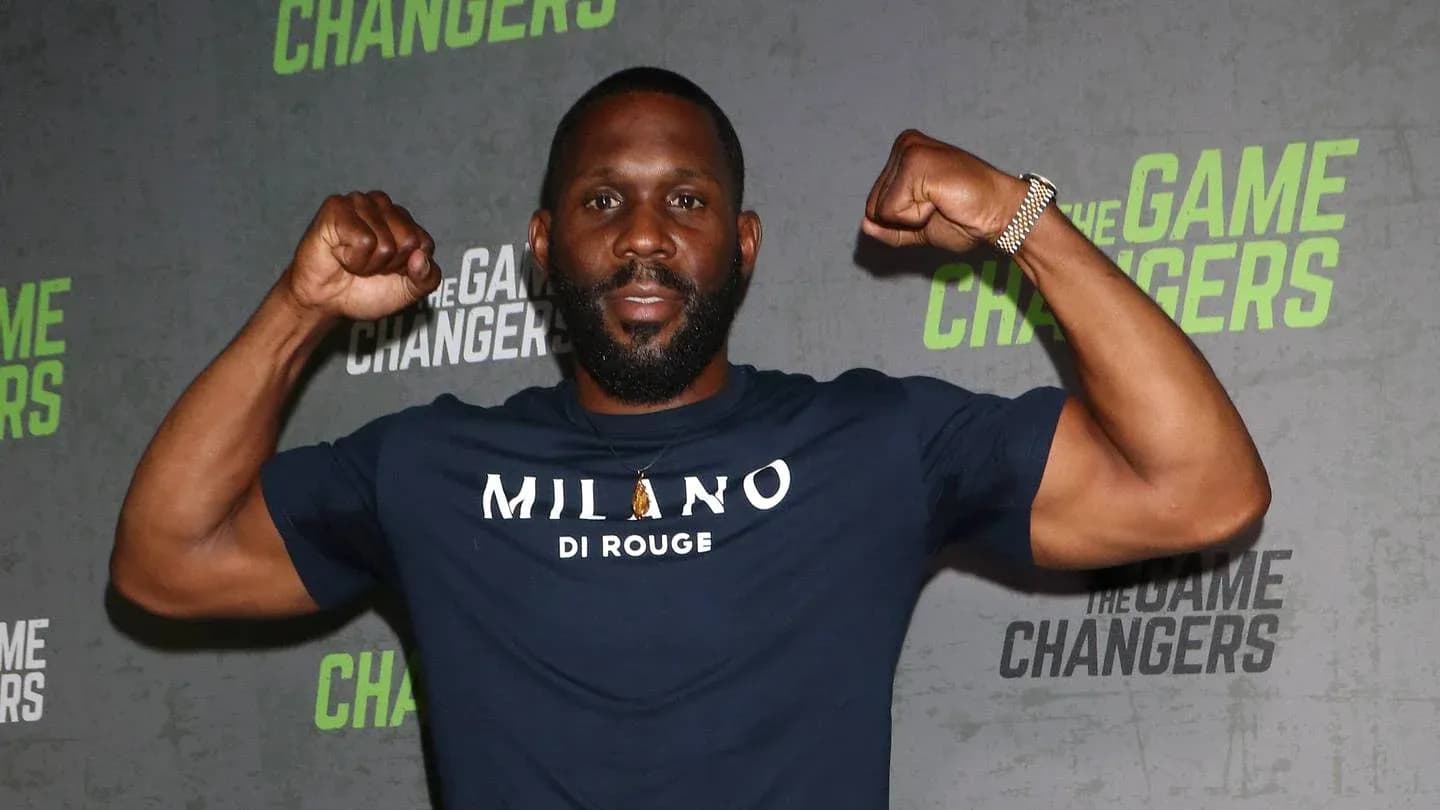
Bryant Jennings is back under the lights, chasing time as much as he’s chasing Brandon Moore.
On Saturday night at the Fox Theatre in Detroit, the 41-year-old heavyweight steps into a ten-round main event on Salita Promotions’ “Big Time Boxing” series knowing exactly what’s at stake. He’s called it a “win-or-go-home situation.” At this stage, that isn’t a slogan. It’s a career line in the sand.
The last of a Philadelphia line
Jennings comes from a city that insists boxing is in its bones, even as he shrugs at the idea of a defined “Philly style.” He’s one of the last acolytes of that old fight town, even if he says the scene, as it once was, doesn’t really exist anymore.
Philadelphia’s roll call is brutal and brilliant: Bernard Hopkins, Bennie Briscoe, Matthew Saad Muhammad, Dwight Muhammad Qawi, Joe Frazier, Jersey Joe Walcott, Danny Garcia, Julian “J-Rock” Williams. Today, the brightest star is Jaron “Boots” Ennis, a welterweight who stands between rounds the way the old heads used to, a quiet nod to tradition.
The “Philly shell” made famous by Floyd Mayweather Jr. is the surface-level image: lead hand low across the body, rear hand tight to the chin behind the shoulder. But Jennings knows it’s more than a stance.
“I wouldn’t say that a certain style defines Philly boxing anymore; maybe a demeanor or attitude or some other attribute you can’t exactly put your finger on,” he said.
He’s probably right. Philly boxing isn’t just about how you stand. It’s about what you’re willing to endure. It’s being schooled enough to outbox a man, but hard enough to break him in whatever way the night demands. It’s the blue-collar training, the unorthodox methods, the refusal to sit between rounds.
Even its most famous fighter never existed. Rocky Balboa is a movie creation, yet the image of Sylvester Stallone pounding sides of beef came from reality. Joe Frazier did that. In Philadelphia, myth and sweat have always overlapped.
From the Federal Reserve to Klitschko
Jennings’ own path fits neatly into that lineage. Before he laced up gloves in 2009, he worked maintenance at the Federal Reserve Bank of Philadelphia, clocking in at 7:30 a.m. He was a regular man with a regular job who decided late that he would try to do something extraordinary.
Six years later, he was standing in a ring with Wladimir Klitschko, fighting for the heavyweight championship of the world.
“I don’t think anything went wrong that night with Klitschko. I think it was a good opportunity for me,” Jennings recalled to KO On SI. “I had only started boxing in 2009, and in 2015, to be in a position to face Klitschko was a great opportunity. If I hadn’t taken that opportunity, who knows if I would have got a chance to face him with the time remaining in his career.”
Klitschko was 39 then, edging toward the end. Jennings pushed him but came up short, then rolled straight into another world-title shot that same year, this time against Luis Ortiz for the WBA belt. Again, he walked away empty-handed.
The dream had materialized, twice. The belt never did.
Five years away, one more run
After a disputed loss to Joe Joyce in 2019, Jennings stepped away. No farewell tour. No drawn-out decline. Just a hard stop and five years out of the sport.
He says those years taught him a lot about himself. Whatever he found in that time pulled him back to boxing in 2024, older, clearer, and fully aware of the odds.
He returns now on Wynn Records Network, older than Klitschko was when they fought. The Ukrainian legend was 39 that night in 2015. Jennings walks to the ring at 41, still lean, still sharp, but deep in the twilight where heavyweights either reinvent themselves or get pushed out.
“It’s not necessarily the end goal, but I am definitely looking to extend my legacy. I would definitely love to fight for a heavyweight world title, but this fight is a win-or-go-home situation,” he told KO On SI.
There’s no pretending otherwise. One more title shot might be out there. It might also vanish with a single bad round.
Bad blood in Detroit
Across from him stands Brandon Moore, a fellow American contender and a man Jennings has no interest in liking.
The bad blood isn’t manufactured. Their rivalry traces back to a training camp in Dubai, where tension simmered long enough to survive the miles and the years. They’ve traded barbs throughout the build-up, both men convinced the other is a stepping stone.
Jennings, for his part, doesn’t bother keeping in touch with former opponents. Win or lose, they leave his life when the final bell rings. If he beats Moore on Saturday, that won’t change.
Perhaps it’s a Philly thing.
Detroit will see whether that old Philadelphia attitude still has one more big night in it, or whether the man who walked away for five years finally reaches the end of the road he once sprinted down from the Federal Reserve to the world stage.