.svg&w=384&q=75 "logo")
Binghamton Carousel Classic: A Unique Community Tennis Festival
VESTAL, N.Y. – What started as a creative early-season tune-up has quickly grown into one of the most distinctive tennis weekends on the collegiate calendar.
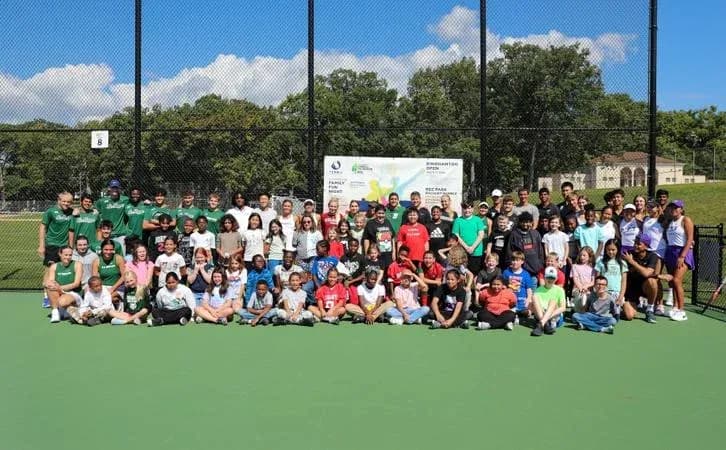
Binghamton University Tennis will stage the Carousel Classic for the second straight year from Sept. 11–13 at Recreation Park in Binghamton, turning a public park into a three-day showcase of how wide the sport’s reach can be when everyone gets a place on court.
This is not just another fall invitational. It’s a festival.
A full spectrum of tennis in one park
Across the three days, the Carousel Classic will roll out Division I college matches, college club competition, high school tennis and, for the first time, a full adaptive tennis clinic and tournament.
Friday sets the tone early. Division I and Collegiate Wheelchair matches start at 9 a.m., laying out the dual heartbeat of the event: high-level competition and inclusive opportunity. A youth clinic for Horace Mann students runs from 11 a.m. to noon, then match play resumes at midday and carries through to around 5 p.m.
Saturday belongs to adaptive tennis. An adaptive clinic opens the day at 9 a.m., giving athletes with disabilities hands-on coaching and court time before matches begin around 10:30 a.m. and run into the late afternoon. On Sunday, play starts again at about 9 a.m., with Collegiate Club matches taking over from noon and running through the afternoon.
The schedule is packed, but deliberate. Every block of time is designed to overlap different corners of the tennis world, so a young Horace Mann student can watch a Division I player on one court and a wheelchair athlete on the next.
Adaptive tennis steps into the spotlight
The most striking evolution of this year’s Classic is the formal launch of adaptive tennis programming. It’s not a token exhibition but a full clinic and tournament, built to give athletes with disabilities a competitive, welcoming setting rather than a side show.
Wheelchair programs from University of Michigan, University of Houston and Fresno State will travel in, fielding both men’s and women’s squads. They will share the courts with Division I men’s teams from Binghamton, Buffalo and Bucknell, and women’s teams from Binghamton, Buffalo and Colgate.
The mix is intentional. Top conference contenders, regional rivals, and national wheelchair powers all in the same public park, with shared courts and shared clinics.
Men’s head coach Nick Zieziula underlined the scale of what’s coming, calling it a “pretty unique” weekend across college sports, one that puts community and access on the same stage as early-season measuring-stick matches. For his team, it doubles as a sharp test against programs sitting at the top of their respective conferences.
Community at the core
Behind the scenes, the Classic is a major lift. To keep it free-flowing and open to the public, Tennis Charities of Binghamton is actively seeking corporate sponsors and community partners to underwrite event-wide costs and help fuel the youth and community programming threaded through the weekend.
That community angle runs through the coaching staffs as well. Women’s head coach Paul Caceres highlighted the return of the youth clinic with Horace Mann Elementary students and the added energy of the new adaptive programming. For his side, the Carousel Classic is more than a curtain-raiser; it’s the first real look at a reshaped roster.
The women’s team will unveil four new players, joining returners such as Apara Khandare, Angel Walia and Samantha Jaros. Their first swings of the fall will come not in a quiet, tucked-away facility, but in the middle of a city park buzzing with kids, club players and wheelchair athletes.
Bearcats set their early standard
On the men’s side, Binghamton arrives with unfinished business. The Bearcats finished runner-up in the NEC Tournament last season and now bring back key pieces in Andre Ajed, Filipe Costa and Harry Liao. Four newcomers join that core, adding fresh intrigue to the early-season lineup battles.
The Carousel Classic gives that group a chance to test itself immediately, not just in scorelines but in how it carries the expectations of a contender in a public, high-traffic setting.
By Sunday afternoon, the results will be logged, the courts swept, and the park will slip back toward normal. But for three days in September, Recreation Park becomes something rare in college sports: a shared stage where a conference title hopeful, a beginner from Horace Mann, and a wheelchair national standout can all call the same baseline home.