.svg&w=384&q=75 "logo")
Alexander Zverev Wins US Open: From Heartbreak to Triumph
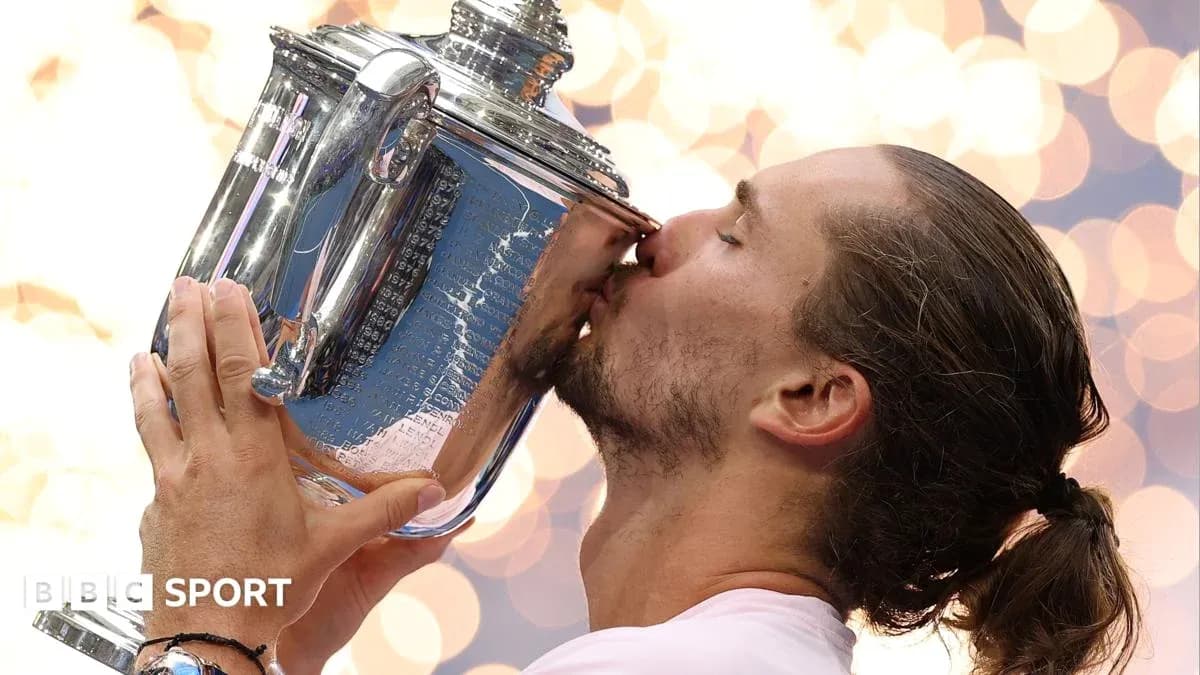
Alexander Zverev walked to the baseline with a ghost at his back.
Six years earlier on this same court, he had served for the US Open title and watched it slip through his fingers. Two sets up on Dominic Thiem, then broken in the fifth, then broken in pieces. That night in 2020 ended in tears and a line that stayed with him: “I wish one day I can bring the trophy home.”
This time, he did.
On Sunday in New York, the German closed the circle, beating American Ben Shelton 6-3 7-6 (7-2) 5-7 6-2 to add a US Open crown to the French Open title he won in June. The player who once crumbled on this stage now stood as a two-time major champion, and the transformation could not have been clearer.
Shelton had the crowd. Almost all 24,000 of them. Zverev had something else.
A tunnel vision so complete he didn’t even realise he had won.
Match point came and went in a blur. Another heavy, unreturnable first serve, another Shelton miss. Zverev turned, walked back to the baseline and settled into his routine, ready for what he thought was the next point. Only when his box erupted and his team shouted across the noise did the reality land.
“In that moment I was in the zone a lot. I didn't hear noise at all,” he said later. “It's funny – tennis teachers always tell you to just play the next point and forget about the score. At that moment I forgot about the score and it helped me.”
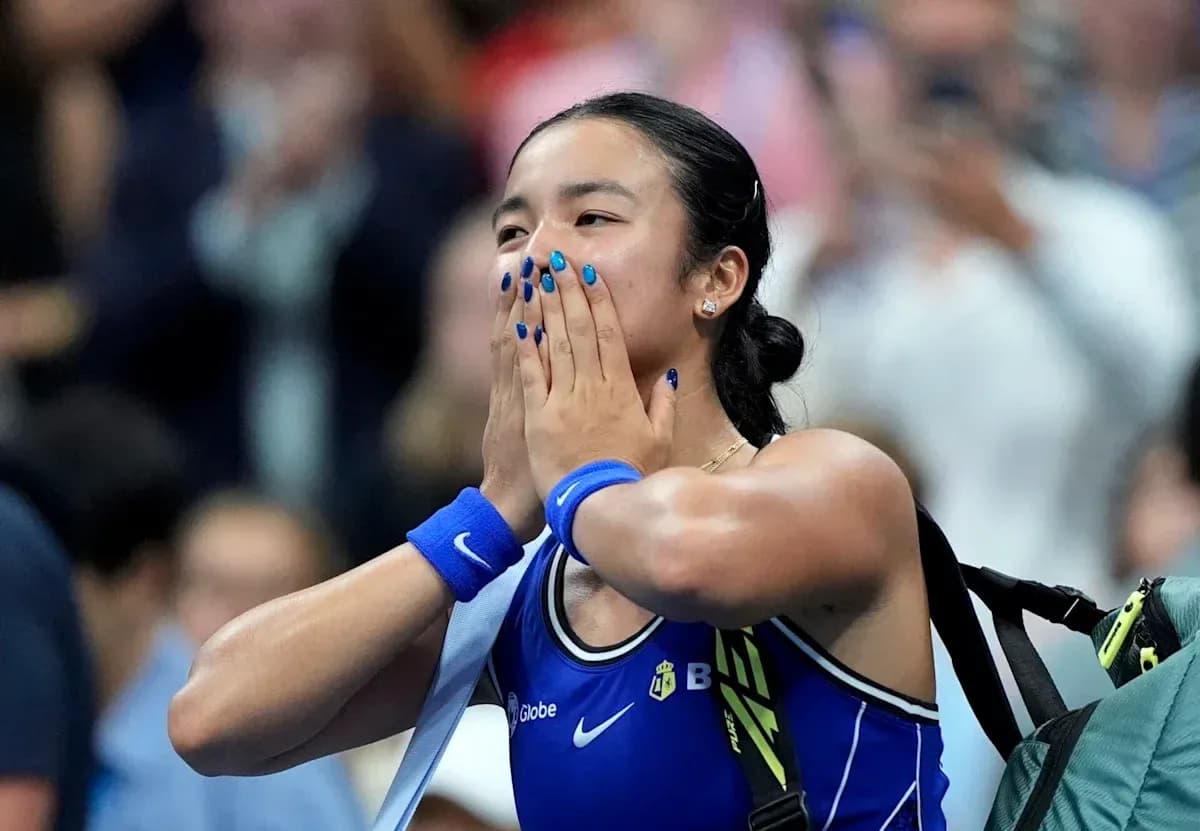
The delayed reaction produced a rare sight: Zverev, usually tight-jawed in victory, breaking into a wide, almost disbelieving smile before lifting his arms to the sky. No collapse, no sobbing speech, just a man who had finally dragged himself to where he always believed he should be.
From heartbreak to hardware
The contrast with 2020 could hardly be starker. Back then, his parents were not in the stands at Flushing Meadows. His body language screamed anguish. His voice cracked as he spoke of the trophy he could not yet touch.
Now, Alexander Zverev Sr. was courtside as coach and father, watching his son complete a year that has redefined his career. His mother, too, loomed large in his thoughts, even if she was not on the bench.
Diagnosed with type 1 diabetes as a child, Zverev grew up hearing limits. His mother refused to accept them.
“When doctors tell you that life and sports will be very limited for that child, it takes a very strong mother to say: ‘my son will be whatever he wants to be’,” Zverev said. “My mother is the most important and strongest person I know.”
The line carried more weight than any celebration. This was not just about a missed chance in 2020, but about years of being told what he could not do, then spending 2026 proving the opposite.
The season of his life
World number two, two majors in three months, semi-finals in Melbourne, a Wimbledon final. This is not the Zverev who once hovered on the edge of greatness and never quite stepped through.
“Yes, he has been aided by injuries to Jannik Sinner and Carlos Alcaraz, who swept the majors in the past two seasons. The landscape opened. He stormed through it.
The numbers tell part of the story. Twice he went five sets in the opening rounds in New York, grinding through late-night marathons that ended in the early hours. In the first round, he stood two points from defeat. He survived, then sharpened. From the third round until the final, he did not drop a set.
The body held. The mind, long questioned, held even firmer.
“There is no-one as fit as Zverev, he is right up there,” said former Wimbledon champion Marion Bartoli on BBC Radio 5 Live. “You can argue about Alcaraz and Sinner, and Novak [Djokovic] and Rafa [Nadal] when they were in their prime physically, but Zverev is right up there as one of the best athletes to play the sport.”
That fitness underpinned everything. He chased, slid, reset, again and again, refusing to give Shelton the chaos the American thrives on. With a partisan crowd roaring for the home player, Zverev simply refused to engage with the noise.
Silence in the storm
Shelton brought his usual fire. Fist pumps, roars, big serves, explosive forehands. The stadium fed off it. On another night, that wave might have swept an opponent away.
Zverev never let it.
He took the first set with authority, edged the second in a tie-break with cold precision, then absorbed the inevitable surge when Shelton snatched the third. There was no panic, no visible anger, no sense that history might repeat itself.
He kept his emotions locked down, his expression almost blank, his tempo unchanging. The grip on the match never loosened, even when the scoreboard briefly suggested danger.
“I'm so admiring of his strength of character and the zen-like state he's been in since the very beginning of the match,” said former British number one Annabel Croft. “The most extraordinary thing was – and I don't think I've ever witnessed it – was that he didn't realise he had won. It was so bizarre, but it was like he was in a trance-like state while he was playing.”
A trance, yes. But an earned one. Built on the scar tissue of 2020, the grind of five-set escapes, the conditioning sessions that made him, in Bartoli’s words, “one of the best athletes to play the sport.”
Germany’s new era
For German tennis, this is more than a personal redemption story. “We went 30 years without winning a Grand Slam title and now we've won two in three months,” Zverev said. A drought that once defined a generation now feels like ancient history.
“2026 is the outcome of all the years that happened before,” he added.
It sounded less like a boast and more like a verdict. On the injuries he has overcome. On the doubts about his temperament. On the night in New York when he walked to the line, saw his past waiting for him – and this time, served straight through it.