.svg&w=384&q=75 "logo")
Zverev vs Shelton: A Grand Slam Final with Historic Stakes
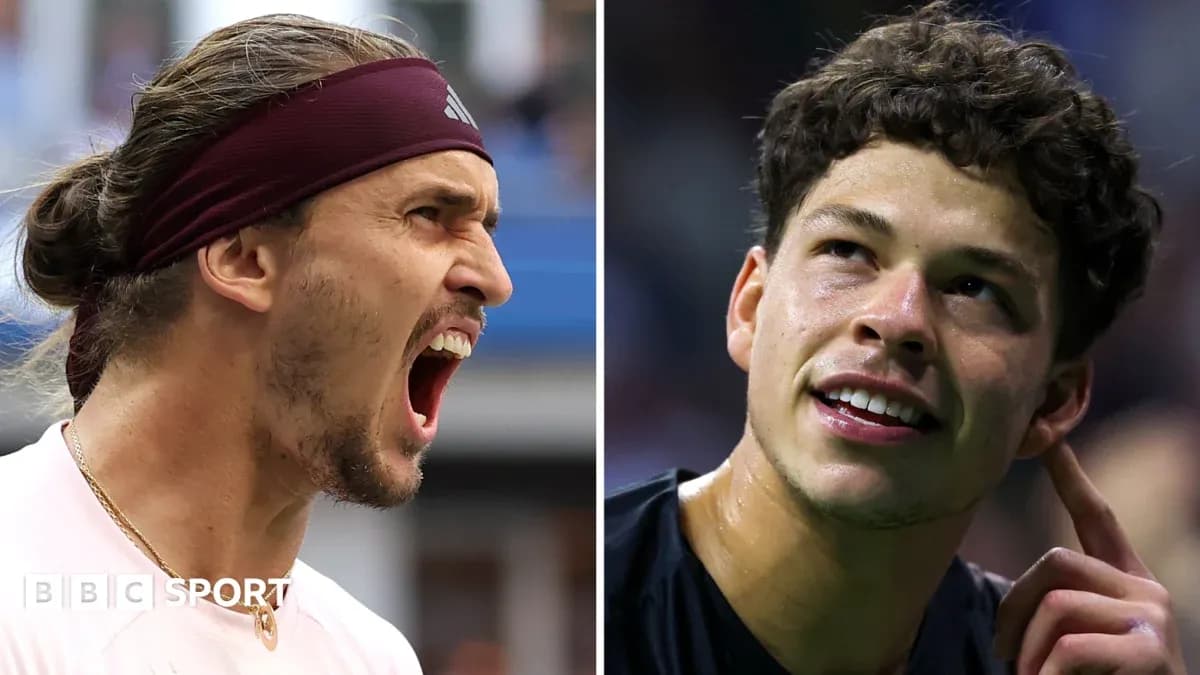
Alexander Zverev and Ben Shelton will walk into Arthur Ashe Stadium on Sunday knowing this: whatever happens, 2026 has already changed their careers.
For Zverev, the year has finally broken the spell. For Shelton, it has blown the doors off what he thought was possible.
Zverev steps out of the shadows
For seasons, Alexander Zverev lived in the long, bright glare of Jannik Sinner and Carlos Alcaraz. The pair hoarded majors in 2024 and 2025, earned a shared nickname – “Sincaraz” – and left everyone else scrambling for scraps.
Many quietly decided Zverev had missed his window.
Three Grand Slam finals, three defeats. A brutal collapse from two sets up against Dominic Thiem in the 2020 US Open final. A lingering sense that, when the moment turned heavy, Zverev’s belief thinned out.
This year has ripped up that script.
He arrived in 2026 as a perennial contender, not a champion. By June, he was lifting the French Open trophy, beating Flavio Cobolli in Paris to finally silence the doubts that had followed him through every Slam run. At Wimbledon he pushed again, only to fall short against Sinner in the final.
Now, in New York, he has stitched together a third straight major final. It has not always been pretty. He slogged through early rounds at Flushing Meadows, often finishing in the small hours, his level fluctuating, his opponents unseeded or outside the top 20. But he survived. Then he sharpened.
At 29, with one major in his pocket and another within reach, Zverev stands as a slight favourite on Sunday. At the start of the year, the idea of him winning two Grand Slams in a single season would have felt fanciful. Not anymore.
Injuries to Alcaraz – absent from Roland Garros and Wimbledon – and Sinner, forced out of the US Open, cracked the door open. Zverev has barged through.
Asked if he believed he could end 2026 with more majors than the two men who have defined this era, he did not blink.
“I believed in it. I believed that it's possible. I think not many of you guys did,” he said. “I think the question was always: Is Carlos and Jannik going to play all four Grand Slam finals between each other again? Of course, it was a very legit question with how the last two years went. I'm happy with how this year went so far, but I've got another big match on Sunday.”
The scars of 2020 will be there when he walks back into a US Open final. The difference now is he carries a champion’s memory as well.
Shelton, the showman with history at his back
On the other side of the net, Ben Shelton brings something entirely different: raw electricity and the weight of a nation’s hope.
The 23-year-old American has turned this US Open into a coming‑of‑age story. He arrived still tagged as a huge talent, a dangerous floater, a showman with a 140mph serve and a highlight reel forehand. He leaves it as a Grand Slam finalist who has cut through the game’s elite.
“For me, this whole tournament has been uncharted territory,” he admitted. “I'm in positions I've never been in before. I've beaten guys I've never beaten before.”
He has never beaten Zverev, though. Five meetings, five defeats. To become the first American man in 23 years to win a Grand Slam singles title, he will have to flip that record on the biggest stage of all.
The stakes run deeper than the scoreboard. Shelton is bidding to become the first home US Open men’s champion since Andy Roddick in 2003. He could also become the first black American man to win a singles major since Arthur Ashe in 1975.
When a reporter pointed out the “lot of history” on the line after his semi-final win over Frances Tiafoe, Shelton flashed a grin and replied: “Is there?” The smile didn’t hide the significance. He knows exactly what this could mean.
Former world number four James Blake framed it starkly.
“Having another black American in the final leaves you wondering how many kids and adults are watching that maybe wouldn't have been otherwise,” he told BBC Sport. “They are going to be inspired to hear Ben's story and see someone that looks like them out there playing and competing in a sport that has historically been dominated by the sense of a country club white sport.”
Shelton’s tennis has done justice to that platform. The serve has been as advertised – regularly clearing 140mph over the fortnight – but this run has been built on more than pure firepower. His defensive work has tightened, his backhand no longer a glaring target. He has learned to stay in rallies, to suffer.
“Ben has been trending in the right direction throughout this year. I think four titles on different surfaces is evidence of it,” said his father and coach, Bryan Shelton. “He's willing to suffer a little bit in the rallies, go deeper and really use his athleticism.”
Those four titles tell the story of a player rounding out his game: Dallas on indoor hard, Munich on clay, Stuttgart on grass, the Canadian Open on outdoor hard. Different surfaces, same outcome. A pattern of growth.
The signature moment of this fortnight came in the quarter-finals. Facing Alcaraz – a seven-time Grand Slam champion returning after almost five months out – Shelton had never beaten a top-three player. He walked off court at 3:34am with an epic win and a new ceiling.
A final loaded with meaning
Zverev and Shelton arrive at this final from opposite directions.
Zverev, the top seed, has built a season on persistence, on finally converting years of “almost” into something tangible. He has not faced a top-20 opponent in New York yet. On Sunday, that changes.
Shelton, the eighth seed, has already proved he can take down the sport’s giants. Now he must solve a man he has never cracked, in a match that will test not just his game but his nerve.
The German knows the pain of a US Open final slipping away. The American has never stood this close to the sport’s summit. One plays to cement a late-career surge. The other plays to ignite an era.
Shelton will have 24,000 voices roaring for him inside Arthur Ashe Stadium. Zverev will have his own hard-earned conviction.
Only one of them walks out with a second Grand Slam title of the year, or a first that could redefine American tennis for a generation.