.svg&w=384&q=75 "logo")
Zverev Claims Second Major Title at U.S. Open 2023
NEW YORK — The wait goes on for American men’s tennis. Alexander Zverev’s surge, though, shows no sign of slowing.
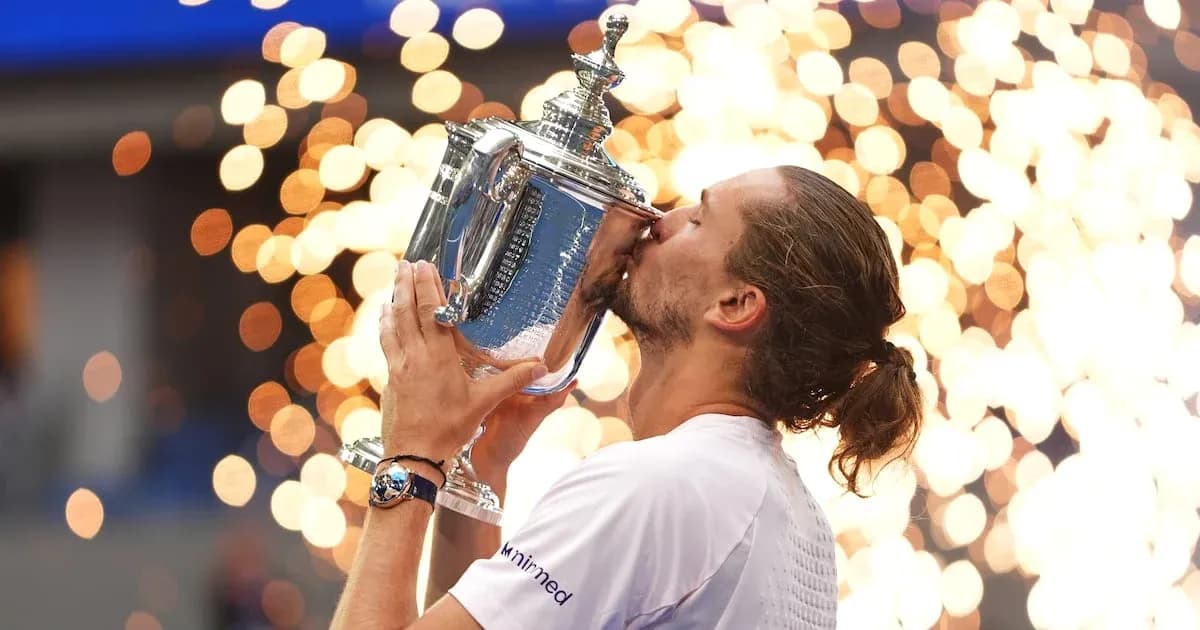
On a sticky Sunday night in Arthur Ashe Stadium, Zverev walked into the cauldron and walked out a two-time major champion, beating Ben Shelton 6-3, 7-6 (2), 5-7, 6-2 in the U.S. Open final. He quieted a crowd that arrived ready to witness history and left with another reminder of how hard that history is to write.
For Zverev, this is the year everything finally aligned. The French Open title in June broke open a door he had been pounding on for a decade. In New York, he strode straight through it. Four years after he let the 2020 U.S. Open slip from a two-set lead against Dominic Thiem, the German returned to the scene of his most painful defeat and claimed the trophy that got away.
The ghosts? Gone. Stamped out under the lights.
Zverev owns the moment
Top seed at a Grand Slam for the first time, Zverev arrived in Queens as the man with the target on his back. By Sunday, that target had shifted. Shelton carried the hopes of a restless tennis nation and the weight of history: trying to become the first American man to win a major since Andy Roddick in 2003, and the first Black man to lift the U.S. Open men’s trophy since Arthur Ashe in 1968.
The crowd made its choice early. When Shelton burst from the tunnel, fans rose to their feet and roared, desperate for a changing of the guard.
His serve betrayed him before he could give them anything to believe in.
Serving first, Shelton opened with two lost points and closed the game with a double fault. It set the tone. Zverev, methodical and unhurried, locked onto that early break and never let it go. The set ended the way it began: Shelton at the line, another double fault, another groan from the stands.
Zverev’s tempo strangled the atmosphere. He bounced the ball again and again — sometimes 10 times, sometimes closer to 20 — stretching out the silence, forcing the stadium to live on his rhythm, not Shelton’s. When the chair umpire warned fans for cheering first-serve misses, it only underlined how little they could rattle him. He had told everyone he enjoyed a hostile crowd. He played like it.
A brutal tiebreaker
Shelton’s first real surge came in the second set. The forehand began to crackle, the first serve found its range, and the noise inside Ashe finally sounded like a New York final. He pushed Zverev to a tiebreaker with the match hanging in the balance.
The pressure only sharpened Zverev.
Shelton sent back the opening return long. Then Zverev threaded a passing shot that drew a gasp, followed by a 16-shot rally that ended with the German on top and a 3-0 lead on the board. The air went out of the building.
Then came the artillery. A 147 mph serve. Then 124 mph. Both untouchable. Shelton clawed back to 5-2 and finally got a return in play, but Zverev still took the point and slammed down a 139 mph bomb to close the breaker, 7-2. Two sets in hand, and a stranglehold on the night.
Shelton, the No. 8 seed, had arrived in this final on the back of a marathon. He had knocked out defending champion Carlos Alcaraz in a five-set quarterfinal that ended at 3:33 a.m., the latest finish in U.S. Open history. He had ridden that wave to his first major final, and he was one set from being overwhelmed in it.
Shelton swings back, but the gap remains
The 23-year-old refused to go quietly. In the third set, he finally cracked Zverev’s armor. The American’s power game began to land, the forehand whipping through the court, the crowd back on its feet with every surge.
Shelton took the third 7-5, breaking Zverev’s control of the baseline and, for a moment, the narrative. This was the version of Shelton the crowd had come to see: fearless, explosive, feeding off the noise and giving it right back.
Any hint of a full-scale comeback, though, ran straight into Zverev’s new reality. This is not the player who froze in 2020. This is a man who has now played finals at Roland Garros, Wimbledon, and the U.S. Open in the same season, who walked into New York as the top seed after Jannik Sinner’s knee injury forced the world No. 1 to withdraw.
When the match tightened, Zverev didn’t blink. He reset, raised his level, and shut the door.
In the fourth set, Zverev’s serve returned to its earlier dominance. The rallies shortened. The errors crept back into Shelton’s game. The American, who had been trying to become the first player since 1975 to beat both the No. 1 and No. 2 seeds en route to the U.S. Open title, ran out of answers.
Zverev broke, then broke again, pulling away to a 6-2 finish. Shelton did manage to do something he had rarely done in this matchup: take a set. He is now 0-6 against Zverev, with Sunday marking only the second time he has pushed him beyond three sets.
A champion at last, and a question that lingers
For Zverev, this trophy cements the transformation. A second major of the year, a first U.S. Open, and validation in the city where he once suffered his harshest lesson. He has turned a reputation for squandered chances into a season of seized ones.
For Shelton, the story is different but no less compelling. This run, capped by a loss rather than a coronation, still feels like a beginning. His power, his flair, his ability to ignite a stadium suggest he will be back on this stage.
The American drought, though, stretches on. Since Roddick in 2003, no U.S. man has finished the job at a Slam. Shelton had the draw, the game, and the crowd. He had already toppled the defending champion. He had a shot at history.
Zverev took it from him.
The 23-year-old will almost certainly get more chances. The question now, for a country that has waited more than two decades, is simple and unforgiving: how many more nights like this will pass before one of them finally finishes the climb?