.svg&w=384&q=75 "logo")
Golden State Warriors Face Dilemma with Podziemski Trade
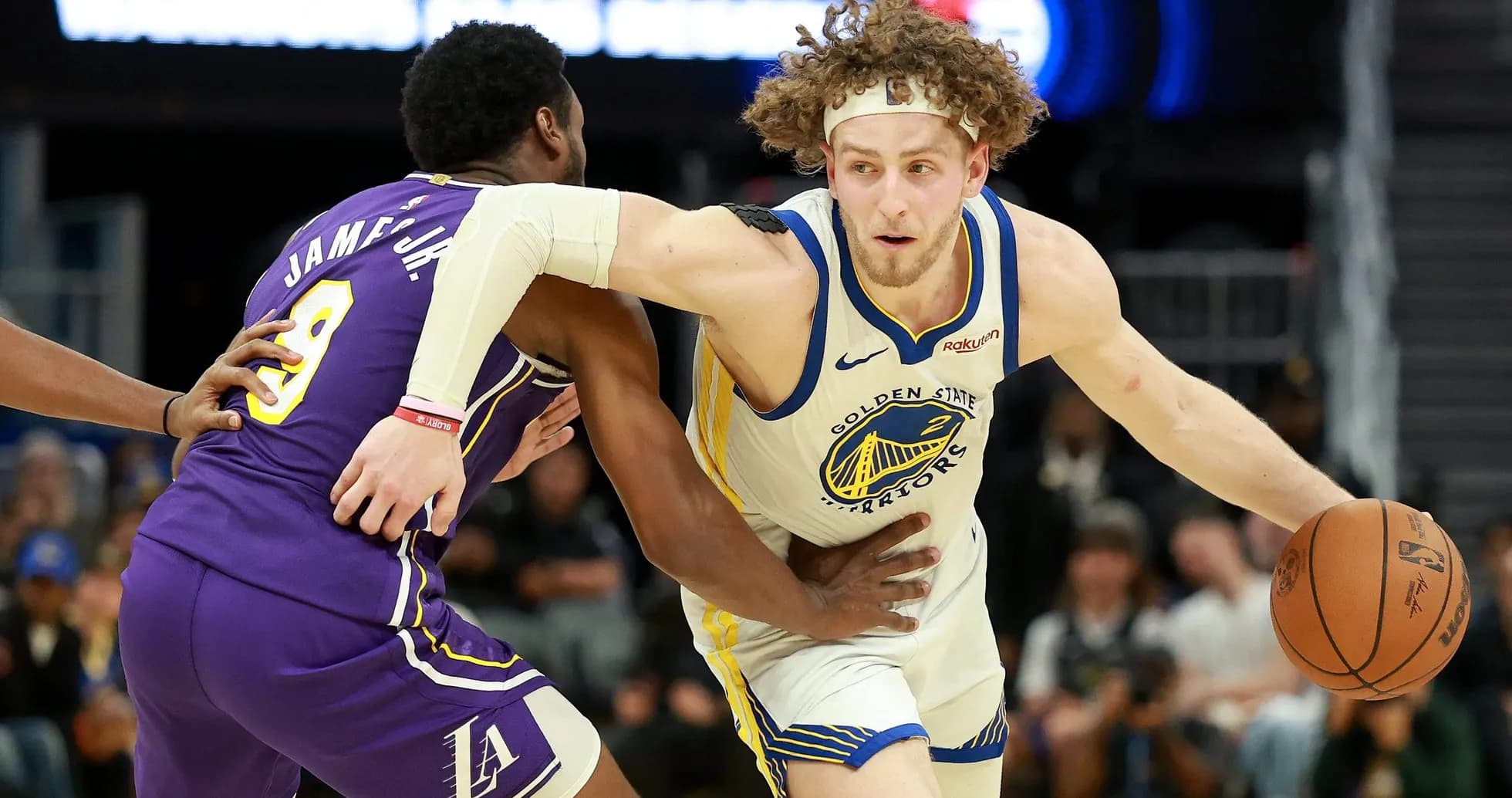
The Golden State Warriors have spent the summer walking a tightrope. One eye on Stephen Curry’s dwindling prime, the other on a thin group of young players they can’t afford to mismanage again.
Now comes a hypothetical that cuts right through that tension.
A Win-Now Temptation
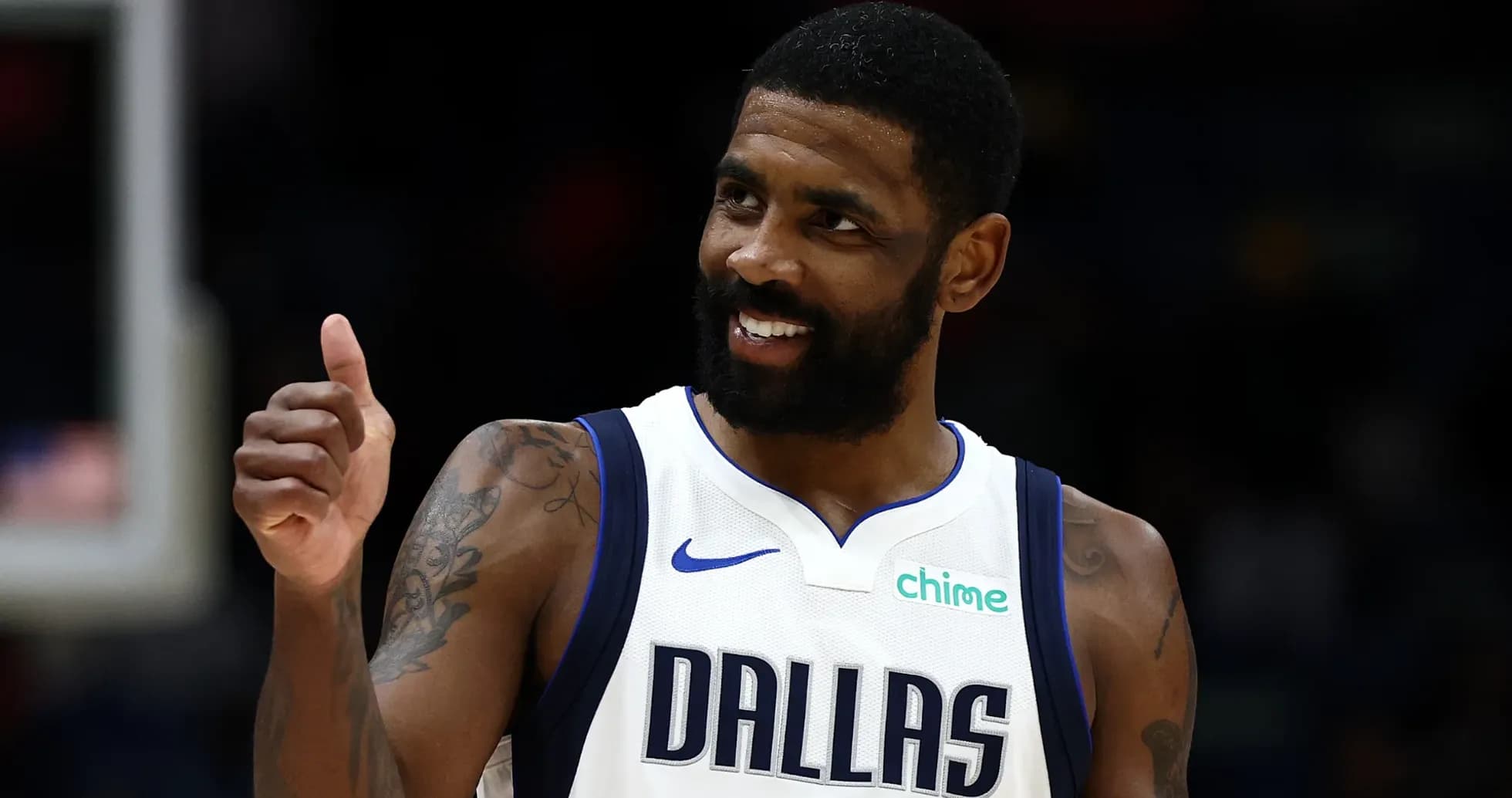
Bleacher Report’s Zach Buckley floated a three-team blockbuster built around Detroit, Dallas and Golden State. The headliner on paper is Kyrie Irving heading to the Pistons. The real decision, for the Warriors, lives somewhere else.
In this scenario, Golden State would send Brandin Podziemski and Moses Moody to the Mavericks. In return, the Warriors would bring in P.J. Washington and Taurean Prince, plus two second-round picks from Detroit.
No first-rounder. No blue-chip prospect coming back. Just veteran help, some draft change, and a cold, simple question:
Is P.J. Washington enough of an upgrade to justify giving up a 23-year-old guard who wants to be part of the franchise’s future?
The Podziemski Question
Podziemski hasn’t been coy about where he wants to be.
“I want to be here for the long term,” he told the San Francisco Chronicle in April. The organization has echoed that. General manager Mike Dunleavy Jr. has already said the Warriors would like to extend Podziemski “sooner rather than later.”
Wanting it is one thing. Paying for it is another.
ClutchPoints’ Brett Siegel has projected Podziemski’s next deal in the $22–24 million per year range. Golden State, according to that same reporting, would be more comfortable somewhere around $15–18 million annually.
That’s not a small gap for a team that just crawled out of the Jonathan Kuminga saga.
Those negotiations dragged through restricted free agency, bogged down by disagreements over money and control. Kuminga ultimately signed a two-year, $46.8 million contract, was shipped to Atlanta during the season, and has now agreed to a two-year, $12.4 million deal with Minnesota after turning down a richer offer from the Lakers.
Different player, different circumstances. Podziemski has been vocal about wanting to stay. The Warriors, for now, sound aligned.
But the scars from the Kuminga experience are fresh. Another drawn-out extension for a young piece risks becoming more than a cap sheet issue. It becomes a storyline, a distraction, a test of how much Golden State truly believes in its next generation.
So the choice sharpens: lock in Podziemski at his price, gamble on restricted free agency next summer, or flip him now for players who help Curry immediately and erase the negotiation altogether.
What Washington Brings
From Golden State’s perspective, Washington is the centerpiece of this imagined deal.
At 6-foot-7, he offers something the Warriors have chased for years: size on the wing, defensive versatility, and enough shooting to stay on the floor in big moments. He’s logged real playoff minutes, not just cameos, and he knows what it looks like when the intensity spikes.
On a roster leaning heavily on veterans and creaking knees, that matters.
With Jimmy Butler and Moody both rehabbing significant knee injuries, Washington could walk straight into major minutes. He has the profile to start on the wing until Butler returns, taking pressure off an aging core and a thin forward rotation.
Prince, meanwhile, would give Steve Kerr another trusted veteran shooter and defender, the kind of plug-and-play role player the Warriors have leaned on in every era of their success. The two second-round picks from Detroit would add some flexibility, small but useful chips for future deals.
The package makes sense on a whiteboard. It shores up the present, gives Curry more help, and keeps the door open for another move.
It’s just not that simple.
Giving Up the Future for the Present
Podziemski isn’t some back-end rotation piece. He averaged 13.8 points, 5.1 rebounds and 4.6 assists last season, playing all 82 games. On one of the oldest rosters in the league, he was the one constant. He didn’t fade as the year wore on; he surged, putting up 18.1 points per game across March and April.
That kind of durability and late-season growth is gold for a team staring at the back half of Curry’s career.
Moody, while less central than Podziemski, remains one of Golden State’s more intriguing young wings — a player who has flashed enough two-way ability to suggest there’s still another level to reach if he ever gets consistent minutes.
Moving both without recouping a first-round pick would be a clear statement: the Warriors are prioritizing the now over the next. Washington and Prince raise the floor. They do not dramatically alter the championship ceiling.
That’s the heart of the dilemma.
Washington helps Curry today. Prince helps today. The second-rounders might help someone down the line. But Podziemski represents both a present contributor and a future asset — on the court and on the balance sheet.
Trading him would clear away a looming extension fight that could climb north of $20 million per year. It would also close the door on a young guard who has already shown he can produce, stay healthy, and embrace the franchise.
A Franchise at a Crossroads
The Warriors know where this road can lead. Kuminga’s situation turned from “simple extension” into months of speculation, frustration and, eventually, a trade. His next deal came somewhere else.
Podziemski’s case doesn’t have to follow that script. But it forces Golden State to confront the same uncomfortable reality: can they afford to pay every promising young player what the market says he’s worth while still building a team around Curry that can actually contend?
This proposed deal doesn’t offer an easy answer. It just crystallizes the stakes.
Do the Warriors trust themselves to navigate another tricky extension and keep Podziemski as a pillar of whatever comes after Curry? Or do they decide that the cost, financially and emotionally, is too steep — and turn him into veteran help before the hard part even begins?
One way or another, they can’t keep straddling eras forever.