.svg&w=384&q=75 "logo")
Viking FK's Unconventional Coaching Revolution in Champions League
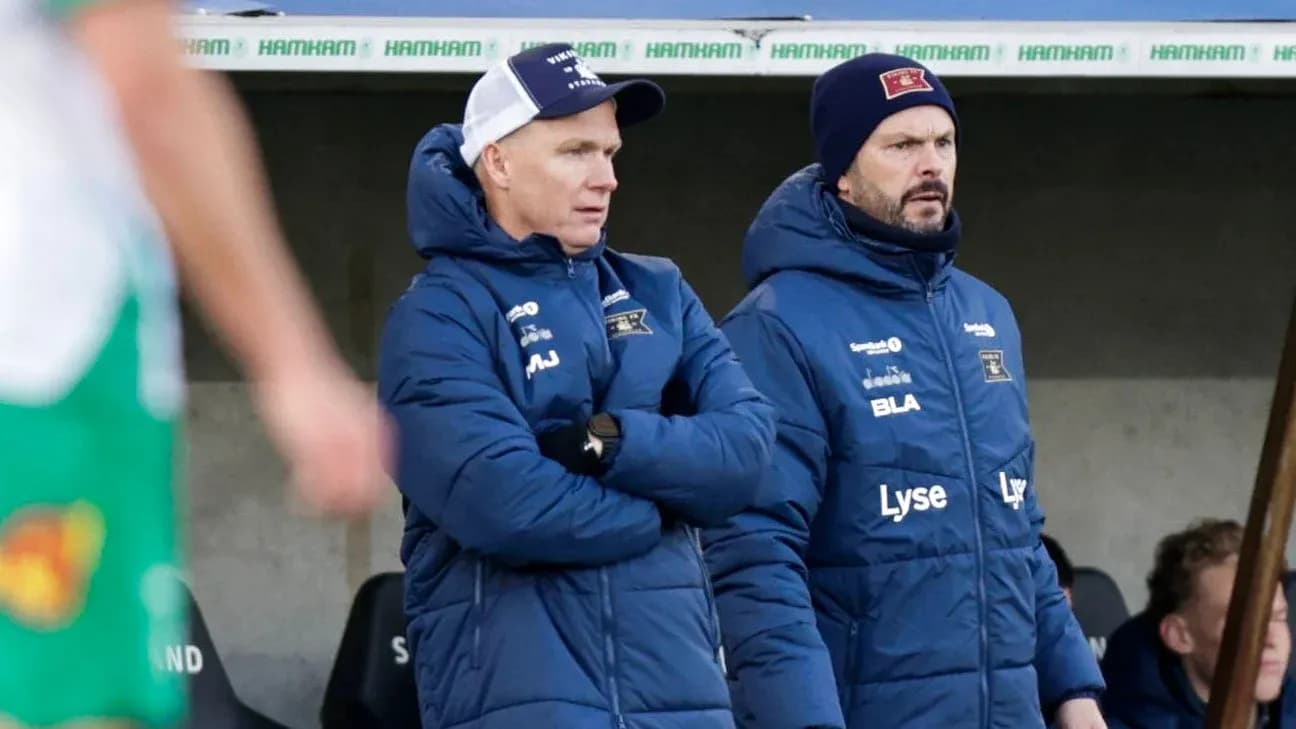
Viking’s two-headed revolution steps onto Europe’s biggest stage on Wednesday night, and it does so without apology.
Norwegian champions Viking FK arrive at the MHP Arena to face VfB Stuttgart carrying one of the most unconventional ideas in modern football: a club run not by one all-powerful manager, but by a partnership. Morten Jensen and Bjarte Lunde Aarsheim share the job, the pressure, and the credit. Equally.
No manager with an assistant lurking in the shadows. No clear hierarchy. Since January 2021, Viking have trusted two voices, one vision.
It has changed everything.
Two men, one touchline
The arrangement sounds like a recipe for conflict. Who picks the team? Who makes the final call on a substitution? At Viking, the answer is both.
Jensen and Lunde Aarsheim hold the same authority and share every major tactical decision. They split matchday duties, training ground work, and media obligations. One doesn’t defer to the other. They stand side by side.
The model is not a stopgap or a quirky experiment. It has become the backbone of Viking’s rise.
Under the dual leadership, the Stavanger club dragged themselves from hopeful challengers to genuine heavyweights. They climbed to the top of Norwegian football and, in 2025, ended a 34-year wait for the Eliteserien title. A generation of Viking supporters had never seen their team crowned champions. The two-coach system delivered it.
This wasn’t a one-off surge, either. Viking have stayed in the fight. Season after season, they have held their place in the title race, trading blows with Bodo/Glimt and refusing to slip quietly back into the pack.
“Overwhelming and everything we’ve ever dreamed of”
The domestic success opened the door to Europe, but it was the play-off against Dinamo Zagreb that truly underlined the scale of Viking’s transformation.
Over two legs, Viking outlasted the Croatian side to reach the Champions League main stage for the first time since 1992. That’s more than three decades of waiting, frustration, and what-ifs swept away in one tie.
After the decisive win over Dinamo Zagreb, Jensen didn’t bother hiding what it meant. He called the achievement “overwhelming and everything we’ve ever dreamed of.” It sounded less like a soundbite and more like a release.
For a club that had drifted in and out of relevance, this was a statement. Viking weren’t just back in Europe; they were back with a blueprint that defies the old rules.
The captain as conduit
On the pitch, the shared authority in the dugout needs a single, clear conduit. That role belongs to Zlatko Tripic.
The captain is the extension of both coaches once the whistle blows. He carries their combined instructions, sets the tone, and embodies the aggressive, front-foot approach that has become Viking’s hallmark.
Tripic didn’t just lead in spirit during the Dinamo Zagreb play-off. He led on the scoresheet. He found the net in both legs, dragging his team over the line and into the Champions League proper. Those goals didn’t just send Viking into the group stage; they stitched his name into the club’s European history.
For Jensen and Lunde Aarsheim, Tripic is the crucial link between theory and execution. For the players around him, he’s the fixed point in a system built on shared power.
A 1,150-kilometre test of an idea
Now comes the next examination of that idea: Germany, Stuttgart, and the noise of the MHP Arena.
The 1,150-kilometre journey from Stavanger is more than a trip across the continent. It’s a step into a spotlight Viking haven’t felt since the early 1990s. This time, they arrive as Norwegian champions with a radical structure and a belief that it can stand up to Europe’s elite.
Jensen and Lunde Aarsheim will walk out together, just as they have since 2021, carrying the same notebooks, the same authority, and the same conviction that two minds can sharpen one gameplan. No one is waiting in the background for their chance. This is the chance.
Viking will need to be precise. The co-coaches’ plan must run cleanly through Tripic and the rest of the side if they are to pull off a result that would echo far beyond Stavanger. A draw would be impressive. A win would be seismic.
The stakes are clear. So is the question hanging over the night in Stuttgart: can European football’s most unusual coaching partnership bend the Champions League to its will, or will the old ways reassert themselves under the brightest lights?