.svg&w=384&q=75 "logo")
USA Women's World Cup Dominance: Caitlin Clark Shines
The United States arrived at the FIBA Women's World Cup carrying the weight of history and the ease of habit. Eleven titles. Four straight golds. One blip — a bronze in 2006 — across nearly three decades of dominance. This is their tournament until someone proves otherwise.
On opening day, nobody came close.
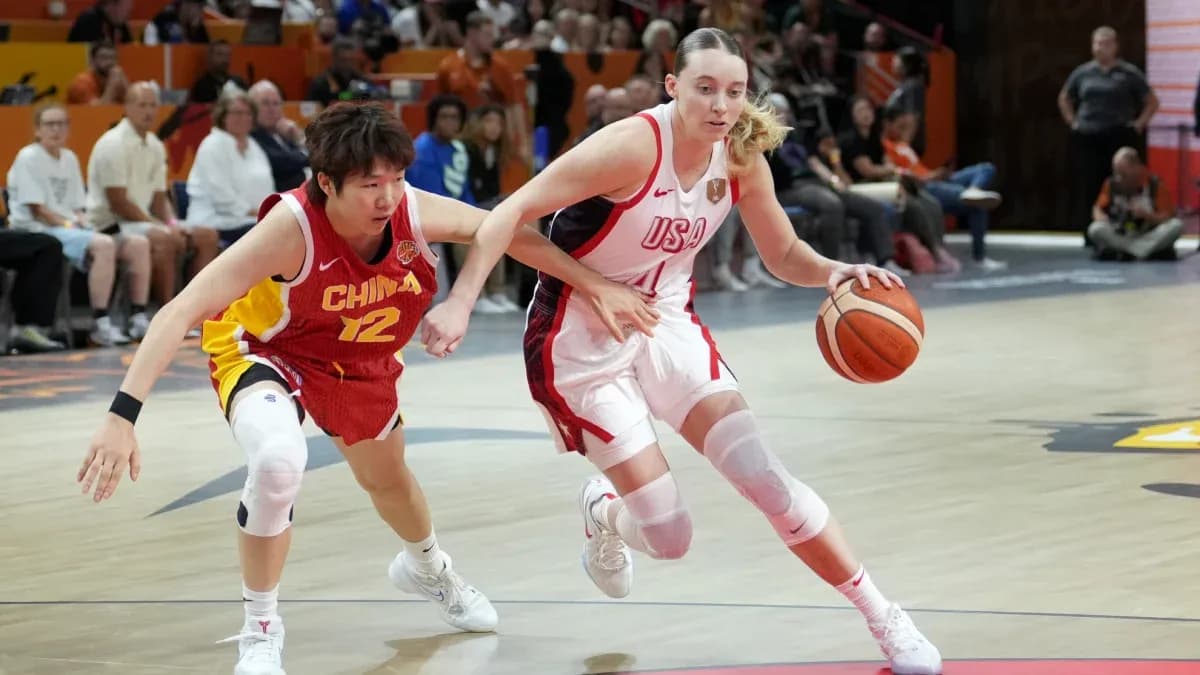
Spain rolled. France rolled. The U.S. did more than that, dismantling China 94-61 in a performance that felt less like a group-stage opener and more like a statement of intent. The scoreline was lopsided; the manner of it, even more so.
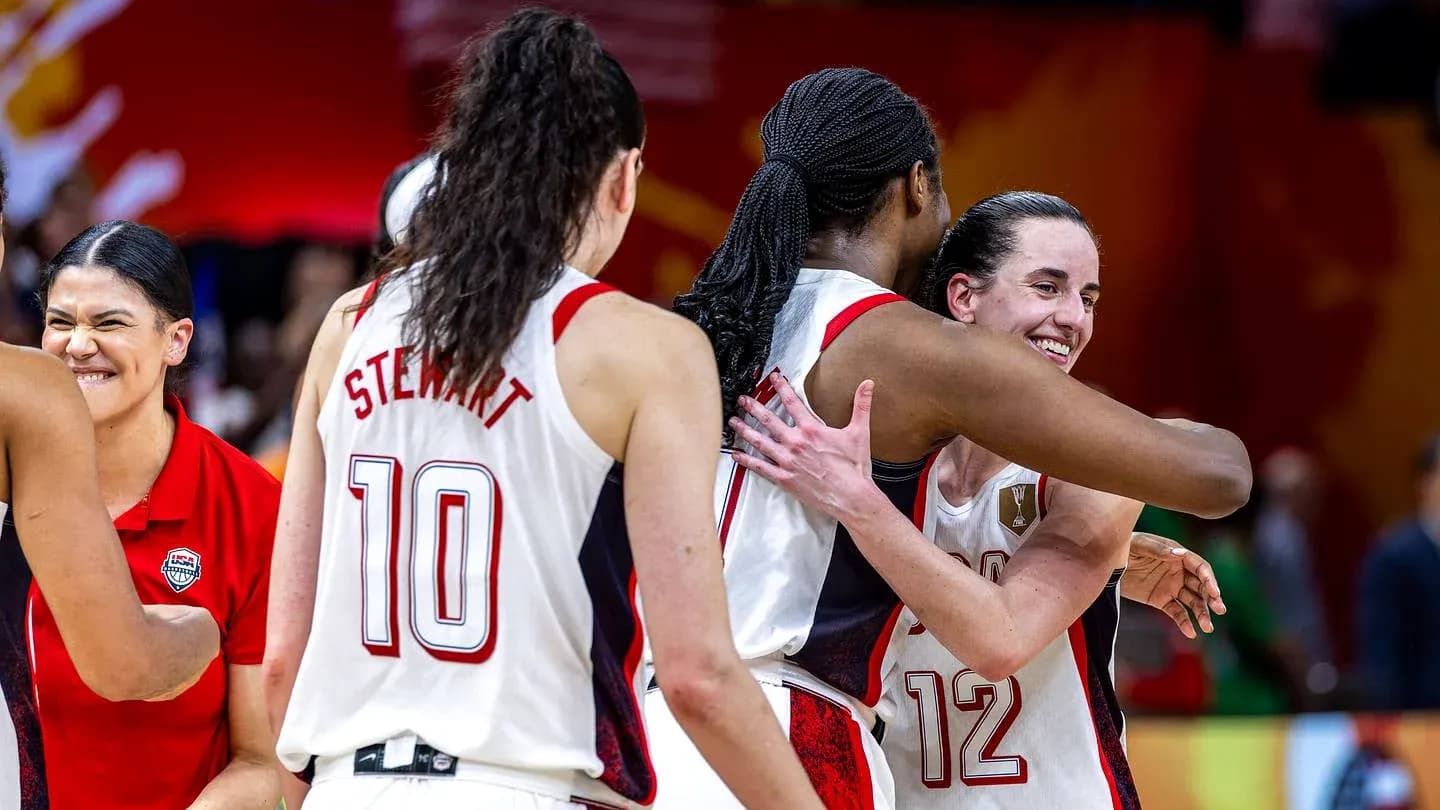
At the heart of it, off the bench, was Caitlin Clark.
She played a team-high 25 minutes, seized the tempo, and never really let China breathe. Fourteen points. Eleven assists. That last number mattered most. No American had piled up that many dimes in a Women's World Cup game for 28 years, and Clark did it in her very first outing on this stage.
She didn’t just rack up stats. She bent the game.
Every time she crossed half court, defenders shaded her way. A second body came. Sometimes a third. Her reputation as a shooter travels ahead of her, and China treated every touch as a crisis. Clark used that panic against them, dragging defenders out of position, then threading passes into the spaces they left behind.
Those reads powered the rest of the roster. They also lit up her backcourt partnership with Paige Bueckers.
Bueckers matched Clark’s 14 points and looked increasingly comfortable as the game unfolded, cutting, relocating, and punishing every late rotation. The two guards played as if they’d been sharing a backcourt for years, not weeks. Clark drew the trap; Bueckers slipped into the gap. Clark pushed the pace; Bueckers filled the lane. The chemistry was obvious, and it showed up in the box score as much as in the flow of the game.
Afterward, Bueckers, now with the Dallas Wings, made it simple: they just know how to play off each other. Clark’s gravity, her vision, her ability to see the next pass before the first dribble — it all frees Bueckers to attack in rhythm. The numbers back every word of that assessment. Eleven assists on the night, and she already leads the WNBA in that category. This is not a hot streak; it’s who she is.
The game also delivered one of the early viral images of the tournament. During a stoppage, cameras caught Bueckers standing beside China’s 7-foot-3 center Zhang Ziyu, craning her neck upward in disbelief. It was a moment of levity in a game that offered China very little else to smile about.
By the time the final buzzer sounded, the familiar pattern of U.S. dominance had reasserted itself. Double-teams collapsed on Clark. Shooters spaced the floor. Bigs feasted on easy looks inside. China, like so many before them, simply ran out of answers.
The schedule, though, does not slow down for anyone, not even the reigning champions.
Next up is Italy on Sunday, a team arriving with confidence after taking down Czechia in their opener. That matchup will test whether this early U.S. rhythm holds when the opposition carries momentum of its own. Less than 24 hours later, the Americans will see Czechia themselves to close out Group D.
The U.S. have made the first move, and it was emphatic. Now the question is no longer whether they are favorites. It’s who, if anyone, can drag them out of their comfort zone before another gold medal slips quietly into their collection.