.svg&w=384&q=75 "logo")
US Women’s Basketball Team Claims Fifth World Title
The USA’s reign goes on. The gap to the rest of the world, though, has never felt thinner.
In Berlin, in a World Cup final that swung from French swagger to American control, the US women claimed a fifth straight world title with a 97-79 win over France – a scoreline that hides just how precarious this one looked for long stretches.
France swing first
For 15 minutes, it was France’s game.
They led 31-17 early in the second quarter. The US offense was jittery, the defense a step slow, and Gabby Williams was carving them up again, just as she had in the Olympic final two years ago. Marine Fauthoux wasn’t here, A’ja Wilson wasn’t here, but the tension felt familiar.
France hit eight of their first 14 three-pointers. Williams attacked the rim, Dominique Malonga bullied the paint, and the US newcomers looked rattled. Angel Reese fouled a three-point shooter. Caitlin Clark checked in and promptly turned the ball over twice, once on a bad entry pass, once by stepping on the baseline. Rhyne Howard bricked off the glass. Kara Lawson had seen enough and went back to the veterans.
At 31-17, the US were on the brink of being run out of the gym.
Then the game changed – not with fireworks, but with the slow, relentless weight of experience.
Stewart, Young, Gray drag the US back
Breanna Stewart, Jackie Young and Chelsea Gray didn’t panic. They just started winning every small battle.
Stewart steadied the glass and lived at the line. Young pushed tempo and found seams. Gray, as so often, became the quiet center of everything – the veteran point guard who never seems to feel the clock or the crowd, only the angles.
A Young three that was downgraded to two still cut into the deficit. Stewart knocked down free throws. Gray threaded a no-look pass through traffic to Young in the corner. Aliyah Boston finally made her presence felt with a deflection on one end and a transition finish on the other.
France kept answering – Williams from deep, Janelle Salaun stepping into big shots, Badiane even hitting from the corner – but the cushion was shrinking. The US defense stopped giving up layups. They started winning the rebounding battle. They forced France to work for every look.
And then, just when the half threatened to slip away, Clark finally arrived.
Her first real shot of the night – officially the second, after a stats-site wobble – was a corner three at the halftime buzzer. Net. The deficit, once 14, was down to two: 45-43 France at the break, and all the momentum had flipped.
The third-quarter avalanche
If the first half belonged to France’s shot-making, the third quarter belonged to the US machine.
On the first possession of the half, Stewart tied it. Collier muscled through a scramble to give the US their first lead “in eons,” as the live commentary put it. Then the veterans hit the accelerator.
France’s offense, so fluid in the first 20 minutes, seized up. Open looks rimmed out. Marine Johannes, so often their creative spark, went cold. Williams’ touches dried up. When she did get the ball, she saw a wall of red, white and blue.
At the other end, the US were ruthless. Young splashed a three off a Gray assist. Collier knocked down a pull-up. Howard jumped a passing lane, went coast-to-coast and finished through Malonga. Copper buried a three. Stewart, again, cleaned the glass.
The key sequence came late in the quarter. Copper drove and drew a hard foul from Johannes that went to review. Officials upgraded it to an “act of violence,” handing the US four free throws and the ball. Copper hit three of four, Clark fed Boston inside on the ensuing possession, and suddenly the lead was 17.
From 45-40 down seconds before halftime, the US had ripped through a 33-12 stretch. France, once so composed, were staring at the wreckage.
The third ended 73-57. The US had turned a thriller into a procession.
Clark’s cameo, Reese’s edge, France’s fight
Lawson’s rotations told the story of where this team is right now. The core five – Copper, Gray, Stewart, Collier, Young – all logged heavy minutes, each well past the 20-minute mark. Boston and Howard were the only reserves to see real time. Paige Bueckers played briefly. Sonia Citron and Kiki Iriafen never left the bench.
Clark’s night captured her World Cup in miniature. Uneven, but undeniably impactful.
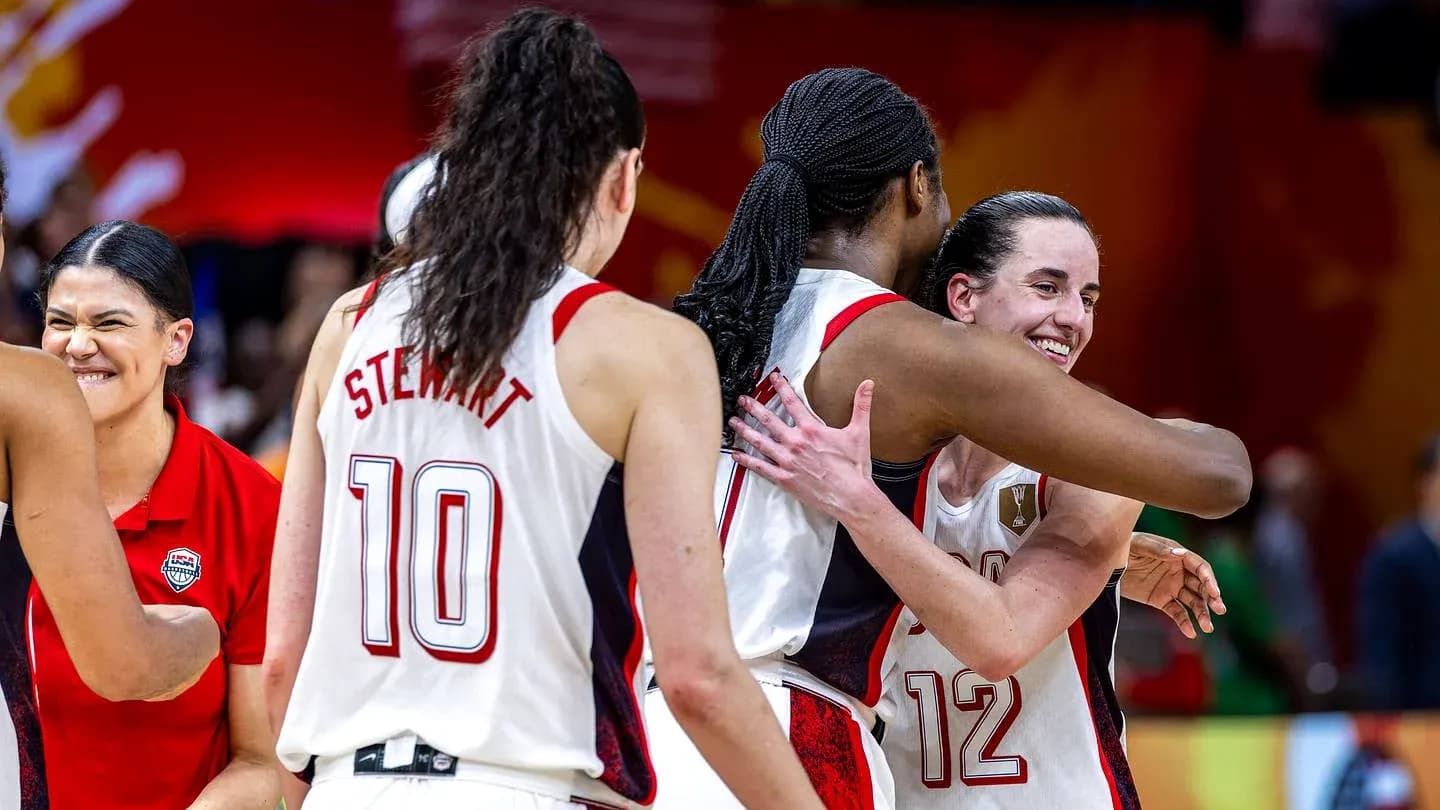
She finished with 12 points in just over 10 minutes, hitting four of five shots, including two of three from deep. She also had four turnovers and a technical foul, barking at the officials after a whistle in the fourth that turned the game’s temperature up a notch. On the next trip, she calmly drilled a quick-release three. Later, she drove and scored, then hit a free throw after a France timeout. When she checked out with just over five minutes left, the damage was done.
Reese, used sparingly, had her own arc. She missed two ugly free throws in the first quarter, then came back in the fourth to block a shot and finish inside off a Stewart feed as the lead ballooned to 20. The US don’t need her to dominate yet. They just need her presence, that edge, and she supplied it in flashes.
France refused to fold. Malonga, especially, refused.
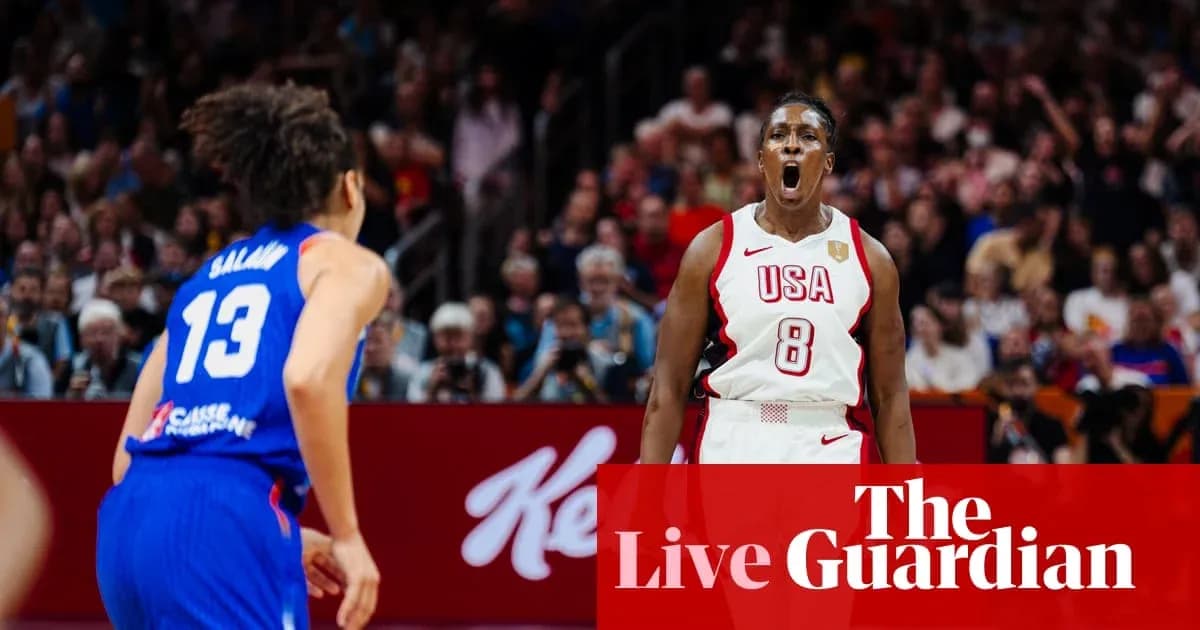
The 20-year-old center poured in 21 points, including a corner three and a series of late buckets that turned a blowout into a respectable margin. She battled through contact, finished through Collier, and kept attacking even as the scoreboard screamed the inevitable. Williams, who had tormented the US in that Olympic final, finished with 20 points and seven assists, but her second half was a grind: turnovers on wild drives, missed free throws, long stretches without a touch when France needed her most.
Johannes, Ayayi and Salaun all had moments, but the third-quarter drought broke them. Once the US defense locked in, France’s early freedom vanished.
The numbers behind the dynasty
The stat sheet underlined the story.
Stewart led the US with 22 points and nine rebounds, just missing a double-double. Young added 18 and five assists. Copper chipped in 15, Gray 12 with five assists of her own, and Clark’s 12 came on that ultra-efficient 4-of-5 shooting burst.
The US dominated the glass, 36-27, a margin that felt even larger in the decisive stretch. They shot 55% from the field to France’s 52%, but where the Americans truly separated themselves was in the possession game and in the way their stars timed their punches.
For France, Malonga’s 21 and Williams’ 20 led the way, with Williams also handing out seven assists. Ayayi added eight. The problem wasn’t talent. It was timing – the shots that fell in the first half deserted them when the title was there to be seized.
A dynasty under pressure
This win extends an absurd run. Since the mid-1990s, the US women have gone 121-1 in World Cup and Olympic play, with 71 straight wins at the sport’s highest level. This is a fifth consecutive World Cup crown. The rest of the world has been chasing for decades.
But domination has changed shape.
Italy pushed them to the brink in the group stage. Spain were level at 58-58 in the semifinal before the US squeezed the life out of them in the fourth quarter. France led by 14 in this final and had the game in their hands for most of the first half.
The US still have the deepest roster, the most experience, the most options late in games. The MVP conversation starts with Stewart, but Young, Gray, Copper and Collier all have cases for being the second-most important player on any given night. Behind them, the so-called golden generation – Clark, Reese, Boston, Bueckers – is still finding its feet at this level.
What’s different now is that they no longer win on aura alone. They have to solve problems. They have to survive bad quarters. They have to chase games.
France, with eight WNBA players and a core that’s still maturing, are not going away. Nor are Spain. Nor are the other European powers building rosters that no longer flinch at the sight of USA across the chest.
The US women climbed the podium again in Berlin, streaks intact, trophy in hand.
The question for the next Olympic cycle isn’t whether they can be beaten anymore. It’s how long this new generation can keep answering every challenge when the rest of the world is finally close enough to smell blood.