.svg&w=384&q=75 "logo")
U.S. Women's Basketball Dominates Hungary 108-56 in World Cup Quarterfinal
BERLIN — The scoreboard said blowout. The performance said something more.
Napheesa Collier poured in 19 points as the United States dismantled Hungary 108-56 on Thursday, storming into the FIBA Women’s World Cup semifinals and rewriting sections of the record book along the way.
This wasn’t just dominance. It was a reminder of what the rest of the world is still chasing.
Records fall as U.S. turns on the style
By the time the final horn sounded, the numbers were staggering. The 108 points were the most ever scored by any team in a World Cup quarterfinal. The Americans piled up 31 assists, another record for this stage, carving up Hungary with ruthless precision and unselfishness.
Kahleah Copper, who added 10 points, summed up the mindset behind the onslaught.
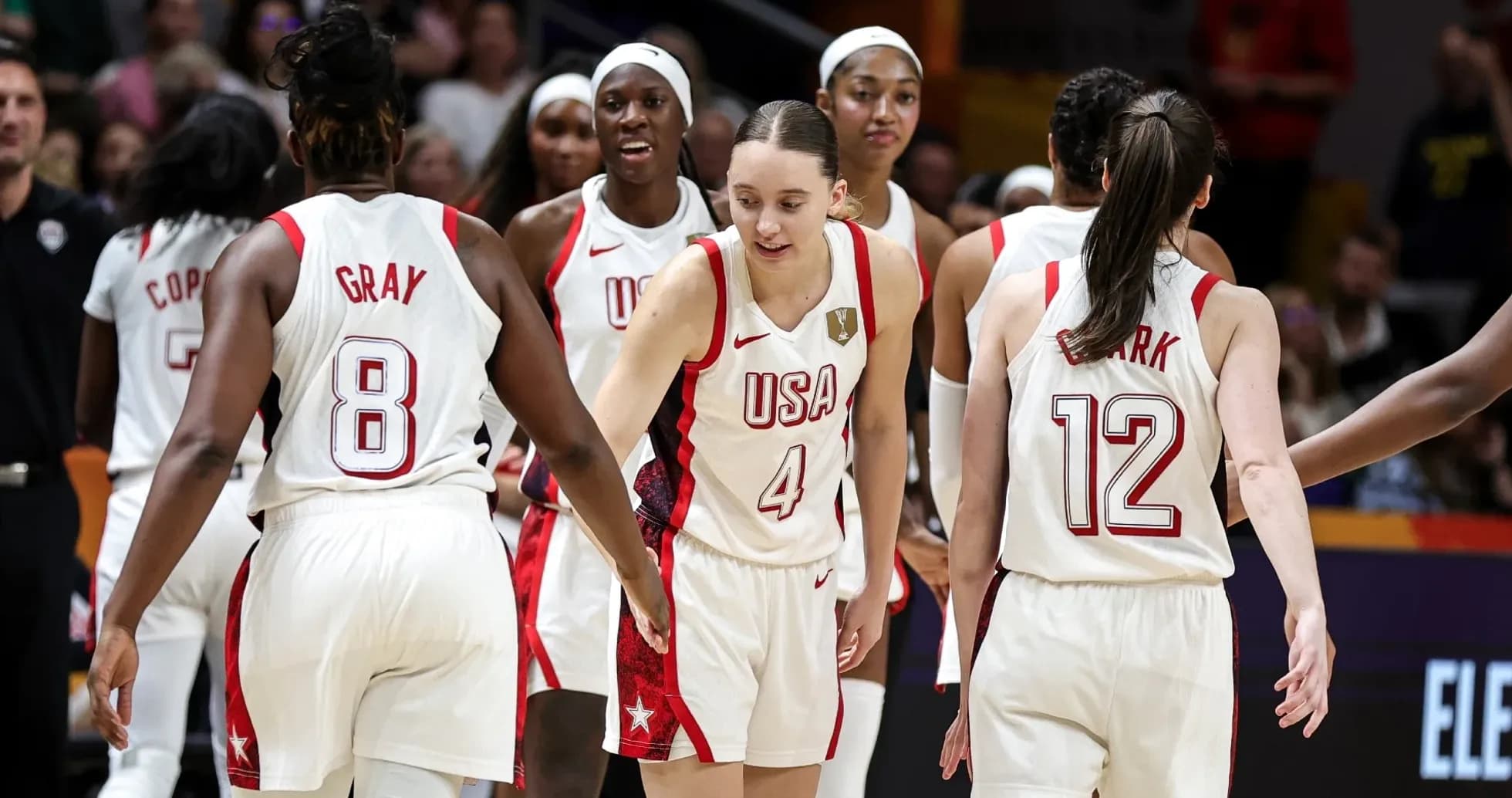
“When that ball is moving, we want to get the best possible shot,” she said. “We want to make sure everybody gets involved. Everyone here on this roster, we know what they’re doing on their respective (WNBA) teams. But you come here, you sacrifice a little bit of that.”
They didn’t just talk about turning good looks into great ones. They lived it. Extra pass after extra pass, the ball zipped around the perimeter, then knifed inside. Hungary simply couldn’t keep up.
A first-quarter avalanche
Any notion of a tense knockout game disappeared almost immediately.
The U.S. exploded to a 36-12 lead after the first quarter, running at every opportunity, punishing turnovers, and pounding the ball into the paint. Hungary’s defense bent, then broke.
Collier set the early tone with 10 points in the opening 10 minutes, but it was the collective force that overwhelmed the European side. Every stop seemed to become a fast break. Every mistake, an American layup.
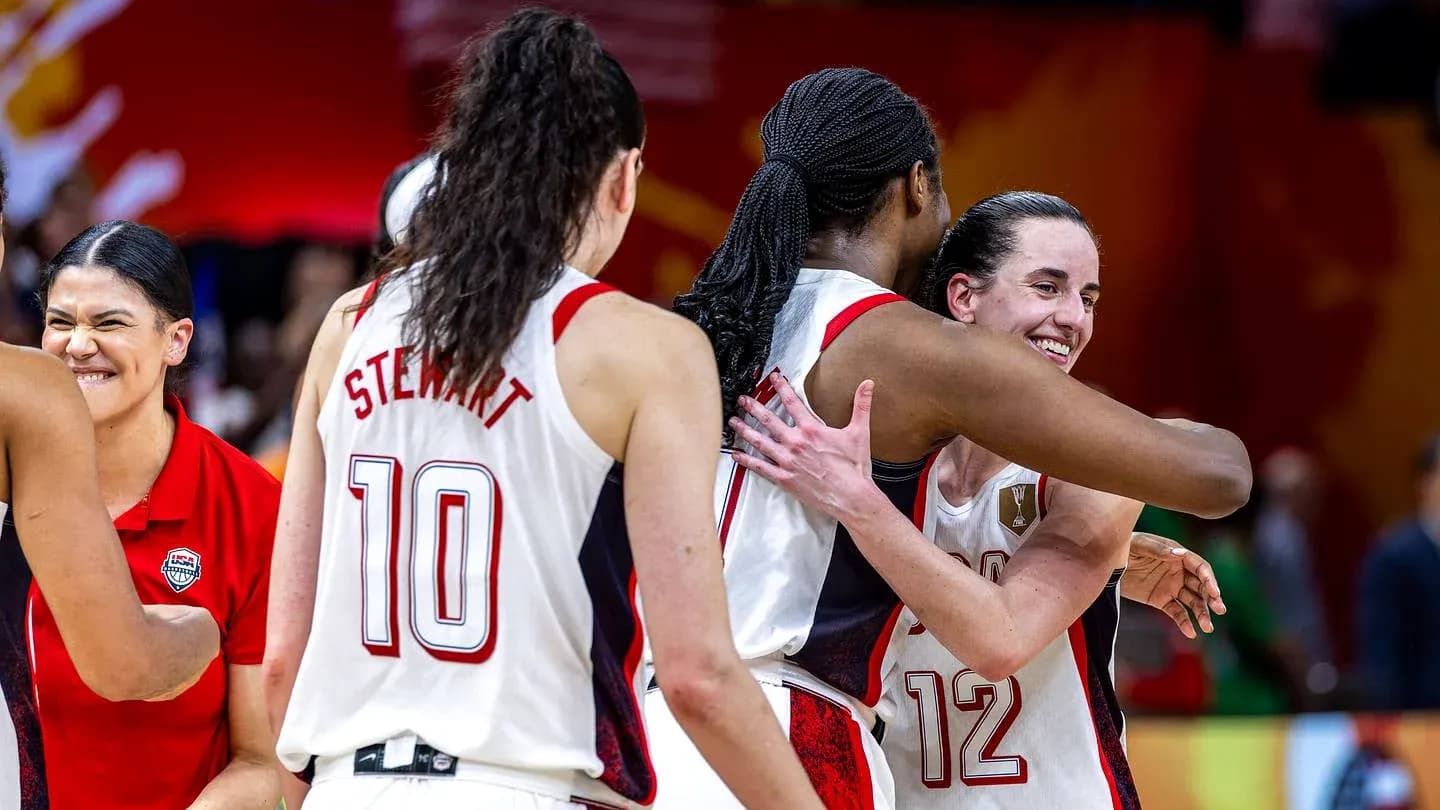
Just before the buzzer, Caitlin Clark and Angel Reese added a flourish that underlined the team’s growing chemistry. A sharp pick-and-roll, perfectly timed and calmly finished, capped the quarter and sent the bench roaring.
The pressure didn’t ease.
The Americans hit 20 of their first 26 shots — a blistering 77% — and buried five of their first six attempts from beyond the arc. With six minutes left in the half, the lead had ballooned to 50-18. The game, in any competitive sense, was gone.
By halftime, the U.S. led 59-30, the highest-scoring first half in team history in a World Cup knockout game, according to FIBA.
Clark orchestrates, Citron scare, defense locks in
Clark once again ran the show. She finished with 10 points and nine assists, just one dime shy of her second double-double of the tournament. Every possession seemed to bend to her tempo — quick hit-ahead passes, perfectly weighted pocket feeds, and kick-outs that kept Hungary scrambling.
There was one nervous moment. In the third quarter, Sonia Citron took an accidental shot to the nose from a Hungary player and left the floor. The U.S. briefly held its breath.
She returned to start the fourth quarter, easing any concern and allowing the Americans to settle back into their rhythm.
While the offense dazzled, the defense quietly strangled Hungary’s main threat.
Dorka Juhasz, the Minnesota Lynx forward and Hungary’s top scorer in the tournament, arrived averaging 15.3 points and 11 rebounds. She left with just two points on 1-for-12 shooting. The U.S. hounded her into tough looks, denied her space, and made every catch a small battle. She missed her first seven attempts and didn’t see the ball drop through the net until 2:26 remained in the first half.
Contain the star, suffocate the attack. The plan worked to perfection.
A giant rolls on, a newcomer takes a bow
For Hungary, the night still carried a measure of pride. Reaching the quarterfinals marked its best World Cup finish in the medal-round era. The country placed fifth back in 1957, but that came in a round-robin format without knockout stages. This run, into the final eight, stands as a modern milestone.
They just happened to run into a machine.
The United States has now won 34 straight World Cup games, a streak that stretches back to a semifinal loss to Russia in 2006. Every tournament since then has reinforced the same theme: when the medal rounds arrive, the Americans do too. They haven’t missed one since the format changed in 1983.
Next up is the winner of Spain vs. Australia in Saturday’s semifinal. Another heavyweight, another test. But on this evidence, the question isn’t whether the U.S. is ready.
It’s who, if anyone, can slow them down.