.svg&w=384&q=75 "logo")
US Open Night Sessions: A Test for Players and the Sport
New York has always sold itself as the city that never sleeps. This year’s US Open is taking that slogan literally.
Night sessions at Flushing Meadows have bled deep into the small hours, matches starting when most of the city is heading home and finishing as the first commuters shuffle towards the subway. It makes for wild television and a charged, nightclub atmosphere in the stands. It also leaves some of the world’s best players staggering towards bed as dawn breaks — and asking whether the spectacle is starting to compromise the sport.
Zverev’s semi-final run on New York time
No one has lived the nocturnal chaos more than top seed Alexander Zverev. Three of his five matches so far have finished after 1am. His body clock has been dragged so far out of sync that he likened the experience to playing a different major entirely.
"I've been to bed as late as 6:45am in the past week so I'm kind of a bit jet-lagged," he said. "I feel like I'm playing the Australian Open in New York right now."
On Friday, he finally gets daylight. His semi-final against Karen Khachanov, scheduled not before 15:00 local time (20:00 BST), will be his first day match of the tournament. It’s a sharp contrast to the path taken by his opponent.
Khachanov, unseeded but quietly efficient, has not played beyond midnight in New York this year. His quarter-final against Alexander Blockx wrapped up shortly before 19:00 on Wednesday, giving him a clean evening, a normal night’s sleep, and an extra slice of preparation time.
The margins at this level are thin. That kind of schedule gap can bite.
Shelton, Tiafoe and the 3:34am epic
On the other half of the draw, the American storylines have been just as extreme.
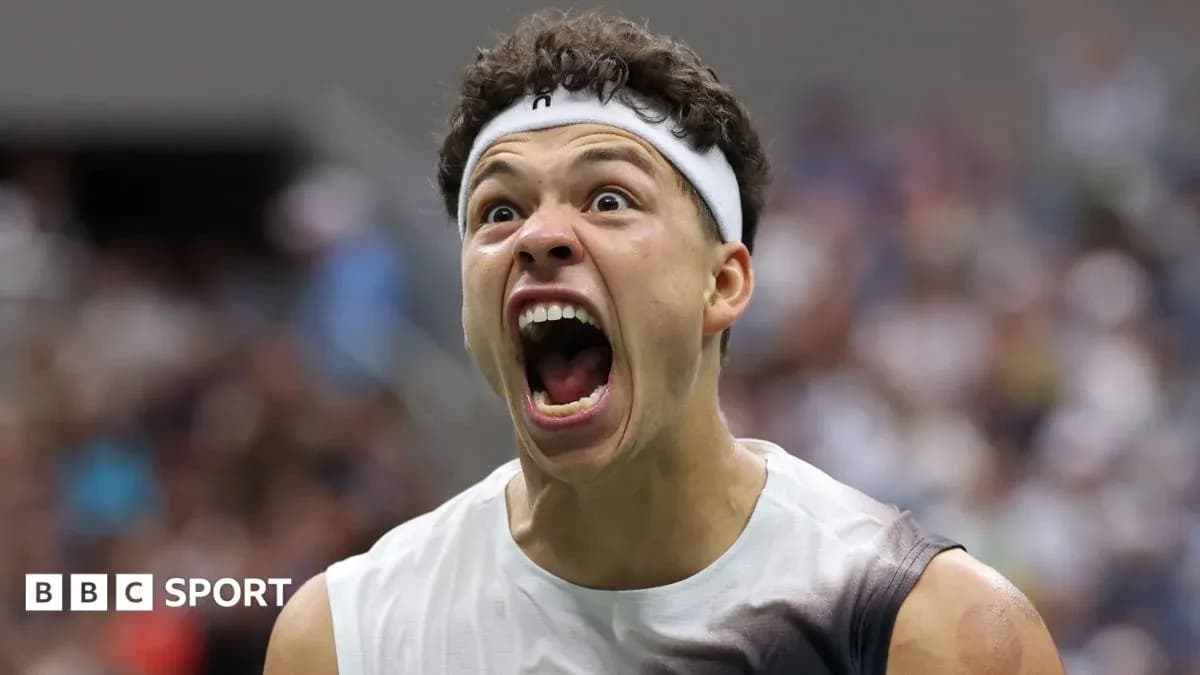
Ben Shelton’s quarter-final win over Carlos Alcaraz did not end until 3:34am on Wednesday, the latest finish in US Open history. The crowd stayed, the noise stayed, the adrenaline stayed. The clock, unforgiving, kept ticking.
Shelton now faces Frances Tiafoe in Friday’s night session (19:00 local time/00:00 BST, Sat). Tiafoe’s route could hardly be more different. He finished his own five-set epic against fellow American Alex Michelsen at around 19:00 on Tuesday. Shower, food, recovery, sleep — on something resembling a normal human timetable.
That gap matters, says Matt Little, Andy Murray’s long-time former strength and conditioning coach.
"The advantage of the opponent who has played earlier in the day will be big - they've had that full evening's rest and a good night's sleep," he told BBC Sport. "We can all relate to it - if you have one really bad night's sleep, you have the knock-on effect of that for the coming days."
Shelton, with two days off court, insisted he would be "all right". The science around him is less forgiving.
"He'll have to be napping to catch up some sleep," Little said. On top of that, he pointed to the basics that suddenly become critical at 4am: load up on carbohydrates and protein, stay on top of hydration, and try to rebuild some kind of routine without crashing into a 12-hour sleep that throws the body clock even further out of sync.
Lessons from Melbourne’s 4am “farce”
The sport has been here before. Murray’s own 4am marathon against Thanasi Kokkinakis at the 2023 Australian Open became a global talking point. The former world number one left Melbourne Park with only three hours’ sleep before returning around 11am. He called the situation a "farce". Few argued.
That match forced change. The Australian Open cut the number of day-session matches on its main courts from three to two, trying to stop night sessions from being repeatedly pushed back.
The tours have responded as well. In early 2024, the ATP and WTA brought in rules preventing regular tour matches — best-of-three, not best-of-five — from starting after 23:00. The majors, though, sit outside those regulations. Grand Slams continue to run their own show, and New York has leaned into its reputation more than most.
This fortnight, that has meant a steady stream of finishes that belong more to a graveyard shift than a sporting arena.
Records, backlash and the New York identity
Last week, Venus Williams and Sofia Kenin began their first-round match at 12:13am, the latest start in US Open history. It was one of three contests that pushed past 2am in the first seven nights. Three more crept beyond 1am. Then came Shelton-Alcaraz, crashing through another record in the middle of the week.
For some, this is the essence of Flushing Meadows: the floodlights, the soundtrack of planes overhead, the crowd that sounds half tennis fans, half concertgoers. A raucous mirror of the city that hosts it.
For others, the romance has gone too far.
"Something has got to give," said 18-time Grand Slam singles champion Martina Navratilova. "This is not OK and it is not normal."
The numbers back her up. The volume of early-morning finishes has spiked this year, even if Tuesday’s schedule meltdown — with play on Arthur Ashe Stadium ending at 3:34am on Wednesday — came from a perfect storm.
All three preceding quarter-finals on the main court went the distance: Aryna Sabalenka against Linda Noskova, Jessica Pegula against Emma Navarro, with Tiafoe’s five-setter wedged between them. One long match can be absorbed. Three in a row, all stretching to the limit, pushed Shelton and Alcaraz into a time slot usually reserved for bakers and overnight security guards.
The tennis, almost inevitably, stayed gripping. The question now is whether the sport is prepared to keep asking its stars to perform in the dead of night — or whether New York’s love affair with the graveyard shift has finally reached its limit.