.svg&w=384&q=75 "logo")
US Open's Late Nights: The Impact on Players' Performance

New York doesn’t sleep. This year’s US Open has decided it won’t either.
Under the lights of Arthur Ashe Stadium, matches have been starting when most of the city is shutting down and finishing when Manhattan is already reaching for its first coffee. It makes for gripping television and a unique atmosphere. It also leaves some of the world’s best players staggering towards dawn and asking how fair this really is.
Zverev’s night shift
Alexander Zverev is the top seed in New York. He has also been working the graveyard shift.
Three of his five matches so far have finished after 1am. On one night, he didn’t get to bed until 6:45am. That isn’t recovery; it’s jet lag without the flight.
"I've been to bed as late as 6:45am in the past week so I'm kind of a bit jet-lagged," Zverev said. "I feel like I'm playing the Australian Open in New York right now."
On Friday, he finally gets a day-time slot: a semi-final against Karen Khachanov scheduled not before 15:00 local time. For the first time this fortnight, the German will walk onto court with the sun still up.
Khachanov’s path could hardly look more different. Unseeded, unfussy, and crucially, unburdened by the clock, he has not played beyond midnight. His quarter-final against Alexander Blockx wrapped up shortly before 19:00 on Wednesday. He left the stadium while Zverev’s internal body clock was still somewhere between Melbourne and Manhattan.
That contrast is exactly what worries those who look after players’ bodies for a living.
"The advantage of the opponent who has played earlier in the day will be big - they've had that full evening's rest and a good night's sleep," Matt Little, Andy Murray’s long-time strength and conditioning coach, told BBC Sport. "We can all relate to it - if you have one really bad night's sleep, you have the knock-on effect of that for the coming days."
Little has seen the damage up close. Murray’s infamous 4am finish at the 2023 Australian Open left the former world number one with just three hours’ sleep before he had to drag himself back to Melbourne Park at around 11am. The match became a symbol of a schedule that had lost control.
Shelton, Tiafoe and the 3:34am epic
The Americans have been pulled into the same storm.
Ben Shelton’s quarter-final win over Carlos Alcaraz did not end until 3:34am on Wednesday, the latest finish in US Open history. By the time he left Ashe, some fans were already planning their morning commute.
Shelton now faces Frances Tiafoe in Friday’s night session, set for 19:00 local time. On paper, the 21-year-old has enjoyed two days without a match. In reality, his body is still trying to make sense of a contest that ended when most players would be deep into their second sleep cycle.
Shelton is bullish, insisting he will pull up "all right" after his break. Little knows what that break needs to look like.
"He'll have to be napping to catch up some sleep," he said. "On the nutritional side, he'll be making sure he gets as many carbs and as much protein as he can in for that next match, and trying to get back to a bit of a routine. It's about making sure you can optimise the hydration and get as much sleep as possible without completely going into a full slumber."
Tiafoe, by comparison, has lived a more conventional tennis life this week. His five-set win over fellow American Alex Michelsen finished around 19:00 on Tuesday. He had his evening, his dinner, his night’s sleep. Normal rhythms, normal recovery. In elite sport, that margin matters.
“This is not OK and it is not normal”
Tennis has wrestled with late finishes before, and the backlash is growing louder.
Murray called the 4am conclusion to his match against Thanasi Kokkinakis in Melbourne a "farce". Few disagreed. The Australian Open responded by trimming its day-session schedule on the main courts from three matches to two, trying to stop night sessions from being pushed deeper into the early hours.
The tours followed. Early in 2024, the ATP and WTA introduced rules preventing three-set matches from starting after 23:00. Those measures, though, do not touch the Grand Slams. In New York, the majors still write their own hours.
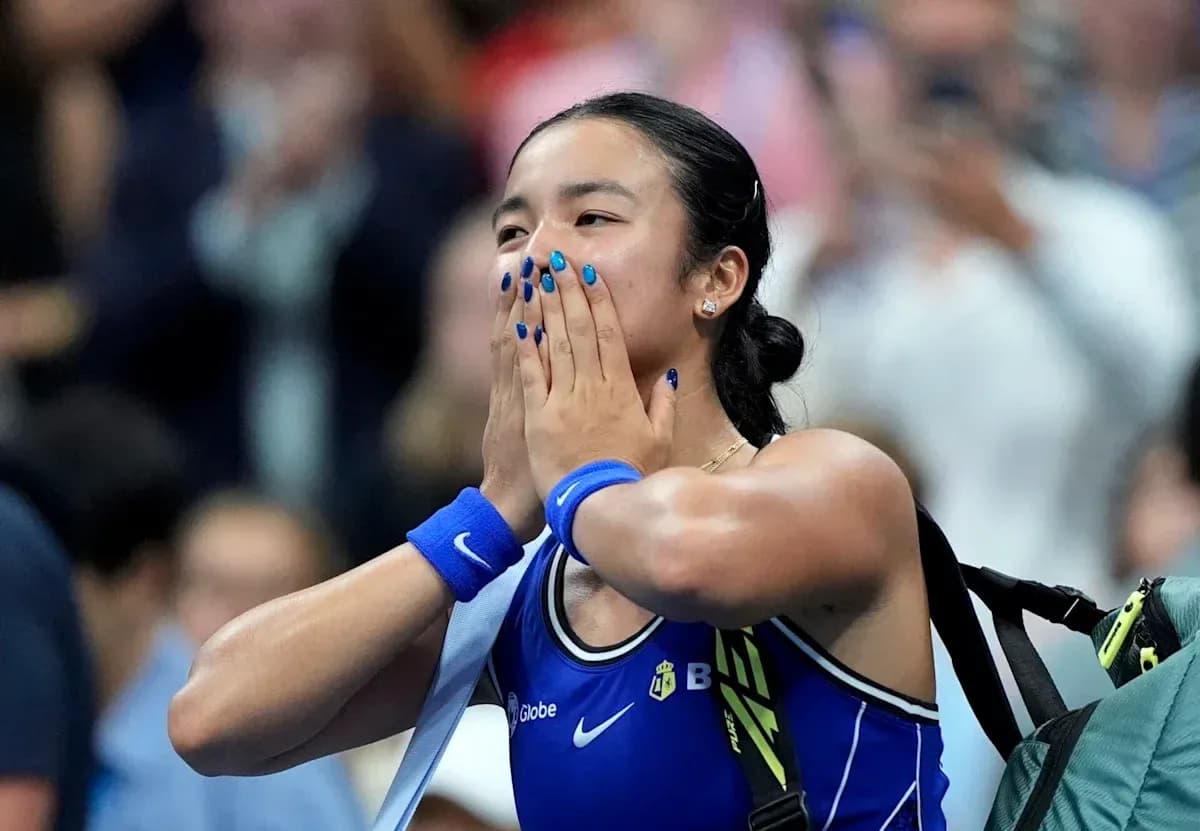
The result has been a flurry of night-into-morning marathons at Flushing Meadows this fortnight. Last week, Venus Williams and Sofia Kenin started their first-round match at 12:13am, the latest start in US Open history. It was one of three matches in the opening seven nights to finish after 2am. Three others crept beyond 1am.
For Martina Navratilova, 18-time Grand Slam singles champion, the line has already been crossed.
"Something has got to give," she said. "This is not OK and it is not normal."
The New York question
Of course, there is another side to this. Ask some fans, and they will tell you these nights are the essence of the US Open.
The tournament leans into New York’s mythology: the city that never sleeps, the stadium that never shuts, the roar that never really dies down. A packed Ashe at 1:30am, fuelled by adrenaline and late-night energy, is unlike anything else in tennis.
This week’s 3:34am finish, though, did not come from a single epic gone wild. It was the end point of a day that had simply overloaded the schedule. All three earlier quarter-finals on Ashe – Aryna Sabalenka beating Linda Noskova, Jessica Pegula overcoming Emma Navarro, with Tiafoe’s win in between – went the full distance. One long match bled into another. By the time Shelton and Alcaraz stepped on court, the night was already lost.
So the sport is left with a familiar dilemma. The spectacle is undeniable. The atmosphere is electric. The images are unforgettable.
But when top seeds are talking about jet lag without changing time zones, when semi-finalists are going to bed at 5am while their rivals are already recovering, and when legends of the game are calling the whole thing "not normal", the romance of the night session collides head-on with the reality of high-performance sport.
At some point, tennis has to decide what matters more: the mythology of the city that never sleeps, or the players who eventually have to.