.svg&w=384&q=75 "logo")
US Open 2026: Chaos and Resilience at Arthur Ashe Stadium
By the time the last stragglers drifted out of Flushing Meadows, the tennis was over but the chaos wasn’t. In a deserted corner of the US Open grounds, a small crew of workers huddled under a gaping hole in the ceiling of a tournament shop, wrestling with a burst pipe and a steady stream of water threatening to destroy thousands of pounds’ worth of merchandise.
It felt less like the end of a Grand Slam night and more like the aftermath of a storm.
A grand stage, crumbling at the edges
Anyone walking into Arthur Ashe Stadium this year knew something was off. The first thing they saw wasn’t a celebration of champions or a nod to history, but a plea: “Pardon our appearance while we write the next chapter of Arthur Ashe Stadium.”
The appearance needed more than pardoning. It needed rescuing.
Inside, one of the sport’s great arenas looked tired and battered. Corridors and back rooms at one of the biggest events in world sport gave off the uneasy sense of a building in decline. The media centre became a running joke and a minor hazard. Every other day, a new leak appeared in the ceiling, long plastic sheets snaking down into buckets that caught the steady drip of water. Reporters typed beneath makeshift water slides.
In the workers’ restaurant, a dramatic burst from above forced a full-day shutdown. Some staff wondered, only half in jest, why they kept turning up to work under a ceiling that seemed determined to give way. Photographers, stuck in the bowels of the stadium, complained of foul-smelling fumes rising from the drains in the photo pit that left them feeling sick.
This was a Grand Slam dressed up as a construction site.
The year of ring lights and restless crowds
On court, the tennis often soared. Off it, the tournament unravelled in other ways.
The 2026 US Open will be remembered as the year influencers took over Ashe. Not because they brought new fans to the sport in any meaningful way, but because they treated the stadium like a content studio. Ring lights glowed in the darkened stands. TikTok videos were filmed mid-rally. Fans repeatedly stood up to take selfies during points.
The idea that everyone must “grow the game” at any cost has rarely looked more misguided. Sometimes, protecting the experience is the only sane option.
Inside Ashe, the noise never really stopped. Conversations in the stands swelled into a constant, grating hum. At times, the din was so loud it drowned out even Aryna Sabalenka’s full-throated roars. For players trying to serve for sets, it was a circus.
And yet, amid the leaks and the ring lights, the sport still produced a day of tennis to remember.
A brutal schedule, a brilliant day
Between 11.30am on Tuesday and 3.33am on Wednesday, Ashe staged 16 hours of tennis that reminded everyone why this tournament matters. Four matches, four final sets, four dramas that bled into one endless, intoxicating day.
It was also a glaring indictment of the sport’s leadership. The early-morning finishes that have become a grim tradition in New York are not a quirk; they are a problem. Players, fans, and staff staggered out of the stadium in the small hours again, and still the tournament has not found – or chosen – a real solution.
The spectacle masked the dysfunction. It did not erase it.
Women’s game rises above the mess
Through the noise and the logistical missteps, women’s tennis carried the tournament.
The entire top six reached the quarter-finals. For the first time in 51 years, the top four players in the world locked out the semi-finals, turning the latter stages into a pure, heavyweight shootout. It was a powerful statement from a tour often accused of volatility.
Sabalenka, after a nightmare summer, dragged herself through one of the matches of the year against Linda Noskova, the 21-year-old Wimbledon champion. Down but never gone, she clawed her way back to win, and simply reaching the final felt like a triumph of resilience as much as power.
Elena Rybakina had even more to juggle. The No 1 ranking. An aching achilles. A brutal draw. She handled it all and still walked away with the title. Her icy composure and understated personality offered a striking contrast to Sabalenka’s emotional intensity, yet on hard courts over the past year, her level has been relentless.
Zheng Qinwen lit up the middle rounds with the kind of comebacks that stick in the memory. From 0-5 down to 7-5 in the third set against Madison Keys in the third round. Then again from 0-5 to 7-5 in the opening set against Iga Swiatek in the fourth round. Those turnarounds were not accidents; they were declarations. She earned every inch of her return to the spotlight.
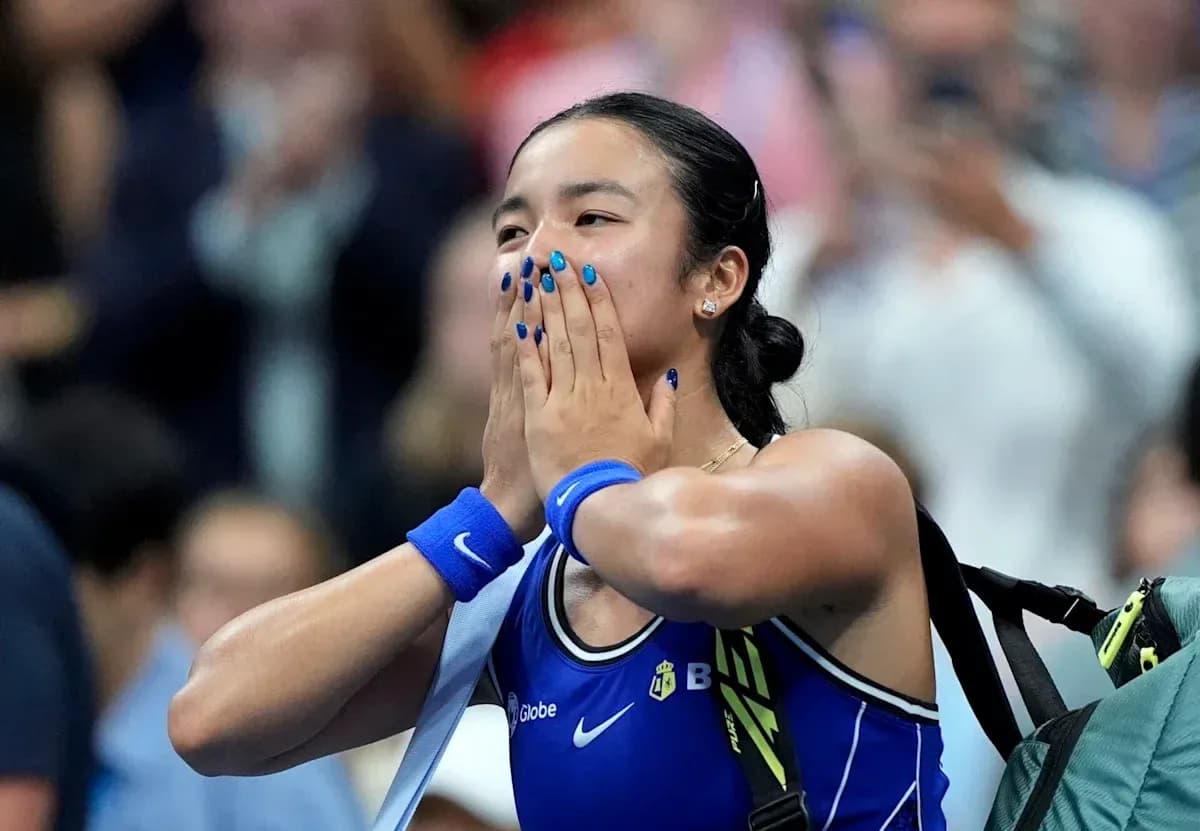
In the juniors and the next wave, the tone was the same. Iva Jovic and Alexandra Eala showed that ferocity and friendship can coexist, pushing each other deep into the night without losing their bond.
And then there was Coco Gauff. A year removed from standing on this court in tears as her serve deserted her, she returned to the semi-finals with a rebuilt game and a steadier mind. Her run was proof that last year’s pain had been processed, not buried.
Men’s game limps through a lost year
While the women’s tour surged, the men’s season sagged under the weight of injuries.
Carlos Alcaraz and Jannik Sinner grabbed the headlines, but their struggles told only part of the story. Jack Draper, Holger Rune, Lorenzo Musetti, Arthur Fils, João Fonseca – all spent long stretches on the sidelines over the past year. Even those who made it to New York carried the rust and the scars of missed months.
The men’s draw felt thinner, more fragile, stripped of some of its rising energy. Yet in the middle of that, it still produced one of the sporting moments of the year.
Alcaraz’s defeat, and a victory of a different kind
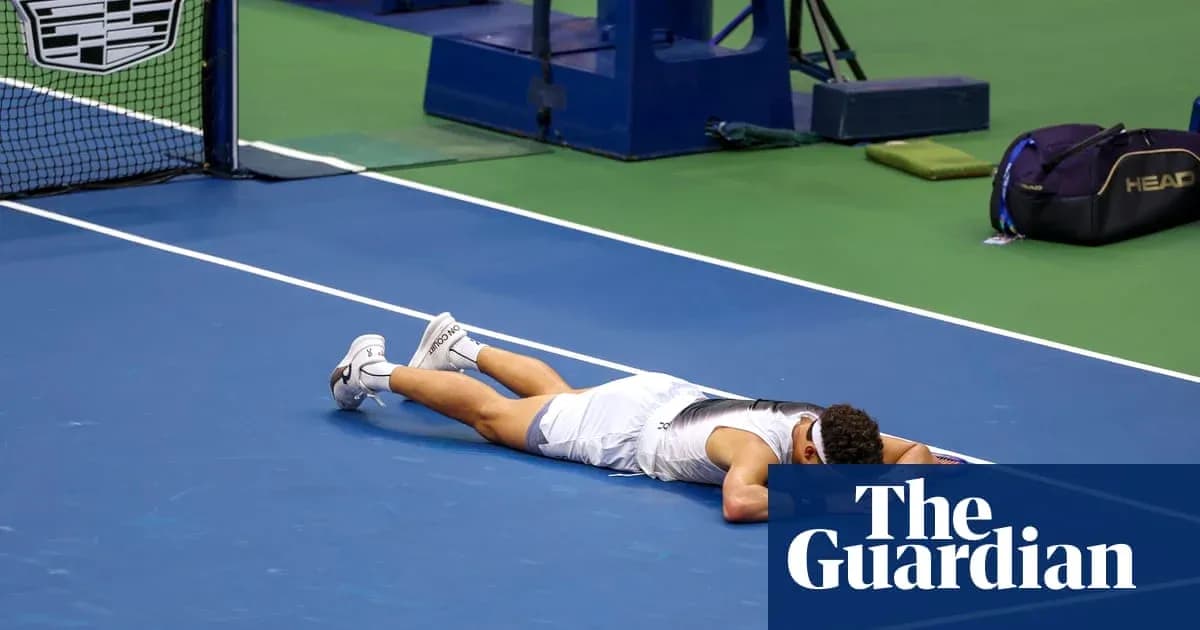
At 3.40am on Wednesday, after four and a half hours of punishment, Ben Shelton walked off Arthur Ashe with the biggest win of his career. He had outlasted Alcaraz in a fifth-set tie-break, in a match that pushed both men to the edge.
Alcaraz, who had spent four and a half months out with a wrist injury and did not know how his body would respond on his return, emptied himself. He played 4hr 28min. He vomited repeatedly. He lost by the narrowest of margins.
The scoreline said defeat. His reaction said something else.
For the first time in months, he had been able to immerse himself again in the thing he loves most, on the stage that suits him best. As he finally left Ashe, long after most of the crowd had gone, he walked down the tunnel towards a locker room that has seen its share of heartbreak and frustration.
This time, his face cracked into a wide, unrestrained smile.
On a night when the roof leaked, the drains stank, and the schedule bordered on farce, one of the sport’s brightest stars walked away beaten on the scoreboard but restored in spirit. The building may be falling apart, the tournament wrestling with what it wants to be, but the game itself – bruised, noisy, imperfect – still finds a way to remind everyone why they keep coming back.