.svg&w=384&q=75 "logo")
UFC 331: A Night of Shock and Violence in Los Angeles
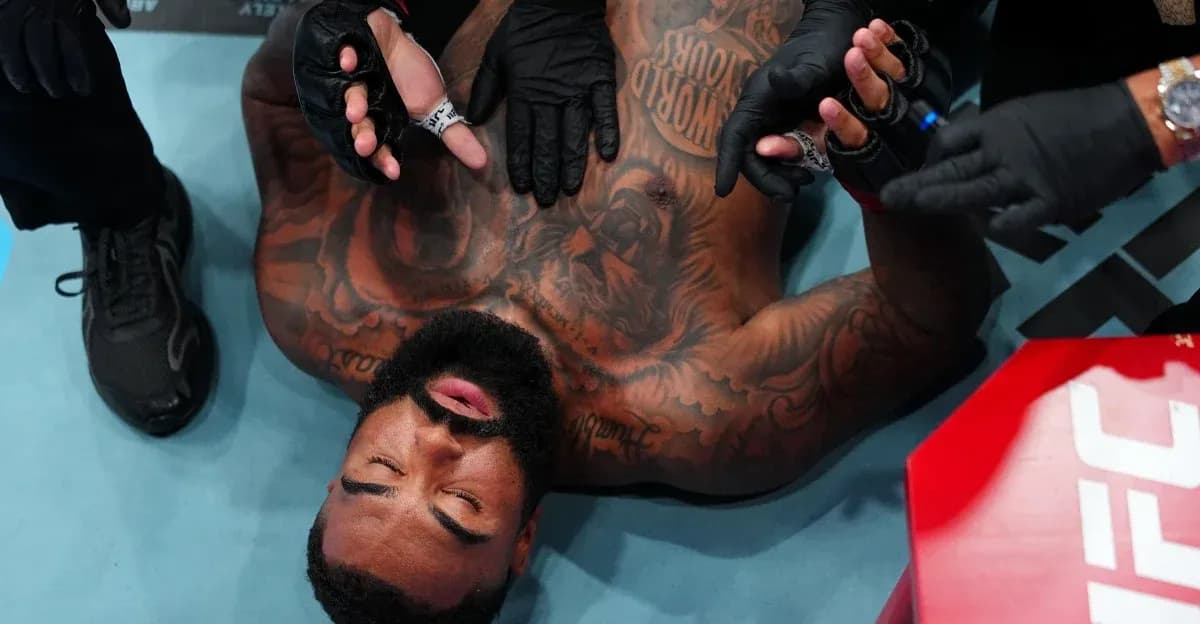
The lights at UFC 331 in Los Angeles barely had time to warm before the first true jolt of the night arrived. Twelve seconds. That’s all it took.
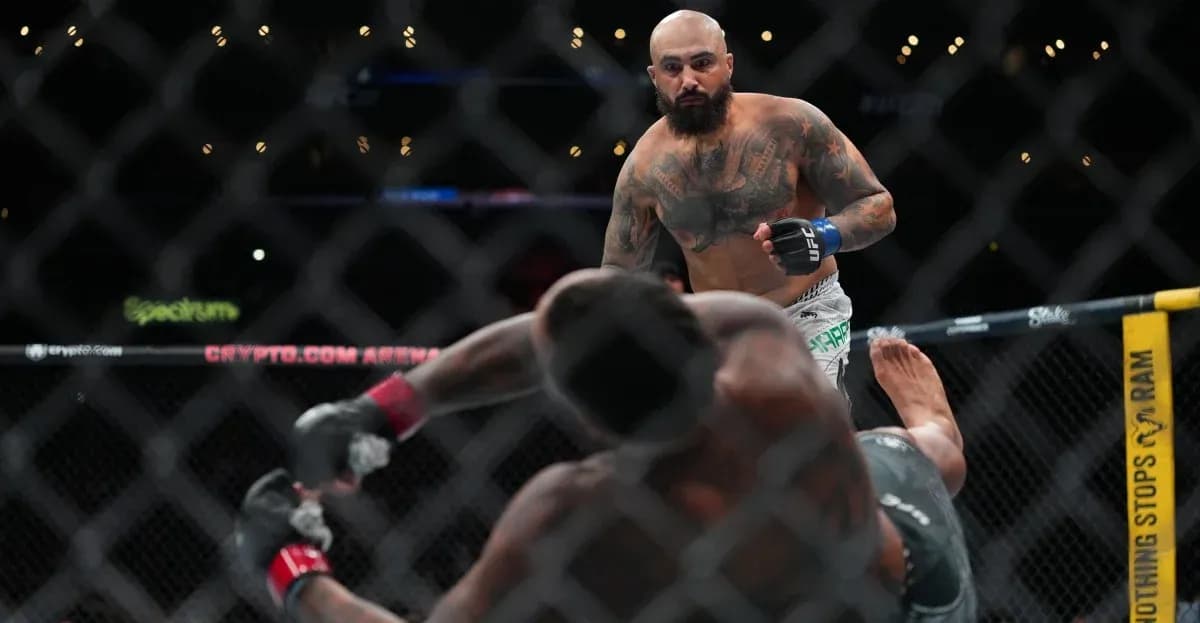
Gable Steveson, the Olympic wrestling prodigy many had penciled in as a future heavyweight force, was knocked out in a blink, sent crashing to the canvas in one of the most stunning moments of the card. The cameras quickly cut to Jon Jones at cageside. His reaction said what thousands in the arena were thinking.
Eyes wide. Jaw dropped. A champion who has seen almost everything in this sport looked genuinely stunned.
For Steveson, the loss was brutal and abrupt, the kind of defeat that can either derail hype or harden resolve. For the rest of the card, it set a raw, unpredictable tone that carried through the night.
Menifield vs. Baraniewski: Power Meets Resistance
Alonzo Menifield and Iwo Baraniewski brought a different kind of tension. No shock flash knockout here, but a steady, grinding test of will.
Menifield, known for his explosive power, stalked forward with bad intentions, forcing Baraniewski onto the back foot early. Every time Menifield stepped in, the crowd leaned with him, expecting the finish. Baraniewski refused to fold, firing back counters, clinching when he had to, and dragging the fight into deeper waters.
The bout turned into a tug-of-war between Menifield’s athletic aggression and Baraniewski’s durability and composure. It wasn’t chaos. It was pressure, minute after minute. By the end, both men wore the story of the fight on their faces.
Vera vs. Jourdain: Controlled Violence on the Feet
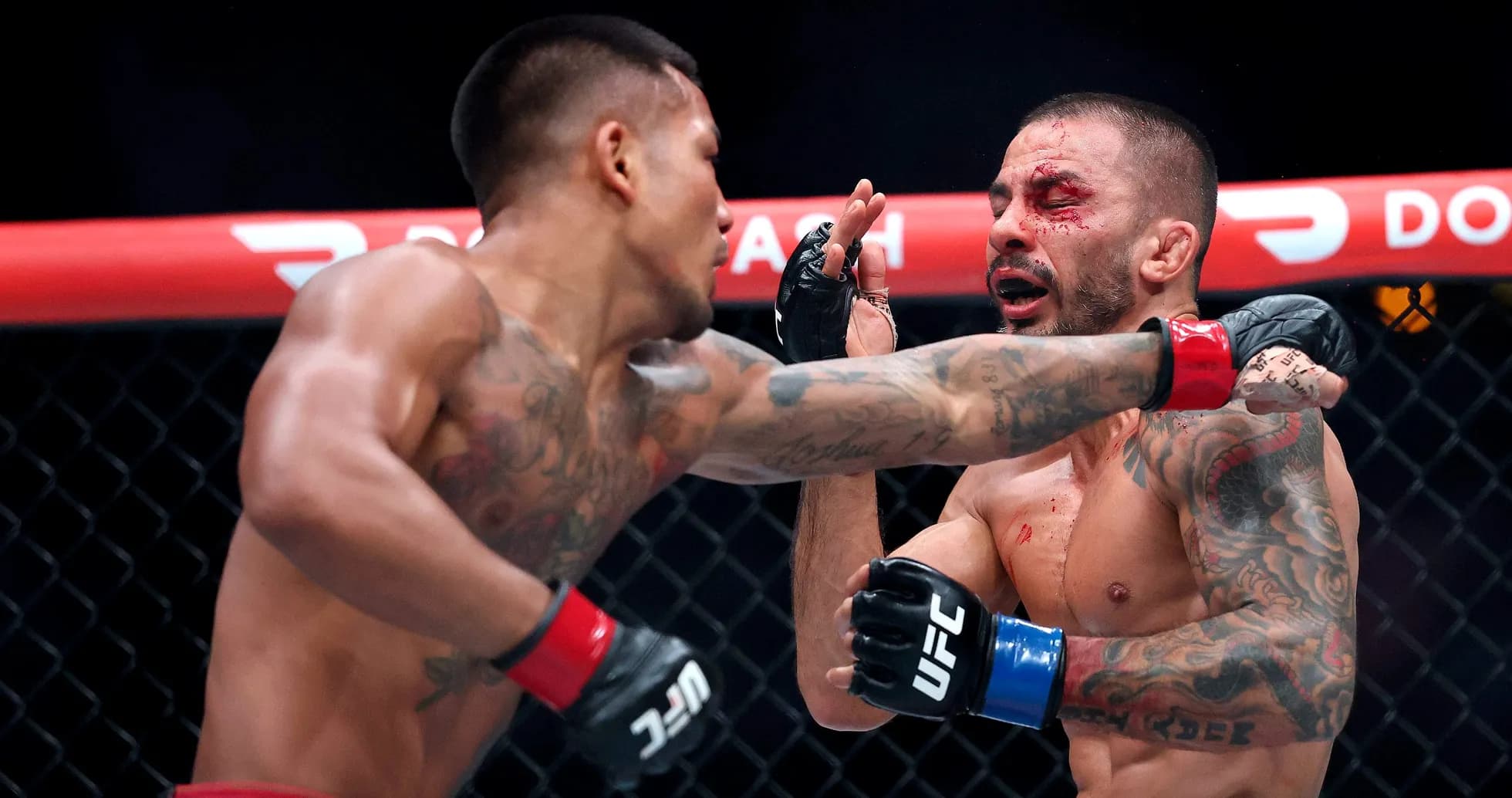
When Marlon Vera and Charles Jourdain walked to the Octagon, the building felt different. Fans know what those two bring: malice wrapped in technique.
Vera, with his familiar slow burn, took his time. He read Jourdain’s movement, absorbed the early volume, and started to chip away. Jourdain tried to keep it loose, mixing kicks and combinations, changing angles, refusing to stand still in front of Vera’s power.
Then Vera began to close the cage. His pressure grew heavier, his shots more accurate. Every landed strike carried weight. Jourdain answered with flurries and heart, but the exchanges tilted toward Vera as the minutes ticked by.
It was the kind of fight where every clean connection drew a roar, a reminder of how thin the line is between control and collapse at this level.
Gandra vs. Diaz: A Fight on a Knife-Edge
Ryan Gandra and Osman Diaz fought like two men who understood exactly what this stage meant.
From the opening horn, they refused to let the pace drop. Gandra tried to impose structure, working behind his fundamentals, looking to dictate where and how the exchanges took place. Diaz pushed back with sharp offense of his own, turning defensive moments into sudden bursts of danger.
Momentum swung repeatedly. One sequence belonged to Gandra, the next to Diaz. Neither man allowed the other to feel safe, not for a second. It was less a slow build and more a constant knife-edge, each mistake punished, each success fleeting.
By the final moments, both fighters were running on grit, not freshness, still trading, still reaching for a statement in front of the Los Angeles crowd.
O’Neill vs. Moura: Relentless Work in the Shadows
Casey O’Neill and Eduarda Moura delivered the kind of fight that hardcore fans appreciate: physical, tactical, and unforgiving.
O’Neill pushed a high pace, intent on breaking Moura with volume and pressure. She stepped into the pocket, forced clinches, and made every exchange count. Moura answered with stubborn resistance, defending, adjusting, and firing back when the openings appeared.
This wasn’t a highlight-reel sprint. It was a grind. O’Neill tried to wear Moura down, to test her conditioning and resolve. Moura refused to be a passenger, turning defensive positions into scrambles and counters, making O’Neill work for every inch.
It was a reminder that not every decisive performance comes with a spectacular finish. Sometimes it’s about who can keep their foot on the gas the longest.
Brito vs. Chikadze: Fireworks on the Edge of Range
Joanderson Brito and Giga Chikadze promised striking drama, and they delivered.
Chikadze, as always, tried to own the space just outside boxing range, stabbing with kicks and punishing any lazy entries. His timing and variety kept Brito guessing early, forcing him to think his way into the fight rather than simply charge.
Brito responded with calculated aggression. He cut off angles, forced Chikadze toward the fence, and refused to let the Georgian settle into a comfortable rhythm. Every time Chikadze looked ready to flow, Brito disrupted him—through pressure, through power, through sheer refusal to back away.
The exchanges crackled with danger. One clean kick from Chikadze or one heavy overhand from Brito could have flipped everything. That tension kept the arena locked in, every feint and step drawing a murmur from the crowd.
UFC 331 will be remembered for that 12-second shock, the moment Gable Steveson hit the canvas and Jon Jones’ expression told the story. But beneath that headline moment, the card in Los Angeles delivered what this sport does at its best: careers nudged forward or knocked sideways, reputations tested, and futures rewritten under the bright lights.