.svg&w=384&q=75 "logo")
Twelve Seconds That Changed the UFC Heavyweight Division
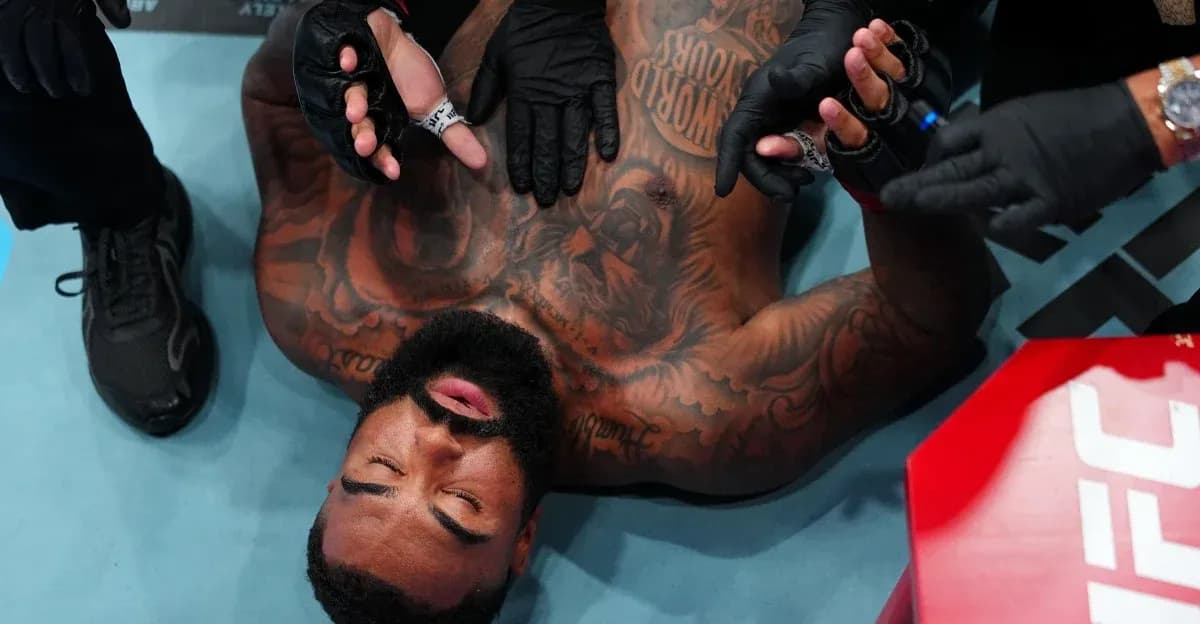
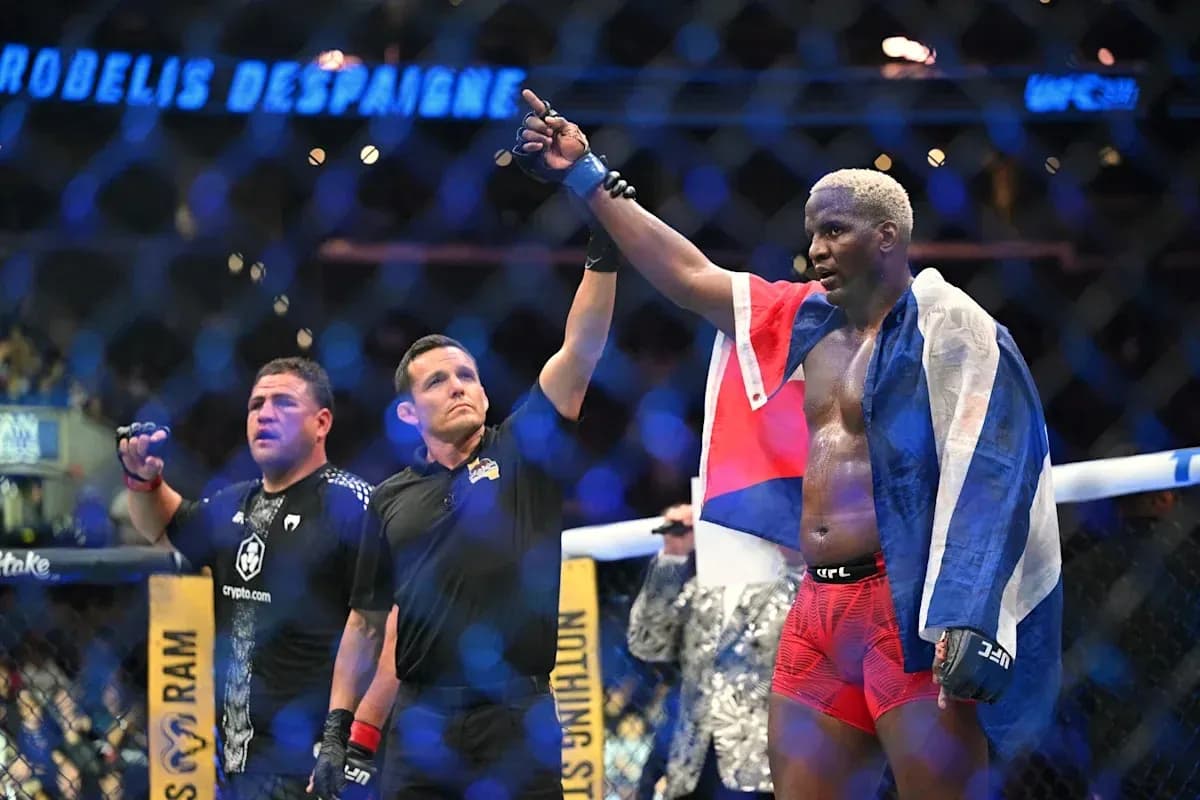
Gable Steveson walked into Crypto.com Arena on Saturday night as the future of the UFC heavyweight division. He walked out 12 seconds later, flat on his back, his aura shattered and his record stained for the first time.
The man who did it? Sean Sharaf, a relative unknown from Santa Ana, California, who needed less time than a TV replay to turn the division on its head.
Twelve Seconds That Changed Everything
The opening horn had barely finished echoing when Sharaf stepped forward, loose and composed. Steveson, the 26-year-old former wrestling phenom, moved to engage, looking to impose the physicality that has defined his young MMA career.
He never got the chance.
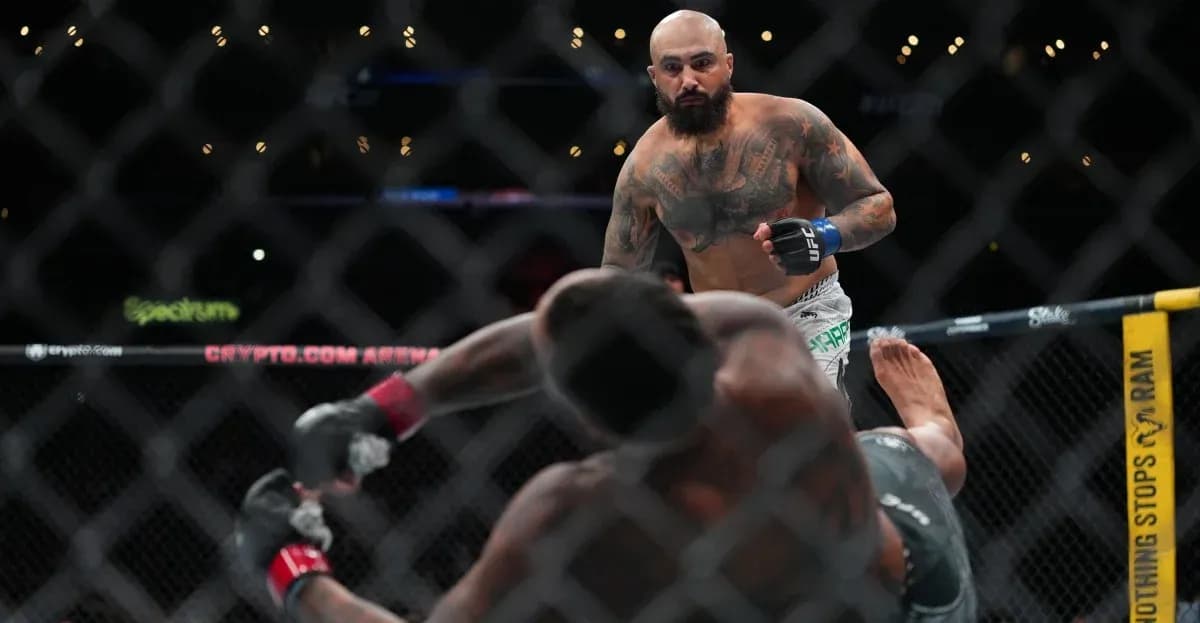
Sharaf snapped a left hook clean onto Steveson’s jaw, a short, sharp shot that detonated with brutal precision. Steveson crumpled, the favorite beaten before most fans had settled into their seats.
By the time the referee waved it off, the building was still trying to process what had just happened. The broadcast quickly supplied the context: it was the third-fastest finish in UFC heavyweight history.
Sharaf simply stood there for a moment, almost stunned by his own handiwork, before the roar of the arena washed over him. Then the reality sank in. He had just knocked out one of the most hyped heavyweights on the roster in less time than it takes to circle the Octagon.
Sharaf’s Moment
When Joe Rogan stepped in for the post-fight interview, Sharaf’s voice carried the adrenaline of a fighter who had just changed his life in a single exchange.
“I feel amazing, Joe,” he said, breathing hard but smiling wide. “I worked so hard. … I want to thank you all so much for your support.”
He soaked it in. The lights. The noise. The disbelief. This was the kind of finish that gets replayed for years, the sort of statement that can turn a fringe name into a contender overnight.
Across the cage, there was no such celebration.
A Villain’s Exit
Steveson didn’t wait around for the official announcement. As Sharaf’s hand was raised, the Olympic wrestling star was already gone, walking out to a chorus of boos that had followed him all week.
The hostility wasn’t new. Fans had made their stance clear days earlier, jeering Steveson loudly during a public press conference. That animosity traces back to June 2019, when Steveson was arrested on suspicion of criminal sexual conduct while at the University of Minnesota. Prosecutors later dropped the case and he did not face criminal charges, but the cloud has never fully lifted.
On Saturday, the crowd’s reaction was sharp and unforgiving. As he exited, the boos only grew louder, a soundtrack to a brutal, sudden fall.
Hype Halted
Steveson arrived at UFC 331 with the kind of momentum matchmakers dream about. He was 4-0 in MMA, with his most recent win a first-round knockout of Elisha Ellison at UFC 329 on July 11, 2026. His transition from elite collegiate wrestler to knockout threat had fueled talk of a rapid rise toward the top of the division.
All of that ran headfirst into Sharaf’s left hand.
Now Steveson sits at 4-1, his unbeaten record gone, his invincibility punctured in the most ruthless way possible. The questions around him will only grow louder: How does he respond? Can he tighten his striking defense quickly enough to match his wrestling pedigree? Will the public ever separate the fighter from the off-the-mat controversy?
Sharaf doesn’t have to worry about any of that right now. He owns one of the fastest knockouts the heavyweight division has ever seen and the signature scalp of a heavily favored rising star.
Twelve seconds. One punch. A division that thought it knew its next big thing suddenly has a very different name in the spotlight.