.svg&w=384&q=75 "logo")
Toto Wolff's Pursuit of Max Verstappen Ends
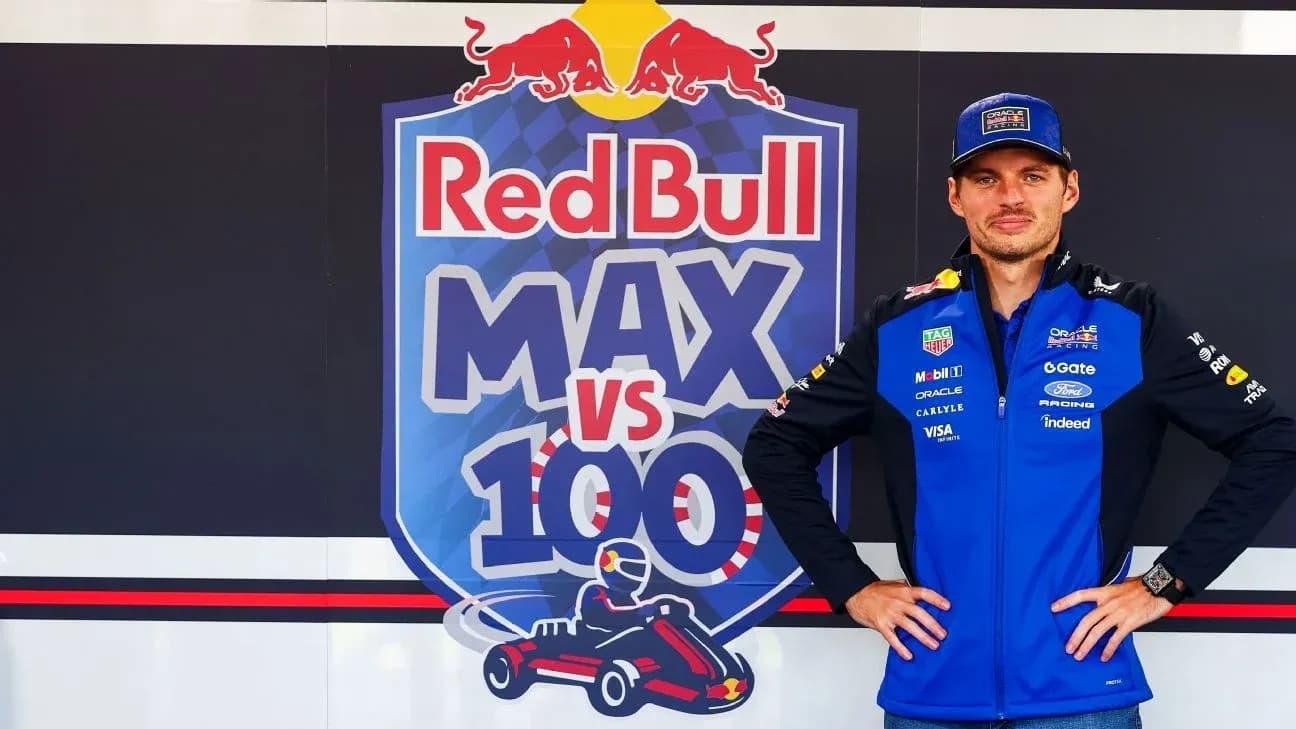
Toto Wolff never hid the fact: he wanted Max Verstappen.
For more than a year, the Mercedes boss circled the three-time world champion, sensing an opening as Red Bull tore itself apart behind the scenes. With Kimi Antonelli stepping into F1 as a rookie and George Russell still searching for that final gear to truly go toe-to-toe with Verstappen, the idea of a silver car for the Dutchman felt less like fantasy and more like an inevitability.
For a while, the paddock believed it too.
Whispers turned into full-blown expectation as Red Bull’s internal chaos grew. Mercedes, battered by the early years of the current regulations, suddenly looked like the most stable option on the grid. Verstappen to Brackley became the storyline that refused to die.
Then the season happened. And the script flipped.
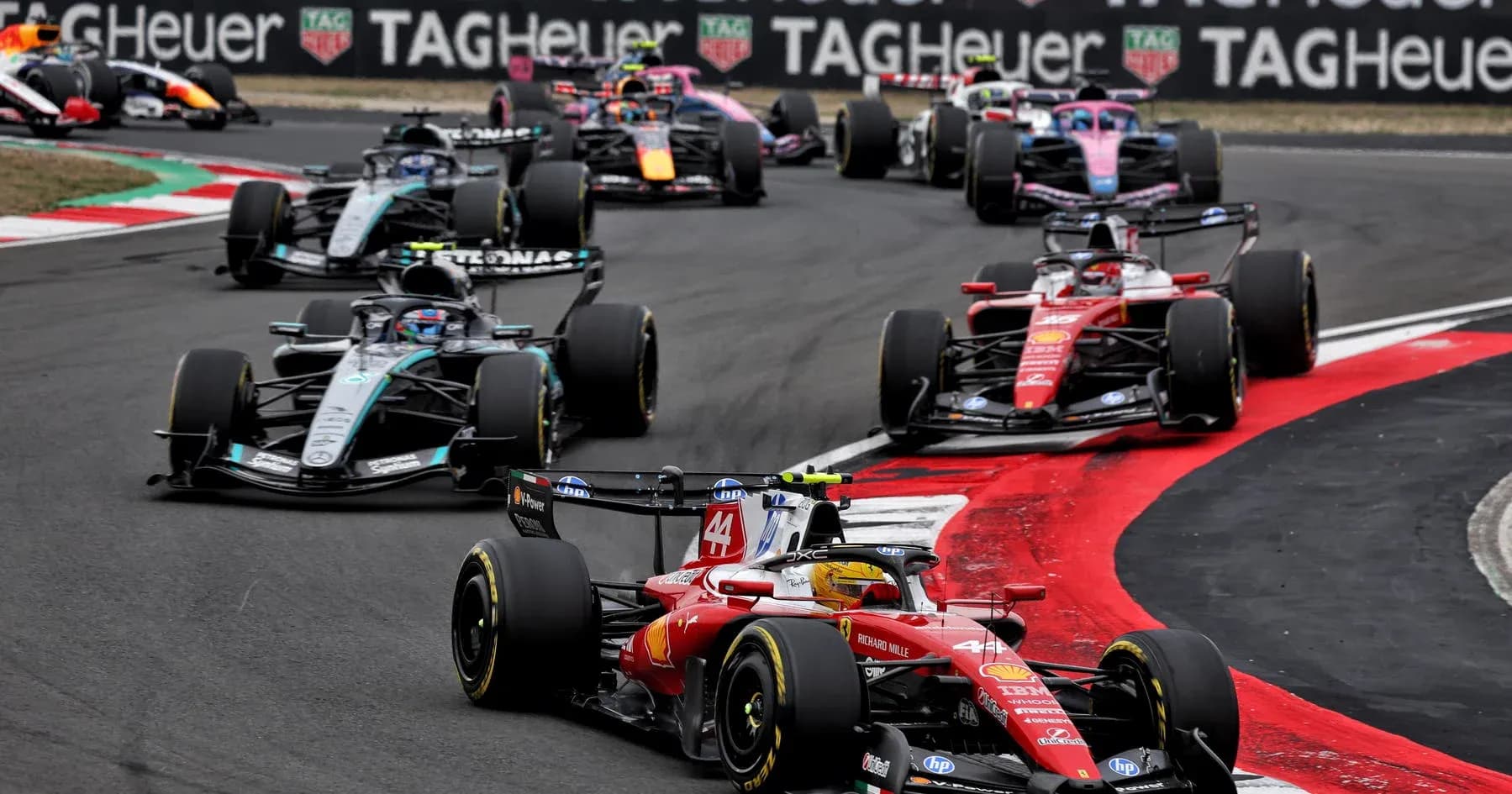
Antonelli, the prodigy Mercedes have been grooming for years, started to look exactly like the talent they’d promised. Calm, quick, unflustered. Russell, whose trajectory had briefly plateaued, signed a long-term deal and began driving like a man who understood this was his team to lead, not just occupy.
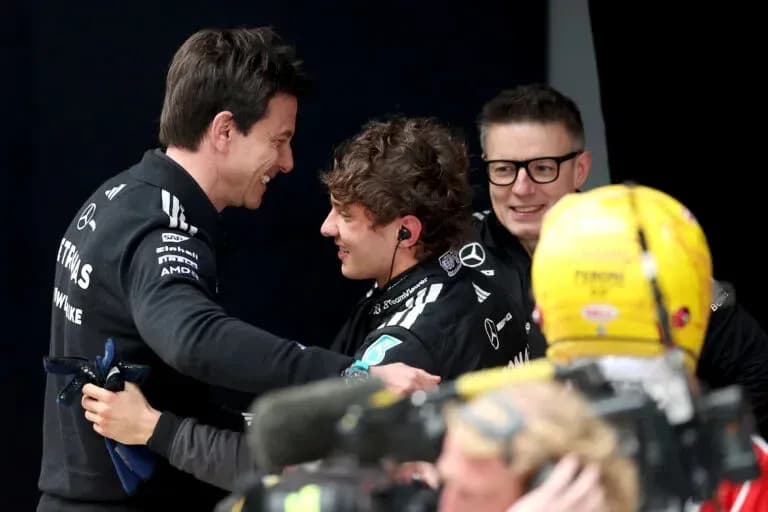
The image from Shanghai told its own story. Wolff, grinning in parc fermé beside race winner Antonelli at the Chinese Grand Prix, looked less like a team principal hunting a superstar and more like one who had just realized he already had the future in his garage.
While Mercedes settled their house, Verstappen made his call.
He stayed loyal to the only F1 team he has ever driven for, choosing familiarity over the intrigue of a fresh start. Red Bull, under pressure and searching for stability of its own, moved to lock him in. The new deal runs until 2033 – a decade-long commitment that plants a flag in Milton Keynes and shuts down the biggest “what if” of this generation.
Wolff’s reaction? No drama. No public sulking. Just a man insisting the decision suits everyone.
“I think [the] most important [thing] was we had clarity in the team for a long time,” he told Sky Sports, underlining how early Mercedes had made their internal decision. “We are committed to George and Kimi and, in a way, that was just a logical consequence of what happened [Verstappen signing a new contract]. Now, silly season is officially canceled, and everyone can focus on the racing.”
The message was clear: Mercedes had moved on before Verstappen put pen to paper.
Asked outright whether he was disappointed to see Verstappen commit his future to Red Bull, Wolff didn’t hesitate.
“No, not at all,” he said. “We know each other well. With Kimi and George, it's the perfect setup that we have and the perfect lineup. So there's no disappointment.”
Behind those words lies a quiet confidence. Russell is entering his prime years with a long runway ahead of him. Antonelli is still miles away from his ceiling. Together, they give Mercedes something Verstappen could never offer at this stage of his career: a decade-plus of dual development, with one driver already established and the other rapidly emerging.
Red Bull, for their part, are betting just as heavily – not only on Verstappen, but on Laurent Mekies as the man to haul the team back to the sharp end and keep them there. Verstappen’s new contract is as much a statement of faith in Mekies as it is in the car. He is trusting that Red Bull can deliver a machine capable of closing the gap in this regulation cycle and, crucially, of winning again.
It’s a high-stakes gamble on both sides.
Mercedes now look settled, their driver lineup locked in and aligned with their long-term vision. Red Bull have secured the sport’s most devastating weapon until 2033, but must give him a car worthy of that commitment.
The chase for Verstappen is over. The next phase is simpler, and far more brutal: can Mercedes’ future beat Red Bull’s present?