.svg&w=384&q=75 "logo")
Toby Samuel's Rapid Rise to Davis Cup Selection
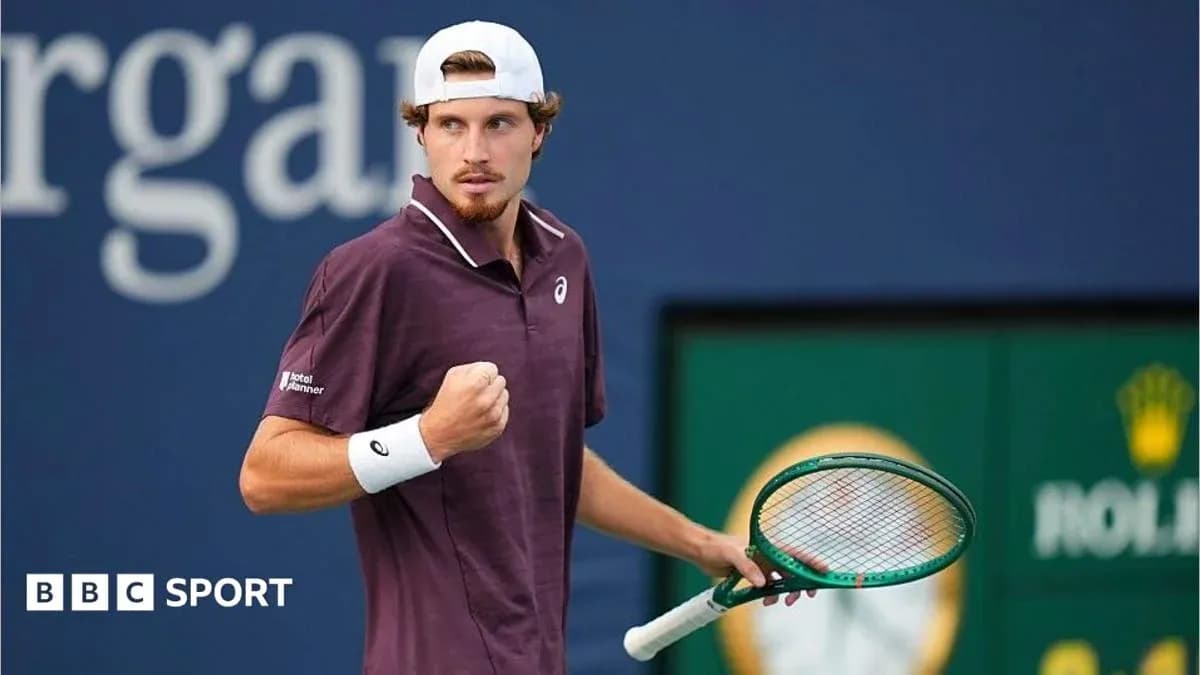
Toby Samuel was wandering the streets of New York when his phone rang. On the other end was Leon Smith, the Great Britain Davis Cup captain, with the words every British player wants to hear.
Congratulations. You’ve been selected.
For Samuel, 23 and barely a year into life at the sport’s top table, it felt unreal.
“It’s surreal being in this position now from where I was eight, nine months ago… hopefully trying to play some Challengers, and now I’m sat here ready to play the Davis Cup – it’s crazy,” he told BBC Points West.
From Challenger hopeful to Davis Cup debutant in less than a year. The rise has been steep, and sudden.
From Winchester to the world stage
Samuel, from Winchester and based in Bath for training, has forced his way into Great Britain’s squad to face Ecuador this weekend as the fifth man, joining Arthur Fery, Cameron Norrie, Henry Patten and Lloyd Glasspool.
Twelve months ago, he was looking up at the sport’s elite from a distance. Now he’s sharing locker rooms with them, trading blows in the game’s biggest arenas and sitting inside the world’s top 100.
The turning point came with a string of firsts.
At the US Open, where he received that call from Smith, Samuel claimed his maiden Grand Slam main-draw win, dismantling Tomas Machac before running into 18th seed Jiri Lehecka in the second round. It was a sharp introduction to the unforgiving nature of major tennis, but it also confirmed he belonged.
Before New York, he had already fought his way through three rounds of qualifying in Paris to reach the French Open main draw, only to run into world number eight Alex de Minaur in the first round. Then came Wimbledon, and with it a wildcard and a five-set thriller against Czech 15th seed and French Open semi-finalist Jakub Mensik.
He didn’t sneak into the big time. He kicked the door open and stayed.
Learning to live with the elite
Those early steps onto the sport’s grandest stages came with nerves that were impossible to hide.
“At first it was a completely new experience, I was pretty nervous going to those tournaments, seeing the top guys there in the locker rooms and playing against them – I was sort of shaking a little bit on court,” Samuel admitted.
That raw honesty fits the way he plays. No fuss, no mystique. Just a young player confronting the scale of the challenge and then adjusting, fast.
“But after the second or third time I did it I got more used to it and I felt like I was a lot calmer on the court which helped me to go deep.”
The shift has been as much mental as physical. Challenger Tour life, with its best-of-three format, doesn’t quite prepare you for the grind of five-set tennis. Suddenly, matches can stretch to three, four, even five hours. Momentum swings, bodies ache, and the mind starts to wander.
For Samuel, that’s all new. But he has adapted quickly enough to turn his game into a threat at the highest level.
Weapons for the Davis Cup stage
The serve and forehand, once solid, now carry genuine bite.
“Before they were good but they weren’t really scaring people,” he said. “Now they’re my biggest weapons and I can take matches with them.”
That evolution underpins his selection for Great Britain. Smith has not brought him in as a passenger. He’s there as a live option, a player whose aggressive tools can tilt a tie, whether in singles or in support of a doubles-heavy line-up featuring Patten and Glasspool.
Samuel describes his call-up as “one of the best moments” of his tennis life. Representing Great Britain in the Davis Cup has long been framed as a pinnacle for British players, and for a young man who only recently hoped to scrape into Challenger events, the jump is stark.
From walking the streets of New York, phone buzzing in his pocket, to stepping into a team room alongside established names like Norrie, the trajectory tells its own story.
The question now is simple: if this is what Samuel can do in eight or nine months, where does this ride stop?