.svg&w=384&q=75 "logo")
Tennis' Late-Night Dilemma: Venus Williams' Midnight Match
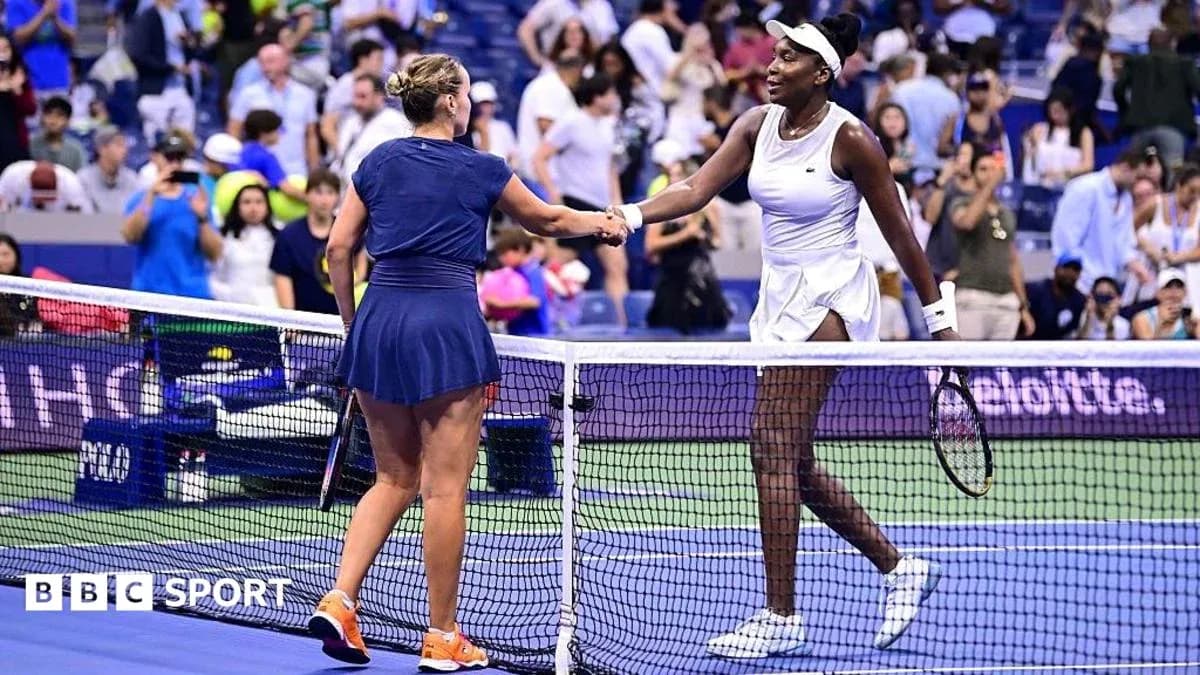
Just after midnight in New York, Venus Williams walked into the glare of Arthur Ashe Stadium as if through a time warp. This was supposed to be a Sunday-night showcase, a primetime tribute to a great champion possibly making her final solo bow at the US Open. Instead, the 46-year-old legend and Sofia Kenin were pushed into the graveyard slot, starting after midnight and finishing well past 2am in front of a thinning crowd and a sport’s scheduling problem laid bare.
Kenin beat Williams in straight sets. The result will slip into the record books as another first-round defeat, another step in a 15-match singles losing streak. The timing will not. Williams called the schedule “not ideal” and “not great” for either player’s conditioning. She did not need to say more. Her late-night appearance felt less like a celebration and more like collateral damage in tennis’ ongoing battle between spectacle, broadcast dollars and basic player welfare.
This is not a one-off. It is the system working exactly as designed.
Why tennis keeps playing into tomorrow
Three of the four Grand Slams – the Australian Open, Roland Garros and the US Open – now build their days around split sessions. Day ticket, night ticket. One set of fans leaves, another set arrives. One price, then a higher one. One audience, then a primetime TV audience.
In New York, that means two showpiece matches from 7pm on Arthur Ashe: one men’s, one women’s. The logic is brutally simple. Two sessions mean two sets of tickets for the same seat. The night session is sold as the premium product: easier for people coming after work, more star names, higher prices. It also means more money from television.
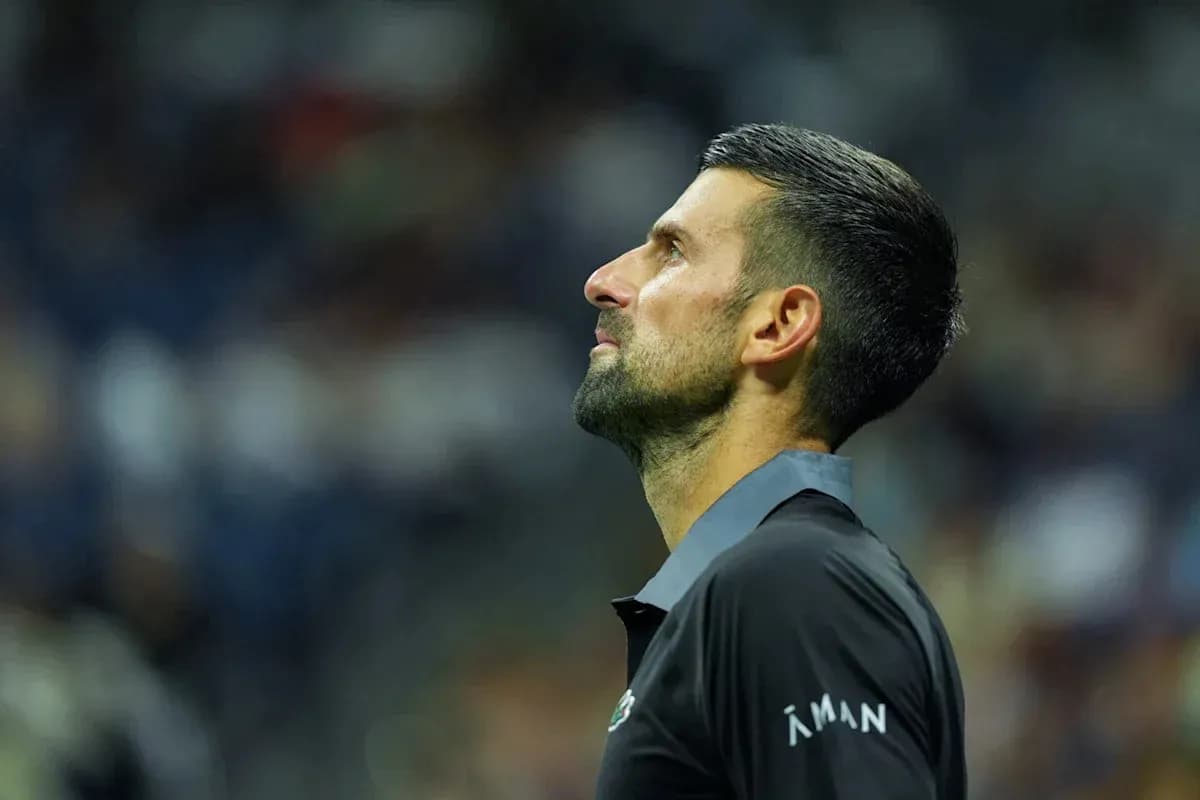
ESPN’s domestic rights deal, signed in 2024, is worth $2.04bn through 2037 – around $170m a year to beam every match into American homes. Those late-night slots are gold. US primetime runs later than in many countries, with talk shows starting around 11pm. Tennis can bleed into the early hours and still sit inside that lucrative window. That is the business case. It is also why Williams and Kenin did not strike a ball until Novak Djokovic and Mariano Navone had finished grinding through five sets and more than four hours.
By the time the women finally walked on, it was Monday. By the time they walked off, the 23,933 seats of Ashe were dotted with only the hardiest insomniacs.
The one Slam that says no
Wimbledon has drawn a line. Play starts at 11am and stops at 11pm, roof or no roof, drama or no drama. If a match is still going, it is suspended and resumed the next day. It frustrates players when they are a few games from the finish line, but there is clarity. Everyone knows when the day ends. Everyone catches the train home.
The BBC, which holds the broadcast rights in the UK, does not rely on selling ads in the same way as ESPN. It has no financial need to guarantee tennis under floodlights deep into the night. That shapes the tournament. It shapes the experience. It shapes the health of the players, too.
In New York, the equation is different. The night session is not an add-on; it is a core product.
Organisers, fans and the clock that never stops
Tournament director Stacey Allaster has defended the US Open’s approach. After the 2022 event, she said late-night matches had been “heavily discussed and reviewed”, but the decision was to keep the format. The idea of starting the evening session at 6pm instead of 7pm was raised and dropped. Too hard for New Yorkers to arrive that early, she argued.
Reducing the night session to a single match was also considered and rejected. Organisers felt it would be unfair to fans who expect two. Tennis, Allaster pointed out, is not defined by fixed start and end times. A match can be over in an hour or stretch to five. That uncertainty is part of the sport’s romance. It is also the root of its scheduling chaos.
Everyone in the game knows what a five-set men’s match can do to a timetable. Four hours is routine. Five is not unusual. A women’s match going the distance can easily pass three. Put them back-to-back in front of 20,000 people and a global TV audience, add a short break, and you are flirting with a 3am finish before a ball is hit.
That is exactly how Williams and Kenin ended up serving and sprinting in the middle of the night, their match squeezed into the space left behind by Djokovic’s defeat. The sport’s business model had spoken, and the players had to live with the consequences.
Players push back
This is not just about a single veteran champion and a single awkward timeslot. Late finishes have become a flashpoint in a broader struggle between players and Grand Slam organisers over money, workload and respect.
For years, players have argued that they deserve a bigger share of the revenue. They point to the relentless schedules, the late-night starts, the limited recovery time, the ever-expanding media obligations, and even pension contributions. The message is simple: if the sport is going to stretch them to their physical and mental limits, they want a fair cut of the profits.
At Roland Garros and Wimbledon this year, top names including Coco Gauff, Aryna Sabalenka and Jannik Sinner scaled back their media duties in protest at what some see as unfair conditions. It was a quiet but pointed show of resistance.
The pressure has worked, at least in part. Wimbledon and the US Open have agreed to increase prize money from 2026. A new Grand Slam players advisory council will be formed after this US Open, designed to give players a stronger voice in how the majors are run.
What that council will do about late-night finishes is not yet clear. Its creation, though, confirms one thing: players no longer accept that this is just the way things have to be.
The price of change
If players push hard to end the 2am epics, the consequences will ripple far beyond the locker room. Shorter night sessions, earlier start times or stricter curfews would almost certainly make the TV product less flexible. That could mean less money from broadcasters, which in turn could mean smaller prize pots.
The sport is stuck in a familiar bind. The same late-night drama that TV executives love and organisers sell as a unique spectacle is the thing that players say is eroding their bodies and shortening their careers. Every tweak to protect them risks cutting into the revenues that pay them.
For now, the stalemate holds. The accountants still have the upper hand over the physios. The schedule bends towards the broadcaster more than the competitor.
So Venus Williams, a seven-time major champion and one of the pillars on which modern tennis was built, walks onto court after midnight, plays in front of a half-empty stadium, and calls the whole thing “not ideal”. The sport hears her. The question is whether it is ready to listen.