.svg&w=384&q=75 "logo")
Team USA Dominates in World Cup Opener: What’s Next?
Team USA did not so much begin their 2026 FIBA Women's Basketball World Cup as announce it.
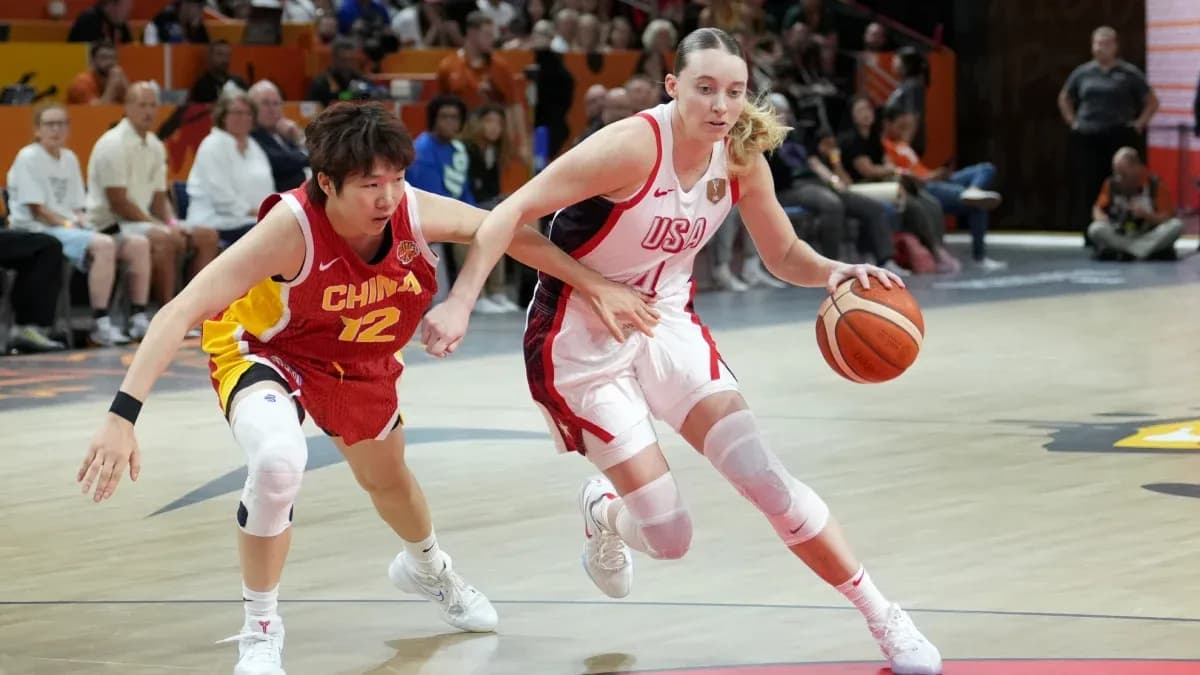
A 94-61 dismantling of China in Berlin on Friday was ruthless, efficient and entirely in keeping with a program chasing a fifth straight world title. The scoreline flattered no one. It simply underlined what most already believed: the United States have arrived as the team to beat again.
But in this new World Cup format, dominance on opening night is only the first step.
New format, higher stakes for first place
FIBA’s revamped structure has stripped away some of the old safety net. Sixteen teams, four groups of four, three games each. That part is familiar enough.
The twist comes after the group stage.
Top spot in each group now carries a golden ticket straight to the quarterfinals. Finish second or third and there’s a sudden-death qualification game just to make the last eight. Fourth place goes home.
So for a team like the United States, the target is not simply “get through.” It’s clear: win Group D, skip the extra knockout, and protect themselves from the chaos of a one-off upset.
Group D is USA, China, Italy and Czechia. The Americans already own the early high ground: 1-0, two competition points, and a 33-point win in the bank. Italy beat Czechia on opening day as well, so both the USA and Italy sit at 1-0 heading into their showdown on Sunday. Czechia awaits on Monday.
The math is simple. The margins are not.
One win to advance, two to dominate
From a qualification standpoint, the Americans are close to safe already. One more victory from their remaining two games – against Italy or Czechia – locks in at least a 2-1 record. In a four-team group, 2-1 guarantees a top-three finish and a place in the knockout phase.
That’s the floor.
The ceiling is where this team’s ambitions truly live. Run the table at 3-0 and first place in Group D is almost certain, barring an unlikely tiebreak twist. That would launch Team USA straight into the quarterfinals and wipe away the risk and fatigue of an extra elimination game.
Even 2-1 could still be enough to win the group, depending on point differential and head-to-head results. But the Americans don’t need help from anyone. Beat Italy. Beat Czechia. Control everything.
They have already shown they have the tools to do exactly that.
A new-look USA shows its teeth
The opening win over China did more than put points on a standings board. It offered a first real glimpse of what this revamped roster can become over the next two weeks.
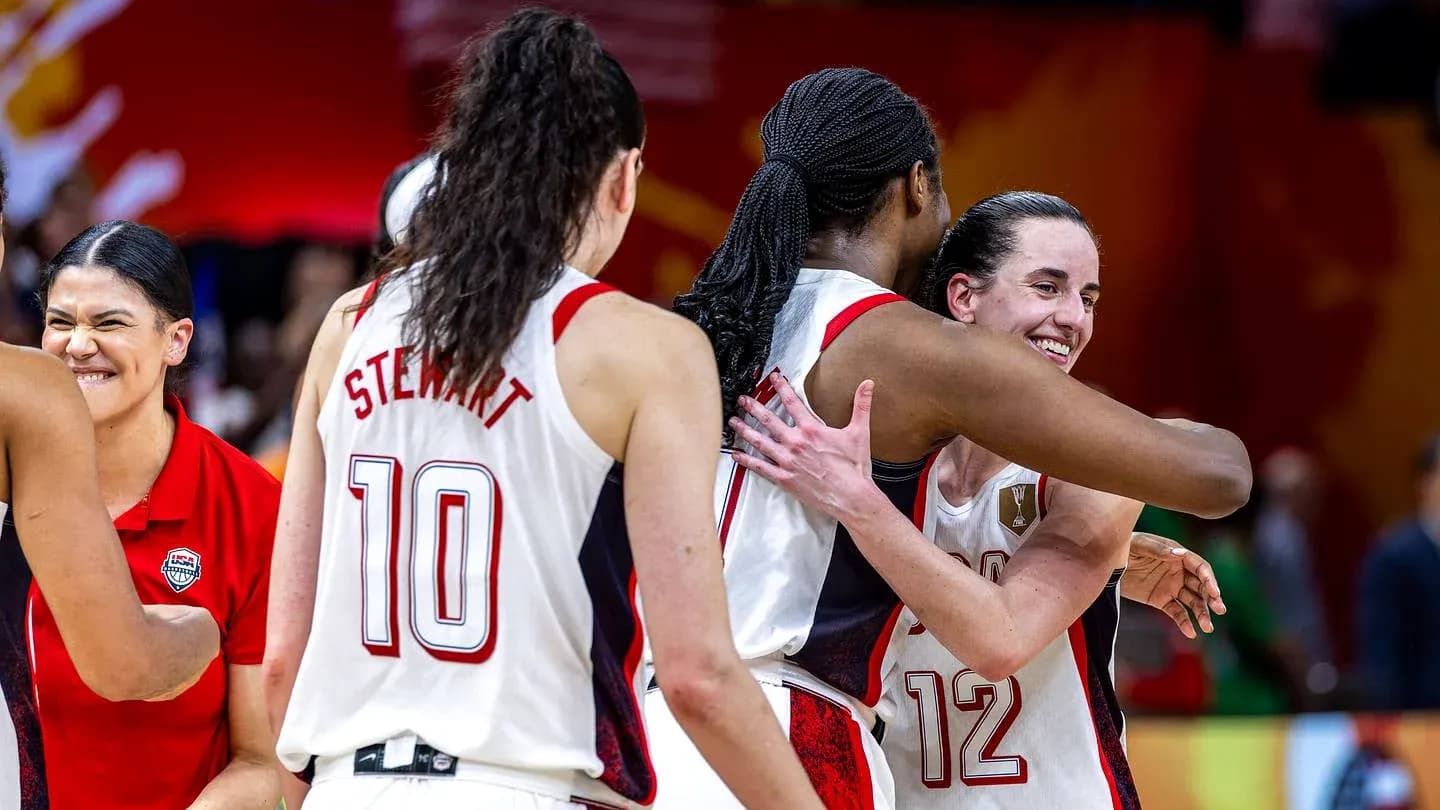
Caitlin Clark, in her World Cup debut, looked as if she’d been here for years. Fourteen points, 11 assists, and a command of the perimeter that stretched China’s defense until it finally snapped. She wasn’t alone.
Rhyne Howard poured in 14 of her own. Paige Bueckers matched that total, giving the United States a trio of perimeter scorers who punished every lapse and every late rotation. By the time the game broke open, China were chasing shadows along the arc and battling a losing war inside.
That performance mattered because this is not the roster many expected when preparations began.
A'ja Wilson and Kelsey Plum, pillars of recent USA dominance, withdrew before the tournament with health and injury concerns. Their absence could have left a void. Instead, it created a reshaped hierarchy.
Sonia Citron and Kiki Iriafen stepped into the group, the depth chart shifted, and the responsibility on the shoulders of veterans like Breanna Stewart and Napheesa Collier only grew heavier. The response was emphatic: the system held, the standard remained.
FIBA still rank the United States as the No. 1 team in the world. On opening night in Berlin, they played like it.
Why Group D matters in a loaded field
The Americans know the danger isn’t just in their own group. It’s waiting later in the bracket.
France loom largest. They pushed the United States to the brink in the 2024 Olympic final, falling by a single point and proving they can live with the American pace, size and physicality for 40 minutes. They came into this tournament widely viewed as the most credible challenger again.
Belgium and Australia also sit in that second ring of contenders, teams with enough talent, structure and experience to rip through a knockout bracket if they catch fire. China, even in defeat, reminded everyone why their towering frontcourt can turn any game into a stylistic battle.
This is why first place in Group D is more than a nice-to-have. It’s a shield.
Win the group and the USA avoid the qualification round entirely. That means an extra day of rest, one fewer chance for foul trouble or cold shooting to derail them, and a clearer path into the quarterfinals, where the tournament finally settles into a familiar rhythm: quarters, semis, medal games, champion.
Slip to second or third and the margin for error shrinks overnight.
The prediction: all roads point to first
After one game, the picture is already sharp.
Team USA sit at 1-0 with a commanding point differential. Italy and Czechia still must battle each other, while the Americans have shown they retain serious depth even without Wilson and Plum. The blend of experience, athleticism and playmaking on this roster looks built not just to survive Group D, but to own it.
The immediate equation is starkly uncomplicated: beat Italy or Czechia and a top-three finish is theirs. Beat both and they almost certainly walk straight into the quarterfinals as group winners.
Given the opening statement against China and the talent still stacked across this roster, the most realistic forecast is blunt: Team USA take Group D, head into the last eight on their own terms, and keep the chase for a fifth consecutive world title very much on schedule.
The real question now is not whether they get there, but who, if anyone, can stop them once the bracket tightens and the stakes start to bite.