.svg&w=384&q=75 "logo")
Team USA Faces Hungary in FIBA Women's World Cup Quarterfinal Showdown
Team USA’s march toward yet another FIBA Women’s Basketball World Cup crown pauses in Berlin on Thursday morning, but only briefly. There’s work to do.
At 9:30 a.m. local time at Berlin Arena — 8:30 a.m. in the UK, 3:30 a.m. Eastern, 12:30 a.m. Pacific — the United States meets Hungary in a quarterfinal that pits the sport’s dominant power against a challenger chasing its first semifinal appearance in nearly three decades.
Early start, heavy stakes
For American fans, it’s the kind of tipoff time that belongs more to insomniacs and diehards than casual viewers. The game opens the quarterfinal slate, and FIBA has it locked into the first session of the knockout round. Every second is available live or on demand via Courtside 1891 on DAZN, subject to local availability, for those willing to set an alarm — or skip sleep altogether.
The bracket delivered this matchup once Hungary survived its qualification game to reach the last eight. That path tells you plenty about both teams.
Hungary had to fight its way in, coming out of the group phase in a position that required a single-elimination qualifier. The United States never faced that jeopardy. By winning Group D, the defending champions walked straight into the quarterfinals under the 2026 format that sends only the four group winners directly through while second- and third-place finishers scrap for survival.
The result? Hungary arrives battle-tested. The Americans arrive rested and prepared.
A dynasty with a new face
The weight of history travels with Team USA every time it steps on the floor at this tournament. It’s not subtle.
The United States has captured the last four Women’s World Cups, including the 2022 edition in Sydney, where it handled China 83–61 in the final. In total, FIBA credits the Americans with 11 World Cup titles — a record that leaves every other nation chasing shadows.
Yet this is no static dynasty. The 2026 roster carries a clear sense of transition.
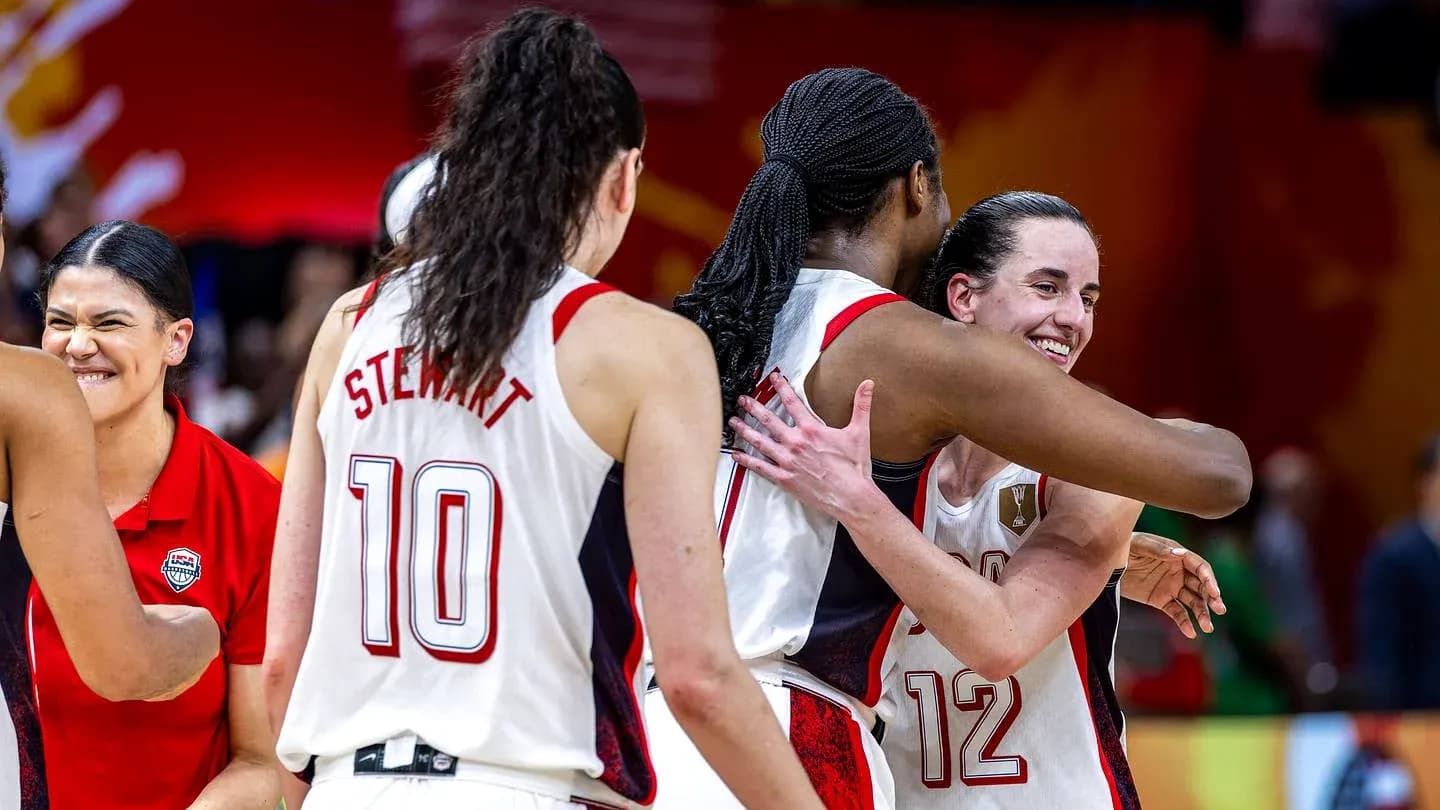
A’ja Wilson and Breanna Stewart anchor the group, established superstars who already know what it means to dominate on this stage. Around them, a new generation is taking its first steps into senior World Cup play. Caitlin Clark, Paige Bueckers and Angel Reese all arrive as debutants, their names already headline material before a ball is even tossed.
That blend of proven winners and fresh star power has turned Team USA into one of the tournament’s main attractions. It’s not just about winning anymore; it’s about watching what the future of the women’s game looks like when it shares the court with its present.
Tested early, warned early
The group stage offered a neat snapshot of this American side: explosive when it clicks, vulnerable when it drifts.
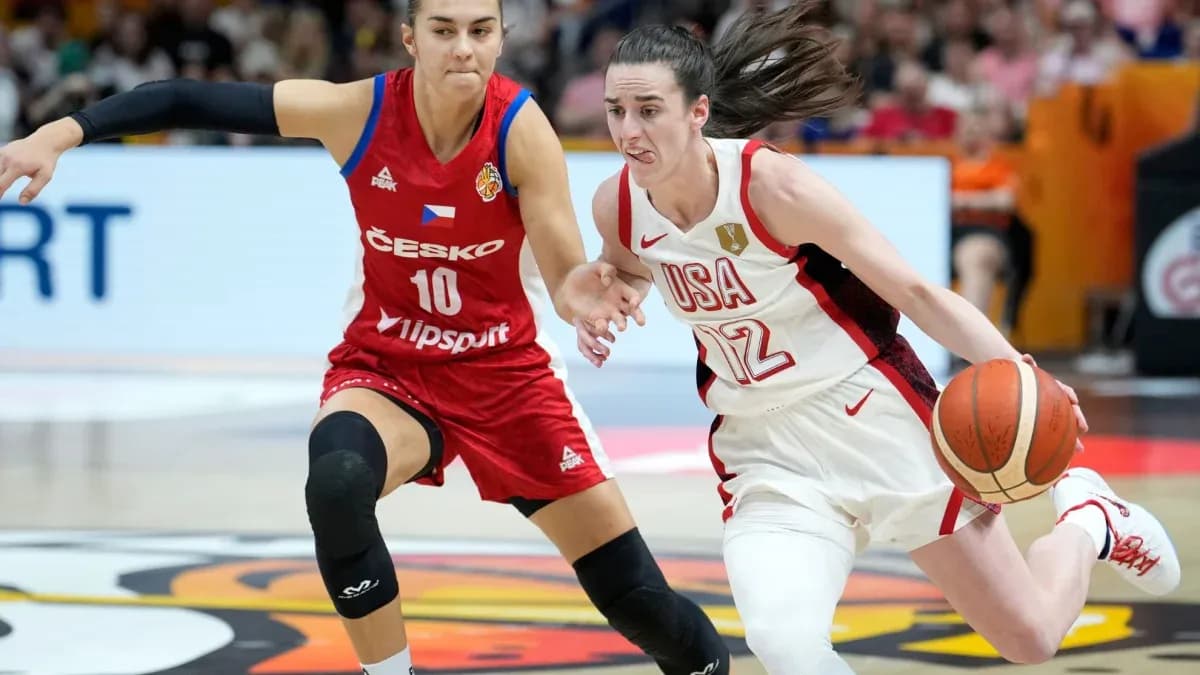
China felt the full force first, overwhelmed in a statement opening win. Czechia followed and met a similar fate as the United States flexed its depth and offensive range.
Then came Italy. And the tone changed.
Where the first two games looked like processions, Italy dragged the champions into a grind. Shots stopped falling. Rhythm disappeared. The scoreboard tightened. The USA had to scrap and claw, eventually escaping with a 55–52 win that secured top spot in Group D and that all-important direct ticket to the quarterfinals.
On paper, it was just another victory. In reality, it was a jolt — the kind of reminder every favorite secretly needs. Even for a team with 11 titles and four straight trophies, margins can shrink fast when knockout basketball arrives.
Hungary’s shot at history
Hungary now steps into that pressure cooker with its own storyline.
FIBA’s preview frames the Hungarians as a confident, upward-leaning group built around interior strength. Dorka Juhasz, the EuroLeague MVP, headlines the frontcourt alongside Virag Takacs-Kiss, and together they have carved out a serious presence around the basket.
That inside duo is the foundation of a team trying to break through a ceiling that has held firm since 1998. Hungary hasn’t reached a World Cup semifinal since that historic run, and this quarterfinal offers a rare chance to rewrite the program’s modern history.
They know the scale of the task. They also know that single-elimination games have a way of ignoring reputations.
No room left for missteps
None of that changes the reality: the United States walks into Berlin Arena as the clear favorite. The bracket, the history, the roster — all of it points in one direction.
But from here, every misstep carries a cost. Win, and the Americans move into Saturday’s semifinals with their title defense intact. Lose, and a run of four consecutive World Cup crowns ends in an instant.
The semifinals await on September 12. The third-place game and championship final follow on September 13. Those dates sit there, tantalizing, for a team built to play on the last day of every tournament it enters.
First, though, comes Thursday morning. USA vs. Hungary. One game, one ticket to the last four, and a shrinking margin for error for the team that has spent decades setting the standard for everyone else.