.svg&w=384&q=75 "logo")
Steve Kerr's New Strategy for Draymond Green and the Warriors
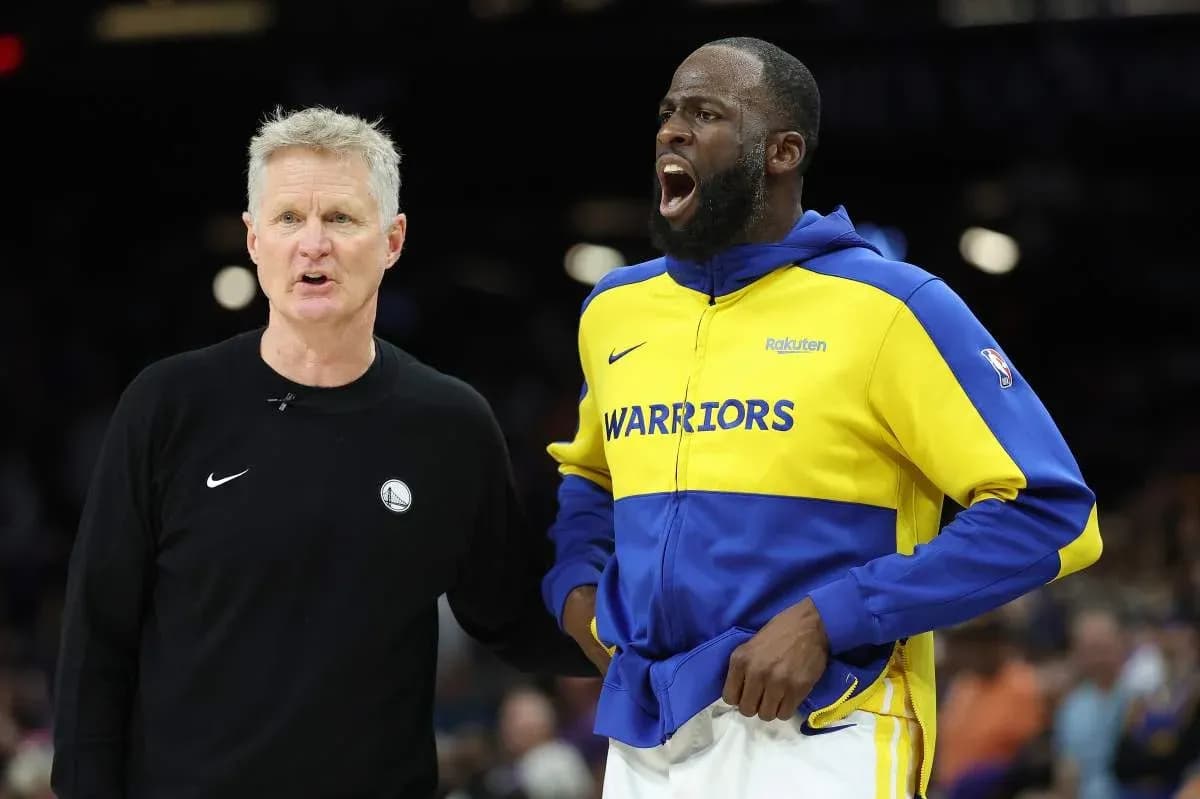
Steve Kerr has seen enough of the overthinking.
The Golden State Warriors, stripped of the overwhelming talent that once terrified the league, are heading into a season where guile and adjustment matter as much as star power. Kerr’s first big tweak is a familiar face in an unfamiliar mindset: Draymond Green, three-point shooter by obligation, not reputation.
On the Tom Tolbert Show, Kerr laid it out plainly. The Warriors can’t keep gifting opponents possessions.
“We have to cut back on the turnovers. I want Draymond shooting the three when he’s open,” Kerr said. “When he shoots a three, he may not be a super high-percentage shooter, but possessions are good for us when he shoots.
“Because, number 1, it’s worth three. Number 2, we get offensive rebounds. Number 3, there’s a flow to the game that has to happen: if someone is open and they shoot it, the game keeps moving.”
That’s the crux of it. For years, defenses have lived with Green standing alone beyond the arc, eyes scanning, hunting for a backdoor cut or a handoff to Stephen Curry. They load up on Curry, send extra bodies at him, and dare Green to make them pay. Too often, the possession slows, the floor shrinks, and the Warriors lean into risky passes that turn into breakaway points the other way.
Kerr wants to rip that page out of the scouting report. If you leave Draymond, he shoots. Simple. Maybe not pretty, but functional.
The logic is cold and sound. A catch-and-shoot three from Green, even at a modest clip, is still a cleaner outcome than a forced pass into traffic. Misses can be rebounded. Rhythm can be built. The offense can breathe. What Kerr is really demanding is commitment: trust the shot, trust the system, keep the ball moving by actually shooting it.
This isn’t just a tactical wrinkle. It’s a career pivot.
Draymond’s future on the line
Green enters the season on a one-year extension worth just under $30 million, a hefty number for a player whose offensive reluctance has become as notable as his defensive genius. His long-term future in San Francisco, though, is anything but secure.
Golden State knows it has to spend to upgrade the roster if it wants to squeeze another deep run out of the Curry era. Jimmy Butler now joins Curry as a headlining star, and that kind of top-heavy structure usually leaves little room for a non-shooting forward on a premium salary.
It is widely expected that the Warriors will not approach this year’s number again for Green. The choices are stark: take a significant discount to retire as a Warrior, or test the market and find a new home next summer. Not long ago, Green admitted on a podcast that he nearly bolted for the Memphis Grizzlies. That near-miss suddenly feels like a preview of a decision that might finally arrive.
So this season becomes an audition of sorts. Not for effort or intensity—those boxes are checked—but for evolution. Green has to hit threes more consistently, or at least take them without hesitation, while still anchoring the defense at an elite level. Teams will pay for a two-way impact player. They hesitate on a playmaker who won’t look at the rim.
Complicating matters further is the presence of Yaxel Lendeborg, the promising rookie power forward Golden State just drafted. He represents something the franchise hasn’t had at that spot in a while: a potential long-term replacement with time to grow into the role. If Lendeborg flashes quickly, the front office suddenly has leverage—and options.
A fragile path back to contention
Around all of this, the bigger question looms: what does overachieving even look like for this version of the Warriors?
Fans are trying to map out a path to the playoffs, and it starts with something they didn’t have last year—health. Curry and Kristaps Porzingis both missed significant time, and Golden State doesn’t have the depth to withstand long absences from either. They need a full, productive season from both just to stay in the fight.
Jimmy Butler is another linchpin. Returning from a torn ACL, he’s expected back by mid-season. The Warriors don’t just need him to play; they need him to play at a high level quickly, injecting force, scoring, and defensive edge into a group that can’t afford a slow ramp-up.
Even if that best-case scenario unfolds—Curry rolling, Porzingis healthy, Butler back and sharp—the margins remain thin. That’s where Kerr’s message to Green, and to others like Brandin Podziemski, lands with extra weight. The old roles are gone. The comfort of doing what they’ve always done is over.
Podziemski, who carved out minutes last season with energy and feel, now has to stretch his game, add new layers, and prove he can hold a starting spot on a team that can’t live off nostalgia. Green, the emotional engine of a dynasty, has to reinvent his offensive identity without losing the snarling edge that made him indispensable.
So Kerr has drawn the line: shoot when you’re open, live with the results, and stop handing the ball away.
For years, opponents begged Draymond Green to take that shot. This season might hinge on whether he finally makes them regret it—and whether doing so keeps him in a Warriors jersey when the next one begins.