.svg&w=384&q=75 "logo")
Spanish Grand Prix Weekend Review: Drivers' Performances
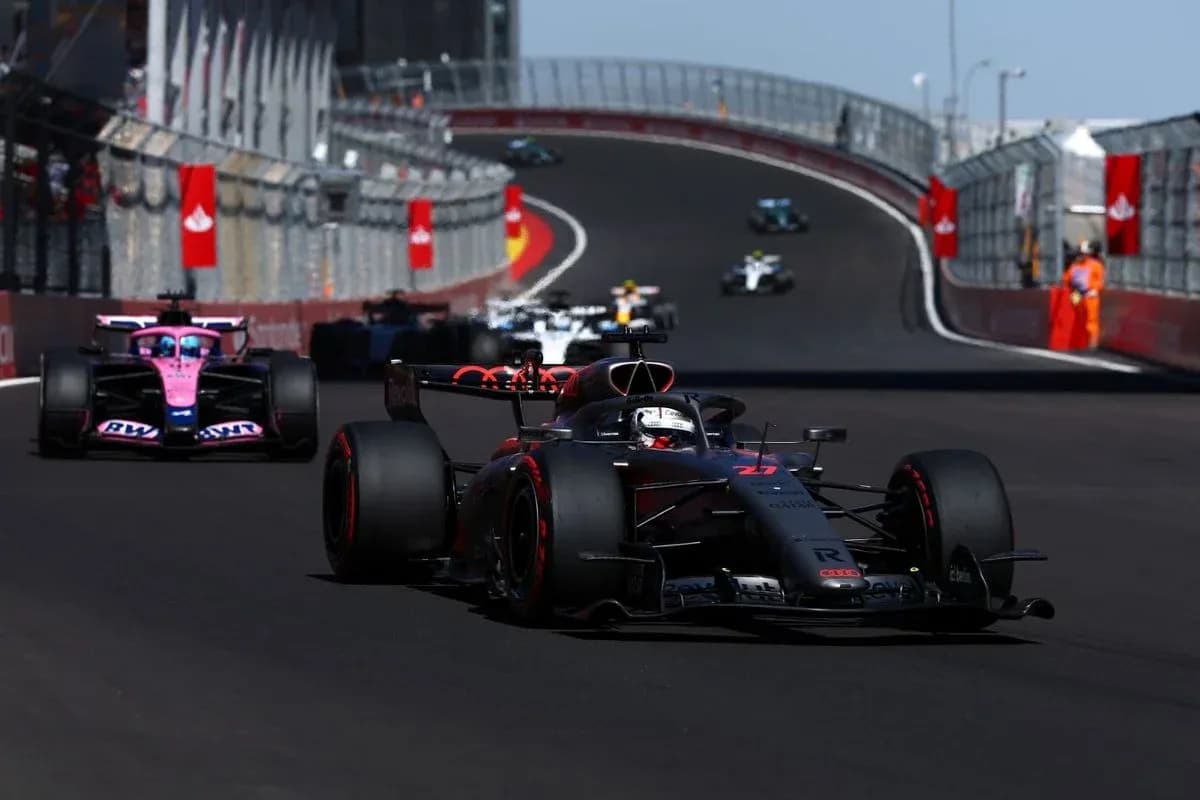
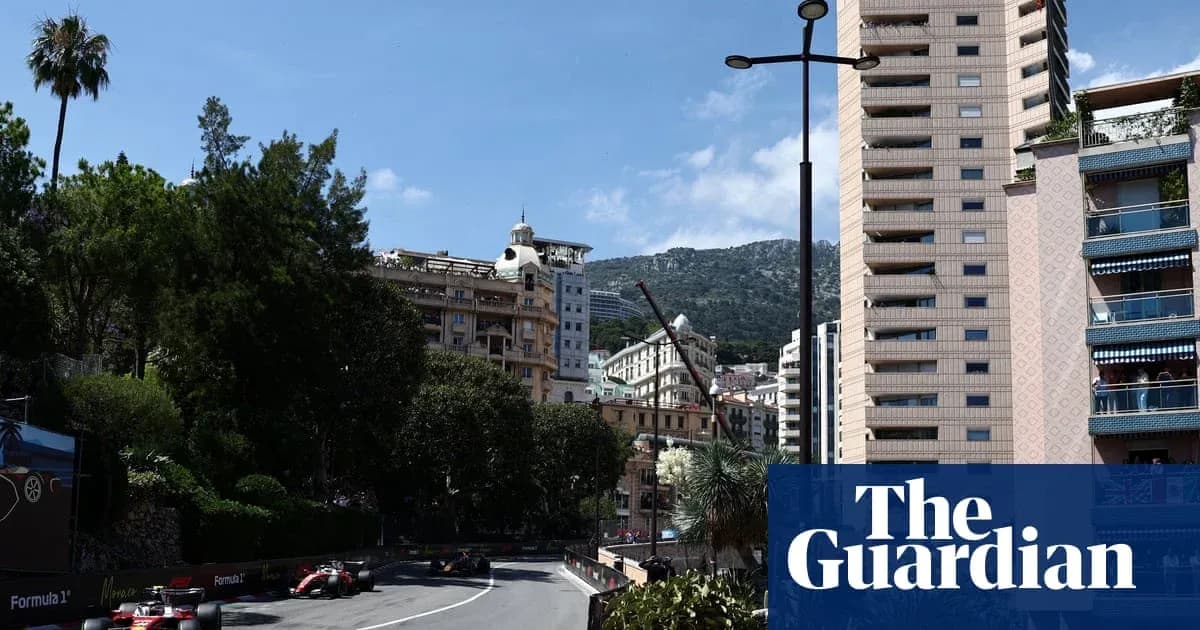
The Madring didn’t deliver a classic, but it did deliver a stress test. New asphalt, awkward kerbs, a pitlane that punished the slightest misstep, and a race neutralised at the worst possible time for some. Out of that chaos came a clear picture of who handled the Spanish Grand Prix weekend – and who left a lot on the table.
Lando Norris – Started 1st, Finished 3rd
Verdict: Only bad luck cost him victory.
Norris produced the lap of the weekend when it mattered on Saturday. Pole at the Madring was not meant to belong to a McLaren that, by its own admission, wasn’t the outright fastest car. Yet Norris wrung enough from it to start at the front, even if a snap of oversteer at the final corner cost him around three tenths and robbed him of what could have been one of those all‑time qualifying laps.
He launched well from a compromised pole-side grid slot, built a cushion, and in pure race pace he was the benchmark. Without the perfectly mistimed virtual safety car that flipped the order, Norris wins this race. Instead, he emerged behind Max Verstappen and never found a way through. Given how suffocatingly hard overtaking proved to be – and who he was trying to pass – that’s no real black mark. This was a champion’s drive with a cruel twist.
Pierre Gasly – Started 9th, Finished 7th
Verdict: Probably his best through‑weekend execution in F1.
Gasly’s weekend was built on one lap. After a hairy moment in La Monumental on his first Q2 attempt, he regrouped and delivered what he called “one of the best” laps of his career to drag the Alpine into Q3, clear of team‑mate Pierre Gasly and at the head of the midfield.
He then beat Arvid Lindblad in the top‑10 shootout to secure what was realistically the maximum starting spot for an Alpine. On Sunday he ran at the front of the midfield train, executed cleanly, and even overachieved by one place by keeping Oscar Piastri behind. There was a sliver of time left in Q3 – the biggest gap to his theoretical best of anyone – but it didn’t alter his grid slot. This was a complete, grown‑up weekend.
Esteban Ocon – Started 13th, Finished 11th
Verdict: A well‑executed weekend that merited a point.
Ocon quietly produced a tidy performance in a Haas that didn’t quite have the legs of the Audis over one lap. His final Q2 effort was solid, and the three‑tenths deficit to Gabriel Bortoleto underlined the car’s limitation more than his.
He then did what Ocon so often does: launched superbly, muscling his way to 11th and effectively into the points once Lewis Hamilton retired. The virtual safety car pitstops hurt him badly, Haas’s less sophisticated pit equipment costing him track position to Nico Hulkenberg. Without that, a point was almost nailed on. With Ollie Bearman out of the equation, there was no clear evidence Ocon left real time on the table. This was a strong, workmanlike drive in one of the weakest cars.
Max Verstappen – Started 3rd, Finished 2nd
Verdict: Largely made the most of the Red Bull.
The Red Bull came alive in qualifying trim more than in race pace, and Verstappen mined most of what was available on Saturday, even if perfection remained out of reach. On Sunday he did what he does better than almost anyone: controlled the cars behind.
Keeping Norris at arm’s length at a circuit that punished any misjudged move was no small task. Luck played its part in vaulting him ahead, and had he stayed third behind Norris the outcome would still have looked like a decent maximisation of the package. The only real question mark came at Turn 1 on lap one, where a move that always looked likely to trigger a chicane cut ultimately left him behind Kimi Antonelli after he had to let Hamilton back through. Even so, he walked away with a result that probably flattered the car.
Lewis Hamilton – Started 2nd, Finished 1st
Verdict: No question about his pace, but a little untidiness.
Hamilton was the quicker Mercedes driver all weekend, and the gap to George Russell was clear. His race management, especially behind the long‑running Charles Leclerc, showed patience and calculation, the sort of measured aggression that has defined so much of his career.
He needed the cards to fall his way. The virtual safety car did exactly that, handing him track position over Verstappen and Norris and, with it, control of the race. The messy first lap – track cuts at Turn 1 and Turn 5 that left him shuffled back to third – was the blemish on an otherwise sharp performance. Once the race settled, his pace left no room for doubt.
George Russell – Started 5th, Finished 4th
Verdict: No major negatives, but still didn’t look at his absolute best.
Russell arrived with a self‑inflicted handicap, forced to run older power unit components after his Monza crash. Even so, he missed Hamilton’s qualifying time by just 0.005s, a tiny margin that still felt like there was a touch more to come, especially early in the lap with less‑than‑ideal tyre prep.
In the race he was clean, consistent, and realistic about what the car could do. Once Hamilton retired, fourth was always the likely destination. He managed his long hard‑tyre stint well, avoided trouble, and banked solid points. This was a good weekend, but not the razor‑sharp version of Russell that occasionally appears.
Sergio Perez – Started 18th, Finished DNF
Verdict: A strong weekend when he was the quicker Cadillac driver.
Perez had the measure of Valtteri Bottas from the outset, even if the yawning qualifying gap owed plenty to Bottas being impeded by Carlos Sainz. The Mexican still had to deliver, and he did, nailing a strong final lap to secure clear intra‑team superiority.
His race went the same way. He climbed through the chaos of Turn 1, settled in behind Alex Albon and looked set for a solid recovery drive before a power‑unit water leak forced him first to back off and then to park it. There was no meaningful downside here – only the frustration of a promising day cut in half.
Alex Albon – Started 16th, Finished 15th
Verdict: A strong weekend, with the FP3 wall‑clip the one negative.
Albon’s Friday was a mess of deployment issues and lost time to Sainz. He then clipped the wall early in FP3 and binned another chunk of preparation. When it mattered, though, he delivered a strong Q1 lap, edging Sainz by 0.005s and dragging the Williams as far as it was realistically going to go.
With no fresh softs for Q2, there was no realistic route higher than 16th. On Sunday he simply drove what he had: a clean, committed race in a car that lacked the pace for more. Aside from that FP3 kiss of the wall, this was a composed recovery from a compromised build‑up.
Fernando Alonso – Started 17th, Finished 17th
Verdict: A decent weekend, but perhaps could have got the Aston Martin into Q2.
Alonso looked the quicker Aston Martin driver all weekend, even if the stopwatch didn’t always shout it. The car had bite in certain corners but bled time on the straights, and he had to fight that imbalance throughout.
He missed Q2 by a sliver, losing a tenth and a half to his own best in the final sector of his last lap. That was enough to tilt the fight with Albon the wrong way. The race then became a damage‑limitation exercise, with deployment problems and a front‑wing change after Sainz hit him wrecking any chance of a meaningful result. He still dragged the car to the flag, but there was a sense of an opportunity just out of reach.
Charles Leclerc – Started 4th, Finished DNF
Verdict: Had the pace to achieve more, but never showed it when it counted.
Leclerc’s weekend never quite aligned. His FP3 crash – a heavy off that cost him half the session and his qualifying simulation – set the tone. He tried to limp the car back to the pits against the team’s instructions, but the damage was done: crucial preparation gone.
Qualifying still yielded fourth, a respectable recovery, yet a small early‑lap mistake cost him what might have been a front‑row start. On Sunday, underlying pace suggested he might be the stronger Ferrari driver, but brake issues ended his race before he could prove it. This was a weekend of “what ifs” and wasted potential.
Arvid Lindblad – Started 10th, Finished 9th
Verdict: FP2 crash had significant consequences, but Lindblad recovered well.
Lindblad’s Friday pace was eye‑catching, right up until the rear snapped at Turn 13 and pitched him into the barriers in FP2. The crash bit hard, eating into running and confidence and leaving him watching most of FP3 from the garage.
Even with that hangover, he dragged the car into Q3 and then went racing. A sharp start put him ahead of Piastri, and he held his ground in the early stages. He couldn’t resist Piastri once the McLaren switched to fresh mediums, but he regrouped and defended stoutly against Hulkenberg late on. Given how badly FP2 had derailed his build‑up, this was an impressive salvage job.
Nico Hulkenberg – Started 11th, Finished 10th
Verdict: A solid weekend’s work, putting the Audi broadly where it should have been.
Hulkenberg edged the intra‑Audi battle with cleaner execution in Q2, outpacing his team‑mate by 0.165s. He left a little on the table – a sneaky route into Q3 might have existed – but his starting spot reflected the car’s true place.
Starting on softs and catching the VSC at the right moment handed him the platform to score. He used it, banking a point and confirming himself as the slightly sharper Audi driver over the full weekend. If there was a small chance to pass Lindblad late on, the difficulty of overtaking at the Madring makes it hard to criticise him for not forcing it.
Liam Lawson – Started 8th, Finished 6th
Verdict: Solid but unspectacular, with an unobtrusively effective race drive.
Lawson again found himself measuring his speed against Verstappen’s relentless step‑by‑step gains in qualifying and again fell short. The 0.352s gap was respectable but left him disappointed, another reminder of the standard set on the other side of the garage.
He lost out to Franco Colapinto at the start, then quickly took the place back with an important early overtake. Staying out on hards under the VSC and making that strategy work was the quiet key to his race, as Bortoleto’s defence against Colapinto later on helped Lawson come home ahead of them both. This was not a headline‑grabbing display, but it was smart and effective.
George Russell – Started 6th, Finished 5th
Verdict: A step back from Antonelli in terms of pace.
Russell’s weekend was defined by comparison. Next to Antonelli, he never looked like the lead Mercedes threat. His qualifying lap unravelled slightly at Turn 11 as he leaned too hard on the tyres, but the truth is he had already been slipping away from Antonelli’s pace before that.
Strategically, Mercedes rolled the dice by starting him on hards to keep options open under an early interruption. When Leclerc did the same ahead, that plan lost its sting, and the VSC timing left Russell on the wrong side of the equation. He still pulled off one of the few successful overtakes of the day – on Lawson after his second stop – yet the gap to Antonelli remained the story.
Oscar Piastri – Started 7th, Finished 8th
Verdict: A lacklustre weekend.
Piastri’s race was compromised almost immediately when front‑wing damage on lap one forced a reset. That wasn’t his fault, and he did at least execute the hard‑medium strategy cleanly, picking off Lindblad after his own stop.
But the raw pace wasn’t there. He never looked like matching Norris over a lap or over a stint and then found himself stuck behind Colapinto late on, unable to unlock a way past. In a race that exposed every weakness in car and driver when it came to overtaking, Piastri came away looking second‑best inside McLaren.
Kevin Magnussen – Started 12th, Finished 13th
Verdict: A middling weekend, marginally worse than Hulkenberg’s.
Magnussen’s race had its positives. His long opening stint on hards was neat, and he managed to keep the quicker Colapinto behind for a significant spell. The VSC timing hurt him badly given his tyre choice, stripping away any chance of an undercut or strategic gain.
The problem lay in qualifying. He admitted he didn’t extract the maximum, especially into Turn 1, where a conservative approach left him on the back foot against Hulkenberg. A poor start – mitigated slightly by being on hards – dropped him even further into the pack. This was an OK weekend, but his team‑mate shaded him.
Gabriel Bortoleto – Started 14th, Finished 12th
Verdict: Poor qualifying defined his weekend.
Bortoleto’s underlying speed was where you’d expect, but not when it mattered. After a strong FP3, he went missing in qualifying, struggling for grip as poor tyre prep on the out‑lap left him baffled by a car that suddenly refused to bite. The result was a lacklustre grid slot that didn’t reflect his potential.
On Sunday he was far better. His race pace on hards was strong, and without the VSC falling awkwardly for his strategy he might have been in the mix for points. A needless five‑second penalty for pit‑lane speeding capped off the frustration, costing him time but not position. The damage had already been done on Saturday.
Valtteri Bottas – Started 19th, Finished 18th
Verdict: Had bad luck in both qualifying and the race, but didn’t look to be at Perez’s level.
The headline qualifying gap to Perez – over two seconds – was a lie. Bottas never got a proper final run: one effort ruined by traffic, another by Sainz impeding him. He was left relying on an early banker that bore no resemblance to his true pace.
Even so, across the weekend he looked the slower Cadillac driver. Damage in the race, again not of his making, snuffed out any opportunity to show more. With Perez retiring early, the comparison never fully crystallised, but the signs pointed one way.
Lance Stroll – Started 21st, Finished DNF
Verdict: No chance in qualifying or the race, but also no glimmers of Alonso‑like pace elsewhere.
Stroll’s weekend was over before it began. A water leak in Q1 meant he didn’t set a time, and with a 40‑place grid penalty hanging over him for power‑unit changes, his starting position hardly mattered. He never had a clean shot at matching Alonso over one lap.
In the race he briefly ran ahead of his team‑mate before Alonso slipped past approaching Turn 13. Brake troubles and debris damage soon turned any comparison into a statistical footnote. Context explains the lack of results; it doesn’t hide the absence of any real flashes to suggest Alonso‑level speed.
Yuki Tsunoda – Started 15th, Finished 14th
Verdict: A nothing weekend thanks to qualifying struggles and race damage.
Tsunoda never got on top of the car on fresh tyres. The 0.880s qualifying deficit to Lindblad stemmed from a simple truth: he felt far happier on scrubbed rubber and couldn’t exploit peak grip when it mattered. That left him marooned on the grid.
The race offered no redemption. Clattered by Sainz at Turn 1, he carried damage from the very start and, despite respectable pace given the circumstances, spent too long trapped behind Perez early on. With the car wounded and the field spread, there was nowhere to go.
Carlos Sainz – Started 20th, Finished DNF
Verdict: Pace was fine, but too many errors.
Sainz arrived looking sharp, his Friday pace hinting at a big weekend. It never materialised. Qualifying slipped away from him, with timing issues on his final run and a straight‑line speed deficit leaving him 0.005s behind Albon. That alone wasn’t fatal.
The bigger problems came in traffic. He impeded Bottas on a crucial lap in qualifying – the team accepted responsibility for not warning him, but a driver always carries some share. Then, at the start, he misjudged the inevitable Turn 1 squeeze and thumped Alonso, compromising his own race and others’. The underlying speed was there; the discipline wasn’t.
Ollie Bearman – Started 22nd (pitlane), Finished 16th
Verdict: A self‑inflicted hole he could only partly climb out of.
Bearman’s weekend collapsed in FP3. After a warning tap on Friday at Turn 15, he went too far in the Turn 10/11 sweep, tagged the inside wall and triggered a heavy crash that wiped out his qualifying. Starting from the pitlane was the inevitable consequence.
From there, he did what he could. His race was neat, his two on‑track passes coming against the damaged Bottas and Stroll, but the ceiling was low. The Madring punished anyone who started deep in the pack, and Bearman’s own mistake had put him there. The recovery drive was respectable; the original error was costly.
The Madring didn’t produce a thriller, but it did lay bare the grid’s fault lines. Some drivers bent a brutal new circuit to their will. Others let it expose every crack. As the season grinds on, weekends like this – scruffy, strategic, unforgiving – may prove more revealing than any classic.