.svg&w=384&q=75 "logo")
Southeast Division: Giannis Joins Miami, Changing the Landscape
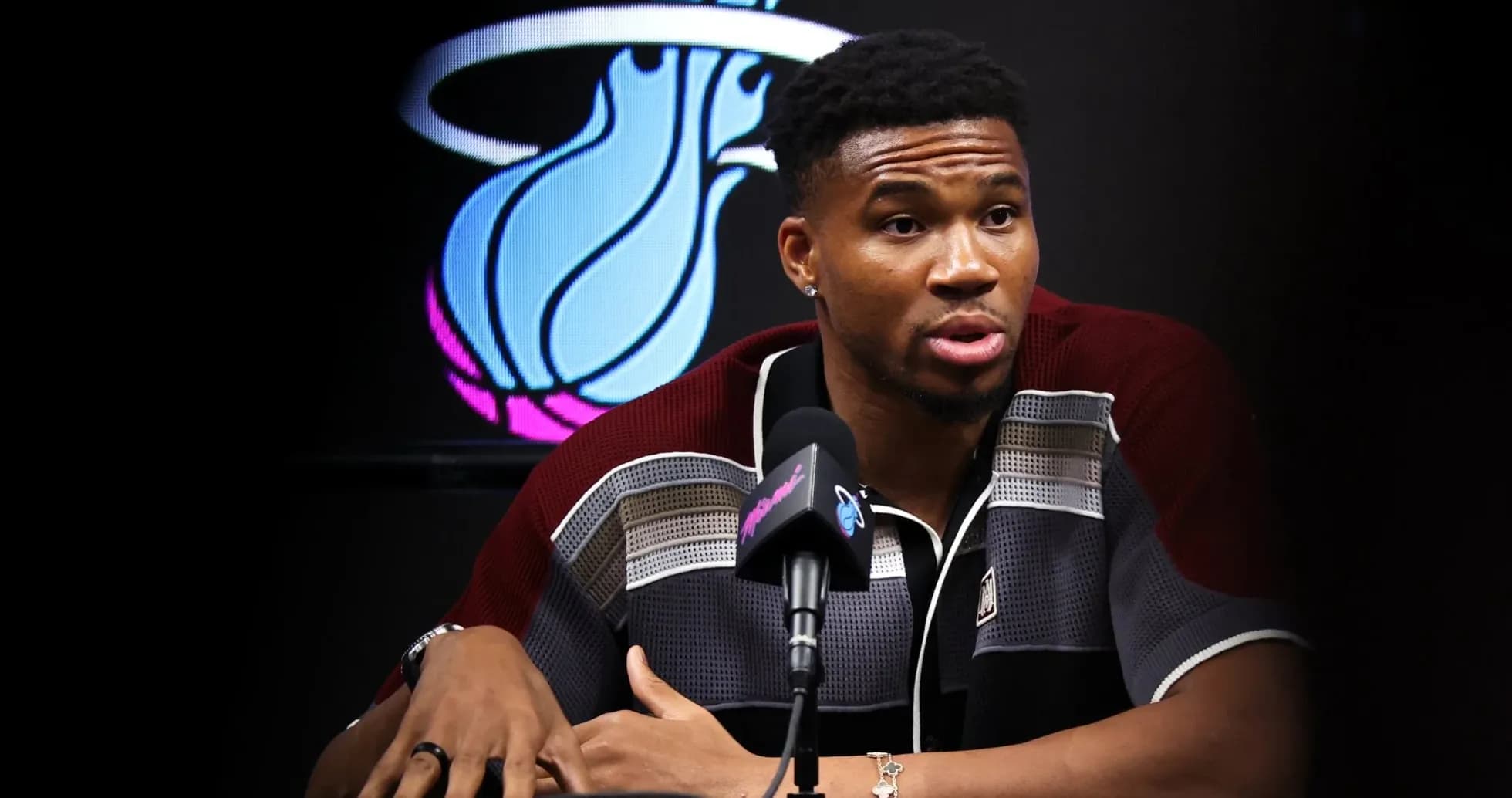
The Southeast has lived in the margins for years, a division of promise and caveats. That changes the moment Giannis Antetokounmpo pulls on a Miami jersey. One generational talent can tilt an entire landscape, and suddenly every front office in the division has to ask the same question:
Are we built to live with that?
Atlanta thinks it might be. Charlotte is betting on structure over stardom. Orlando is trusting continuity and health. Washington, as ever, is searching for a star who finally sticks.
The division just got serious.
Atlanta Hawks: Depth Over Drama
The Trae Young era ended, and the collapse never came.
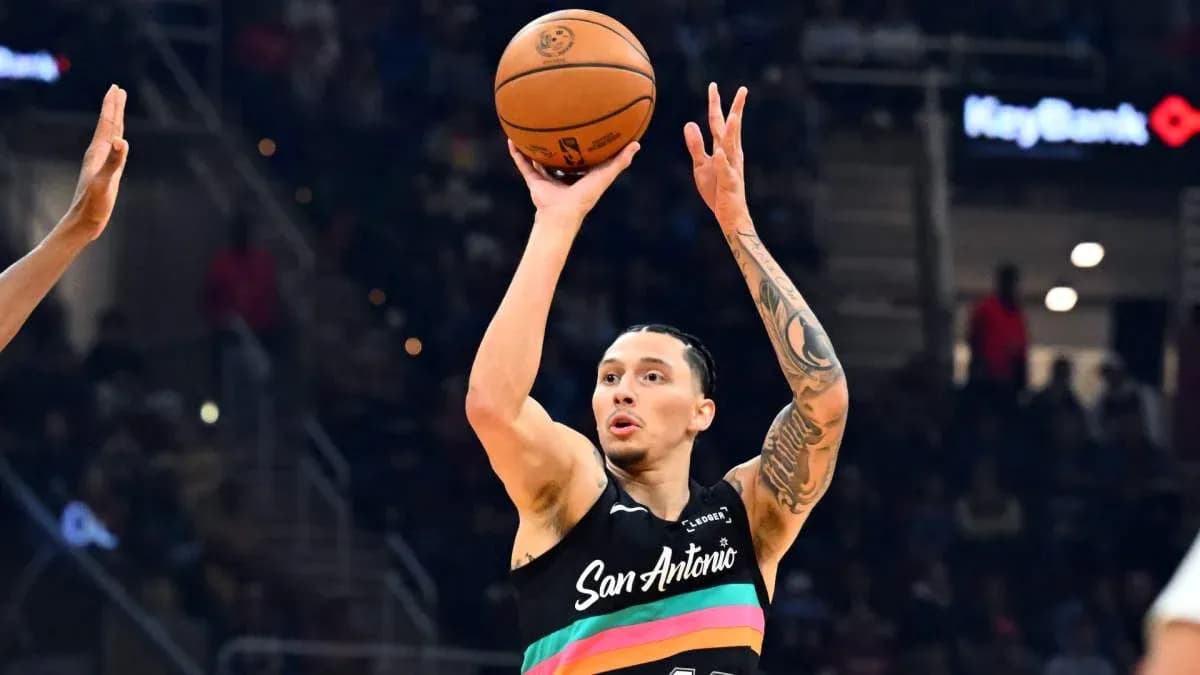
Instead, Jalen Johnson stepped into the spotlight, the Hawks went 46-36, and they pushed their way into the first round. That’s not a soft landing after trading a franchise point guard. That’s a statement that the franchise belongs to someone else now.
Johnson is the lead act. The offseason was about building a band around him.
Atlanta didn’t chase another marquee name. It built a rotation. Luguentz Dort and Aaron Wiggins arrive from Oklahoma City with something that can’t be faked: championship equity. Dort, in particular, gives the Hawks a nasty defensive edge when paired with Dyson Daniels. Two guards who can hound the ball, flatten drives, and change the tone of a game without needing a single play called for them.
They also doubled down on shot-making. Re-signing CJ McCollum keeps a seasoned closer in the backcourt, while Nickeil Alexander-Walker adds another live dribble shooter who can toggle between roles. Suddenly, Atlanta has options late in games — multiple players who can create, multiple players who can finish.
The issue sits in the frontcourt. The Hawks are light on quality bigs, and in a conference that still runs through imposing centers and bruising forwards, that’s a crack that can widen quickly if not managed. The rotation is heavy, the talent spread, but the margin at the rim is thin.
This is the kind of team that can win 50 if the chemistry hits, the defense holds, and Johnson continues his rise. It’s also the kind that can find itself slogging through the SoFi Play-In Tournament if those big-man concerns turn into nightly mismatches.
Atlanta upgraded. Now it has to prove that depth can punch like a star.
Charlotte Hornets: Winning, Then Tearing It Down
Most teams that claw their way to 44-38 with a young core decide they like the view and build from there.
Charlotte went the other way.
LaMelo Ball and Miles Bridges are gone, moved just as both brushed their primes. It’s a bold call, the kind of pivot that can age as visionary or reckless depending on what comes next. The Hornets clearly believed the returns on those deals were too strong to ignore and that their production could be replaced by committee.
The keys now sit with Coby White. He arrived from Chicago and showed enough composure and punch to convince the Hornets he can run a team full-time. Around him, the scoring burden shifts to Brandon Miller, who looks ready to make the leap into the league’s top-tier scorers. If Miller becomes that 25-a-night problem, the sting of losing Bridges’ offense softens quickly.
Charlotte didn’t just bank on internal growth. It layered in proven role players. Grayson Allen brings shooting and an edge that travels, Naz Reid arrives off a crucial season in Minnesota as a versatile big who can stretch and scrap, while Dorian Finney-Smith and Royce O’Neale offer the kind of defensive versatility coaches dream about when drawing up playoff game plans. Dennis Schröder adds veteran control and toughness at the point.
This is a roster designed for structure: multiple wings who defend, a center who can space, guards who can shoot and handle. If the puzzle snaps together early, the Hornets can play their way back into the postseason without a marquee name on the marquee.
But this is also a test of belief. You don’t trade your two best players and walk the same path. Charlotte chose a different road. The season will reveal whether it leads back to the playoffs or to another reset.
Miami Heat: The Giannis Gamble
Pat Riley has never been afraid of the big swing. He’s taken them with Shaq, with LeBron, with Jimmy Butler. Now comes the next one: Giannis Antetokounmpo in Miami colors.
Miami ground its way to 43-39 last season with Tyler Herro limited to 33 games and still scraped into the Play-In. That kind of resilience has defined the Heat for a decade. Now they add one of the most feared two-way forces in the sport, a two-time Kia MVP who warps defenses, punishes the paint, and anchors an entire scheme on the other end.
The risk is obvious. Giannis is 31 and carries an injury history. His game leans heavily on explosion, on long strides and violent takes to the rim. For Miami’s title window to be real, he needs to stay on the floor and stay himself.
If he does, the Heat have a terrifying defensive backbone. Bam Adebayo remains an All-Star-level fulcrum, and together, he and Giannis form what might be the most intimidating defensive front line in the league. Switches, traps, walls at the rim — there’s no shortage of schemes when your two best players can guard almost anyone.
There was a cost. Herro is gone. So are multiple rotation pieces — shooters, wings, depth that has so often defined “Heat Culture.” The roster now has to find its spacing and rhythm around a new hierarchy.
Bobby Portis brings playoff scars and toughness. Tim Hardaway Jr. adds perimeter shooting and experience. Klay Thompson, if his body and legs cooperate, still understands the geometry of the three-point line better than most. Andrew Wiggins, if he finds his Golden State peak again, gives Miami a two-way wing who can bridge gaps.
Miami is on the clock with Giannis. The franchise knows what this kind of player means. The East knows, too. The question is whether the supporting cast can hit enough shots and stay healthy long enough for that generational bet to pay off when the games slow down and the stakes spike.
Orlando Magic: Patience, Then Proof
Orlando’s 45-37 record last season came with a giant asterisk: Franz Wagner played only 34 games. Jalen Suggs appeared in just 57. For a young team leaning on internal growth, that’s a heavy load of absence.
Even so, the Magic reached the first round. That alone tells you how much talent is already in the building.
The front office chose not to chase fireworks this summer. It changed the voice, not the core. Sean Sweeney steps in as head coach, tasked with squeezing more efficiency and consistency from a group that already believes it belongs in the postseason.
On the personnel front, the moves were deliberate and restrained. Izaiyah Nelson joins the frontcourt, and Nikola Vučević returns, a familiar face and steady presence in the middle. The real work came in-house: re-signing Vučević, Jonathan Isaac, and Jevon Carter on economical deals that keep the rotation intact and the books clean.
This season is about clarity. Can Wagner and Paolo Banchero push to another level together? Can Suggs stay on the floor and settle into the two-way guard Orlando envisioned? Can Sweeney’s system unlock a cleaner offense without sacrificing the defensive identity that carried them?
If the group stays healthy, the Magic finally get a full look at the version of themselves they’ve been sketching for years. If not, the questions grow louder, and the trade deadline or next summer starts to look like a crossroads.
Orlando has chosen continuity over chaos. Now it needs results to justify the patience.
Washington Wizards: Waiting on a Star to Stay
Seventeen wins. Fifth in the division. Another year of injuries, experiments, and long nights.
The Washington story has barely changed in nearly a decade: one playoff trip in eight years, no first-round series win since 2017. The fan base is tired of “almost” and “maybe.” It wants a player who can drag the franchise out of its rut.
Enter AJ Dybantsa.
He hasn’t played an NBA minute yet, but he’s already shifted the mood. The Wizards see in him what they’ve lacked for years — a young wing with real star potential, someone who can grow into the kind of game-changer this franchise has been chasing in circles.
They’ve given him help. Deandre Ayton arrives to stabilize the center spot, Felix Okpara adds size and energy, Tre Mann brings more guard depth, and Khris Middleton offers veteran shot-making and structure on the wing. These are not empty names; they’re functional pieces around a star-in-the-making, if Dybantsa becomes that.
The backcourt question has a familiar answer: Trae Young. Washington extended him, betting that his playmaking can simplify life for Alex Sarr and the rest of the young core. A passer of his caliber can turn raw potential into real production if the buy-in is there.
And then there’s Anthony Davis.
His health, availability, and long-term intentions hover over everything. A fully engaged, healthy Davis remains a high-impact two-way presence, the kind of player who can anchor a defense and carry stretches of offense. The problem is never the talent. It’s the timeline. Is he a pillar of the future in Washington, or a short-term stop on the way to somewhere else?
The Wizards have lived too long in the middle, chasing relevance without truly resetting. Dybantsa offers a new direction. Young offers structure. Davis offers a wild card.
At some point, this franchise has to pick a lane and stay in it. Is this the season it finally does?