.svg&w=384&q=75 "logo")
Serena Williams and the $400 Million Gap: Wealth in Women's Sports
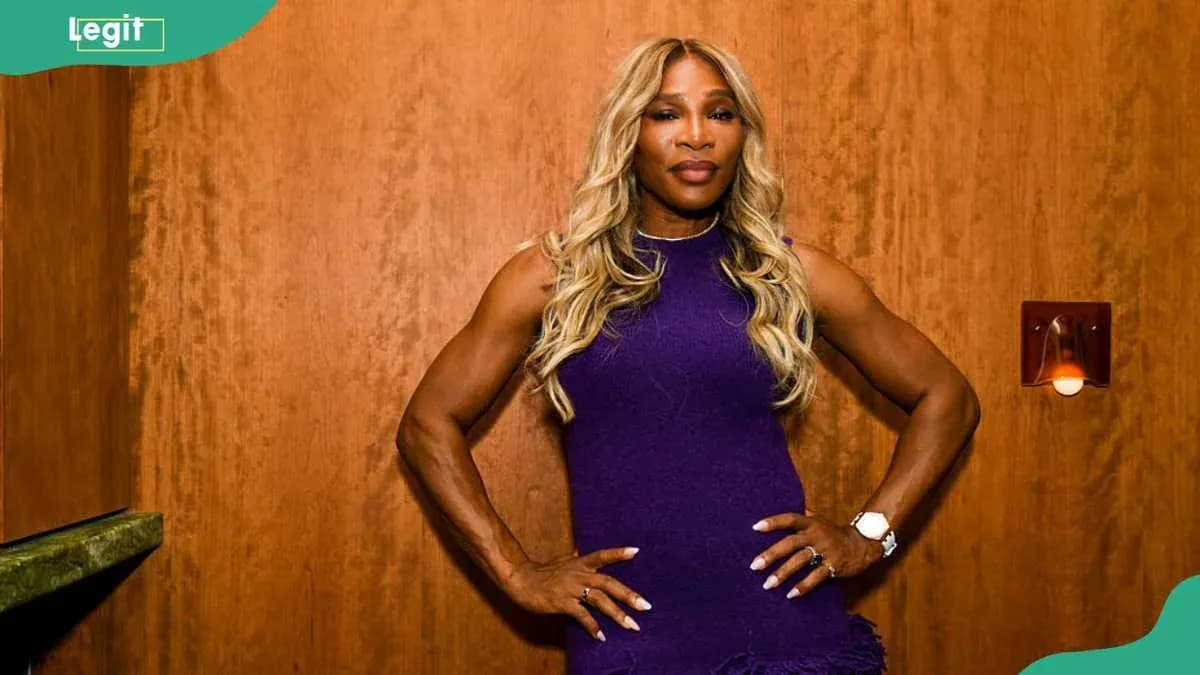
Serena Jameka Williams has not played a full competitive tennis season in years. She does not need to. Her empire now sits at around $400 million, according to Forbes — a number so large it turns even the biggest modern paydays into loose change.
Coco Gauff, the 21‑year‑old face of the new generation, just topped Forbes’ list of highest-paid female athletes with $33 million in a single year. It is a staggering figure for someone barely into her 20s. Yet in net worth terms, she is still a distant speck in Serena’s rear-view mirror.
That is the story of this list: a handful of women who broke into a financial stratosphere once reserved almost exclusively for male superstars, and the vast economic distance that still separates even the elite from the very top.
The $400m benchmark
Serena Williams is not just the richest female tennis player. She is the richest woman in history to build her fortune primarily through sport.
Her numbers on court were already unprecedented: $94.8 million in prize money, more than any other woman in WTA history, 23 Grand Slam singles titles, 73 singles trophies, and 858 career wins. But the money that truly changed her life — and the landscape — came once she stepped off the baseline.
Over the last 12 months alone, Serena has pulled in around $50 million before taxes and fees. Ten long-term sponsorships, including Audemars Piguet, Lincoln, Nike, and Wilson, still orbit around her name years after her last professional match in 2022.
Then there is Serena Ventures. As CEO, she has raised $111 million for a first fund, backed 16 companies, and added minority stakes in the Miami Dolphins, Angel City FC, and the WNBA’s Toronto Tempo. It is the kind of diversified portfolio you expect from a billionaire tech founder, not a retired tennis champion from Compton.
This is the financial summit every other woman in sport is now measured against.
Sharapova, Venus and the top tier
Below Serena, there is daylight — then Maria Sharapova.
The Russian, who spent more than a decade as the highest-paid female athlete on the planet, sits at an estimated $175 million. Across her career, she amassed around $300 million in combined prize money and endorsements. Five Grand Slam titles and a career Grand Slam made her a tennis icon; the commercial machine built around her made her a global brand.
At her peak, Sharapova’s sponsorship portfolio read like a luxury catalogue: Nike, Porsche, Head, TAG Heuer, Evian. In 2012 she launched Sugarpova, a candy brand that outlived her playing days and became a key pillar of her post-tennis wealth. By the time she retired in 2020, her finances were already locked into the upper tier, secure and still growing.
Venus Williams, at an estimated $95 million, occupies the third rung — a figure built on far more than her seven Grand Slam singles titles and five Wimbledon crowns. Her $42.8 million in career prize money ranks fourth in WTA history, but her fight off the court may be even more significant.
Venus was central in the battle for equal prize money at Grand Slams, a campaign that reshaped the economics of women’s tennis. Away from the tour, she has built EleVen, her fashion label, and VStarr Interiors, an interior design firm, into serious businesses. In 2025, she and Serena launched Stockton Street, a joint podcast that extends the Williams brand into yet another medium.
Just below them, Danica Patrick stands out as the richest non-tennis athlete on the list.
Danica Patrick and the non-tennis outliers
Motor racing has never been a natural home for female superstars. Danica Patrick forced the door open.
Her estimated $80 million net worth tells the story of a driver who turned one historic win — the 2008 Indy Japan 300, still the only IndyCar victory by a woman — into a long-running commercial juggernaut. At her peak, Patrick earned more than $10 million per year, driven largely by partnerships with GoDaddy, Coca-Cola, and Peak antifreeze.
Prize money never matched the marketing value. It did not need to. Patrick became one of the most recognisable faces in American motorsport, fronting national ad campaigns while racing in both IndyCar and NASCAR. Since retiring in 2018, she has built a broad post-racing portfolio. In early 2025, she added a stake in Unrivaled, the women’s basketball league, underlining how her influence now stretches beyond the track.
Golf has its own standard-bearer in this financial elite: Annika Sörenstam.
With an estimated net worth of $40 million, the Swedish legend dominated her era, winning 72 LPGA Tour titles and 10 majors. Her earnings did not stop when she stepped away from full-time competition in 2008. Sörenstam moved into course design, launched a wine label, and established the Annika Foundation. Rolex and Callaway stayed on as long-term partners, a reflection of her enduring stature. She even returned to the US Women’s Open in 2022, a reminder that the competitor never fully leaves.
Lindsey Vonn, the most decorated American alpine skier in history, sits at around $28 million. Four overall World Cup titles and an Olympic gold in Vancouver in 2010 made her a star; long-standing deals with Red Bull, Under Armour, and Rolex turned that star power into lasting wealth. She retired in 2019 but remains a fixture in commercials and media, proof that the right brand can outlast the final race.
In combat sports, Ronda Rousey rewrote the script entirely.
Her net worth, around $25 million, stems from a career that broke every barrier in front of it. Rousey became the first woman to headline a UFC pay-per-view and the first female inductee into the UFC Hall of Fame in 2018. Her crossover into WWE and Hollywood opened up endorsement deals with Reebok and Monster Energy. Between 2014 and 2016, she was one of the most recognisable athletes on the planet. In 2024, she released her memoir, Our Fight, adding another layer to a brand built on both dominance and vulnerability.
Osaka, Biles and Gauff: the new money
Naomi Osaka’s rise has been rapid and relentless. Her estimated net worth of about $45 million places her among the wealthiest women in sport, and that figure understates her commercial pull.
Between 2019 and 2025, Osaka earned roughly $230 million, with only around $25 million of that coming from prize money. The rest came from an endorsement and business portfolio that looks more like a corporate holding company than a typical athlete’s résumé.
She co-founded the sports agency Evolve, launched KINLÒ skincare, and created the production company Hana Kuma. From 2020 to 2022, she topped Forbes’ highest-paid female athletes list three years running, peaking at $51.1 million in 2022 and setting a personal record of $57.3 million in 2021. Her current $45 million net worth reflects the early phase of what could become a much larger financial story.
Simone Biles, at around $30 million, stands as the most decorated gymnast of all time and one of the most influential athletes of her generation.
Her endorsement roster — Audemars Piguet, Lilly, Nulo Pet Food, K18 haircare, GK Elite, and Spieth America — spans luxury, lifestyle, and core gymnastics brands. The Netflix documentary Simone Biles Rising earned an Emmy nomination, but it was her decision to step back from several events at the Tokyo Olympics in 2020, prioritising mental health, that transformed her from champion to cultural touchstone. The controversy did not dent her value; it amplified it. Sponsors stayed. New ones arrived.
Then there is Coco Gauff, the youngest name on this list and the clearest sign of where women’s sport is heading.
Her current net worth is estimated at around $28 million, but her annual income already dwarfs that. In 2025 alone, she earned $33 million — $8 million on court, boosted by a French Open title, and $25 million off it. New Balance, Bose, and Baker Tilly headline a growing endorsement portfolio built around a 21-year-old who carries both star quality and substance.
Gauff has now led Forbes’ highest-paid female athlete rankings for two straight years, ahead of Aryna Sabalenka ($30 million) and Iga Świątek ($25.1 million) in 2025. Her accumulated wealth has not yet caught up with her earning power, but she is the fastest-rising figure in this financial elite. If anyone is going to chase down the Sharapova and Venus tier in the coming decade, it is likely her.
The money behind the medals
Strip away the medals, and a clear pattern emerges: the richest women in sport make their fortunes off the field, court, or track.
Only five women have ever earned more than $30 million in a single year — Naomi Osaka, Serena Williams, Coco Gauff, Maria Sharapova, and Aryna Sabalenka. For the top earners, endorsements account for about 70% of total income. For the top-earning men, that figure is closer to 35%.
In other words, the richest women in sport are not just champions; they are brands, investors, and entrepreneurs. They sit in boardrooms, launch companies, and buy into franchises.
Serena’s real estate holdings stretch from Florida to Paris. Osaka runs a sports agency and a skincare line. Sharapova sells candy. Sörenstam designs golf courses. Patrick invests in a women’s basketball league. Venus dresses clients’ homes and bodies. Biles and Gauff front campaigns that speak as much to culture as to sport.
The net worth range on this list runs from $25 million to $400 million. The gap is enormous. Yet the direction of travel is clear. A record 15 female pros earned more than $10 million in 2025, up from just six in 2023. Women’s football is now producing its own high earners, from Aitana Bonmatí and Alexia Putellas to Sam Kerr and a new wave of African stars signing record-breaking deals.
The money is finally beginning to follow the talent.
The question now is not whether another woman will become a nine-figure athlete. That is already happening. The real question is whether anyone, in this new era of booming salaries, streaming deals, and global brands, will ever climb high enough to look Serena Williams in the eye on that $400 million summit — and not have to look up.