.svg&w=384&q=75 "logo")
Pierre Sage's Challenge at Crystal Palace: Navigating a Stormy Start
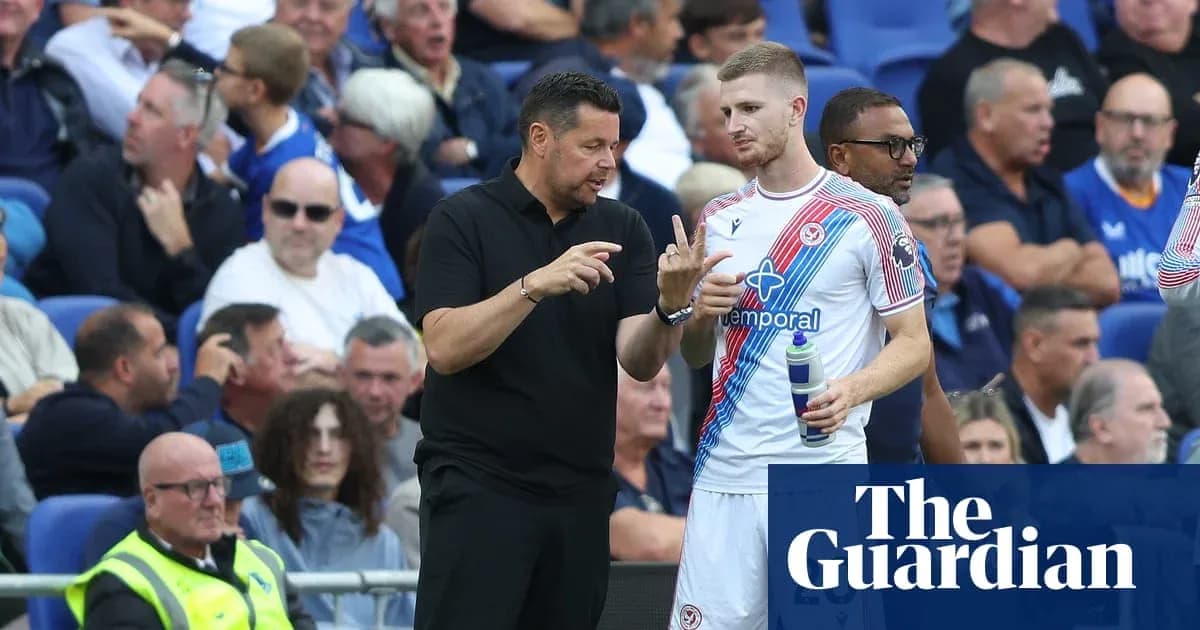
Pierre Sage walked into Selhurst Park with his eyes open. He had done the homework, watched the tapes, studied the politics. He knew he was inheriting Oliver Glasner’s legacy – the most successful spell in Crystal Palace’s history – and he knew he was walking straight into a storm.
Two defeats to start the season, against Everton and Manchester City. Rumours swirling around key men from that Conference League triumph. A fanbase wondering if the new man could keep the club moving forward, or if the momentum was about to snap.
This is what he signed up for.
Late deals, thin margins
Palace’s transfer windows are rarely calm. Sage discovered quickly that in south London, the real business often starts when the clock is already ticking down.
Ismaïla Sarr and Jean-Philippe Mateta both looked halfway out of the door at one stage, tracked by Liverpool and Aston Villa. Both stayed. Four new signings arrived after a frantic final stretch, while Malick Fofana slipped through their fingers and headed to Sunderland in one of deadline day’s most dramatic twists.
Sage didn’t complain. He knew the reputation.
“I knew that and I had to deal and adapt to that,” he said of Palace’s habit of doing business late, a pattern that has seen them sign 10 players on deadline day across the last three summers. His verdict on the final squad was simple enough: they got the profiles they wanted, and that, to him, is the point.
Glasner had been far less diplomatic about the same dynamic. The Austrian made no secret of his irritation at having to wait until the last moment for reinforcements during his time at Palace, and he has now left for Nottingham Forest, taking Daniel Muñoz with him. Sage, by contrast, keeps the temperature down in public, even if he has not been blind to what the squad has lost.
Replacing Lacroix – or trying to
The real wound came in July. Maxence Lacroix, the defensive pillar of last season, was sold to Chelsea. With him went not just quality, but authority. Replacing that kind of presence is rarely straightforward, and Palace found out just how hard it can be.
Sage pushed hard for Ismaëlo Ganiou, the 21‑year‑old Lens defender who had been central to Sage’s own success there: a Coupe de France win and second place in Ligue 1. Lens refused to play along. Ganiou signed a new contract at the start of August and the door slammed shut.
Palace pivoted. A move for Joel Ordóñez collapsed because the Club Brugge defender is still recovering from a broken foot. Interest in Augsburg’s Chrislain Matsima and Brest’s Raphaël Le Guen led nowhere. Targets identified, calls made, deals stalled. The kind of window that tests a manager’s patience.
Axel Disasi arrived, along with teenage defender Honest Ahanor on loan, to help fill the gap. They add bodies and potential. What they cannot yet guarantee is Lacroix’s leadership, the calm that used to sit at the heart of Palace’s back line. That question will linger until the results answer it.
Missed targets, different solutions
It was a similar story in midfield. Palace tried to prise Mamadou Sangaré from Lens, only to watch the Mali international choose Brentford instead. Another near-miss, another reshuffle of plans.
Sage then turned back to his old address book. He drove the push for Malick Fofana, the Belgium forward at Lyon. The club backed him, the manager made a series of personal calls on deadline day, and for a while it looked like persuasion might win out. It didn’t. Fofana stayed put.
Sage’s response was telling. “We fight a lot and sometimes you cannot give more than this, but we give our best in this situation. At the end, the player chooses.” No sulking, no public row with the hierarchy, just a clear line: we tried, he said no, we move on.
Palace moved on to Dario Osorio. The Chile forward joined from Midtjylland on an initial loan with an obligation to buy next summer for £26m. He is more at home on the right flank, which does not solve the Fofana question directly, but he adds another sharp edge to a forward unit that suddenly looks crowded.
Dwight McNeil has come in. Evann Guessand has arrived, although he has been left out of the Europa League squad. Sarr is still here. Up front, at least, Sage has options.
A club that sells, a manager who adapts
Behind those options sits a squad built with one eye firmly on the balance sheet. Palace broke their transfer record twice in January, signing Jørgen Strand Larsen and Brennan Johnson, before flipping Johnson to Everton in a deal that brought McNeil the other way. This summer, the numbers tell a different story.
A net profit of almost £40m, the second lowest spend in the division behind Aston Villa. Across the last five seasons, Hull and Coventry – both in the Championship – have invested more than Palace’s £90m. For a club competing in Europe, that is a stark comparison.
Sage refuses to frame it as a grievance. When asked if he was unhappy with the business, he reached back to his childhood in Belley, in eastern France, watching his parents run their brasserie.
“I’m not frustrated – we are not a bank,” he said. “We do with what we have. My parents had a restaurant and I prefer every day there’s a lot of clients but it was not the case sometimes and we have to deal with that every day. In football it’s the same.”
He has been backed in some key areas. Ben Chilwell’s return and the late arrival of Quinten Timber add depth to midfield. Palace also stood firm when bids arrived for Adam Wharton from unnamed clubs, with Manchester City and Chelsea believed to be among them. Sage welcomed that stance. “The club was strong with the situation, and I think the player is completely in line with that,” he said.
The message is clear: Palace will trade, but not at any price, and not with every asset.
Fulham, absences and a restless Sarr
The immediate problem lies across London at Craven Cottage. Palace travel to Fulham with their squad still settling, their season still searching for a foothold, and their forward line stripped of two major pieces.
Sarr and Mateta will both miss the game. Mateta’s proposed move collapsed when a hamstring injury intervened; that same injury will keep him out for another three weeks. Sarr, nursing a groin problem and the emotional hangover of Liverpool’s interest, is expected back for the Ipswich match next Saturday.
He “needs time”, Sage admitted, after a period in which the player’s agent publicly criticised how Sarr had been treated during the transfer saga. Palace kept him, but the fallout will take managing.
So Sage goes into the Fulham match without his two senior forwards, with a defence still trying to rediscover its voice, and with a squad reshaped more by departures than by lavish spending. He knew all this was possible when he said yes in June.
Now comes the real test: can a manager who grew up in a small-town brasserie turn Palace’s controlled chaos into something that still tastes like progress?