.svg&w=384&q=75 "logo")
Pierre Gasly Claims Historic Pole Position at Monza
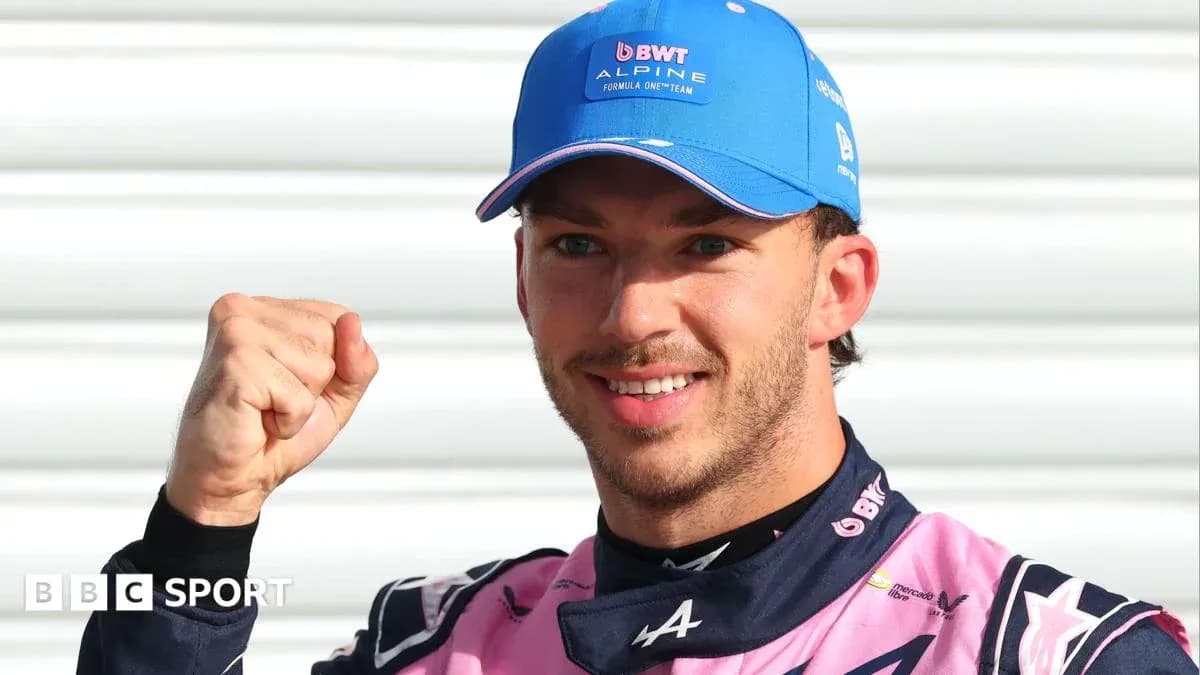
Pierre Gasly stunned Monza on Saturday, stealing pole position for Alpine with the kind of lap that rewrites reputations and rattles a pecking order.
Nine years he has been chasing this. One win, here in 2020 with Red Bull’s junior team, a career spent largely in Formula 1’s shadows, and a week that began with the FIA Court of Appeal stripping him of a Monaco podium. He answered all of it with 1 minute, 19 seconds of perfection.
He beat George Russell by 0.060 seconds. At Monza. In an Alpine.
Gasly’s perfect storm
From the first lap of Q1, Gasly knew. You could hear it in his voice afterwards: the car was alive beneath him, each run a small cut at the marble until the statue appeared in Q3.
“It has been nine years trying to chase a pole position and to take my first win here and then my first pole here is amazing,” the 30‑year‑old said, still half in disbelief. He called the session “incredible” and it was hard to argue. Alpine came to Italy still blinking from a bruising couple of seasons, armed with a major upgrade that had looked ordinary on its debut in Zandvoort, where Gasly managed only 11th in qualifying.
There was no sign this was coming. Not from a team that finished last in 2025. Not from a driver who has had to rebuild his career ever since Red Bull cut him loose mid‑season in 2019.
Yet in Monza’s late‑summer light, the blue car with Mercedes power hooked itself into the sweet spot. Gasly kept finding time, session after session, and when the final laps came, he delivered a tour of the old place that left the heavyweights trailing.
He will start from pole. And he will do it as the first Frenchman to lead a grand prix grid since Jean Alesi did it here for Benetton in 1997.
Russell’s missed chance
For Russell, this one will sting.
With championship leader Kimi Antonelli carrying a 30‑place grid penalty for taking a new engine, the Mercedes driver walked into qualifying as the clear favourite. Antonelli’s job in the session was straightforward: act as the perfect tow, sit in front, punch a hole in the air, and drag Russell to a lap time that could tilt the title fight.
On paper, it was ruthless efficiency. On track, it unravelled.
Russell complained that he started his final lap too close to Max Verstappen, who then complicated the picture by backing off.
“Going into Parabolica, Max just slammed on the brakes and didn't want to be the lead car,” Russell said. “In hindsight, it would probably have been better not trying this, but P2 is a good place to start.”
The game of slipstream chess backfired. Russell still beat McLaren’s Oscar Piastri by just 0.12 seconds, but he did not beat Gasly. The golden opportunity to cash in on Antonelli’s penalty shrank from a potential pole to a front‑row start with an Alpine in the way.
Earlier, the mood had been light. Russell revealed the pair had been finishing an actual game of chess 15 minutes before qualifying, Gasly beating him there as well. “I thought, ‘well, I will beat him in qualifying.’ But here we are,” Russell said, offering his rival “massive congrats” while swallowing the frustration of being second when first felt all but pre‑booked.
Piastri’s redemption run – and Norris’ frustration
Behind them, Oscar Piastri produced the lap he needed at exactly the right time.
The Australian has endured a rough spell, his early‑season sharpness blunted by a run of difficult weekends. At Monza, he answered with third on the grid, his best lap coming on his very first flying run in Q3.
That mattered, because his second attempt never really got going.
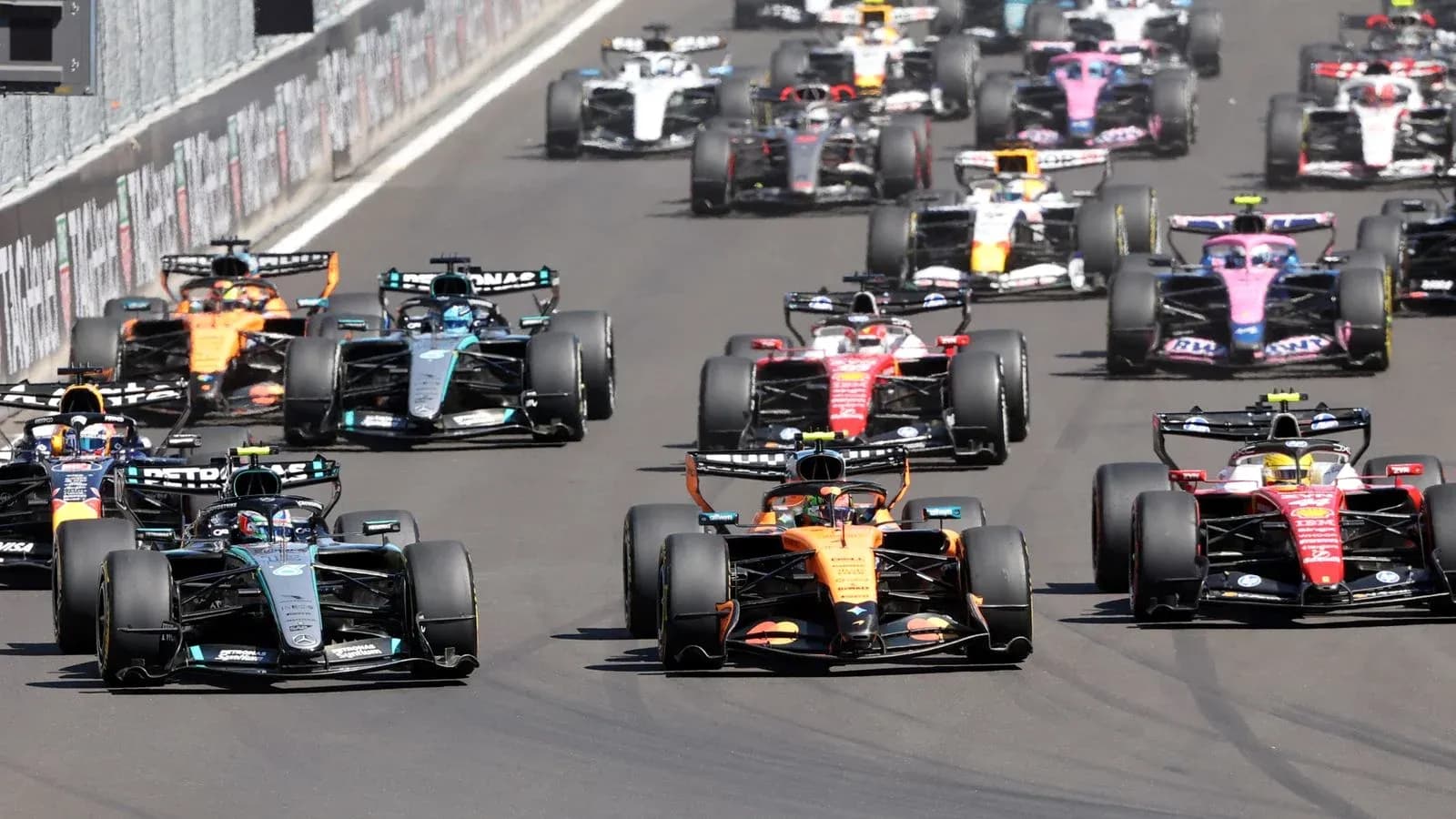
Piastri led the pack out of the pit lane for the final runs, with team‑mate Lando Norris tucked in behind. It is the last thing a driver wants at Monza, where the slipstream is almost worth a tyre compound. He tried to coax someone else through. Nobody bit.
So he attacked the first chicane as late as he dared. Too late. The McLaren locked up and sailed straight on into the escape road.
“The first lap felt quite good,” he said. “I tried to see if anyone wanted to go in front out of the pit lane but no-one did. It was always going to be difficult. I tried to be as late as possible into the first chicane and locked up so that was the session.”
That mistake hurt Norris even more. Delayed at the chicane, he was already four‑tenths down by the first sector. There was no way back from there. He failed to improve, dropped places as others found time, and ended up only ninth.
On a day when McLaren had the pace to menace the front row, they leave qualifying with a split story: Piastri revived, Norris frustrated.
Ferrari flatter to deceive
Ferrari arrived at their home race with a new engine and the promise of a tenth of a second per lap. In the build‑up, the red cars looked ready to join the fight at the front.
Qualifying told a harsher truth.
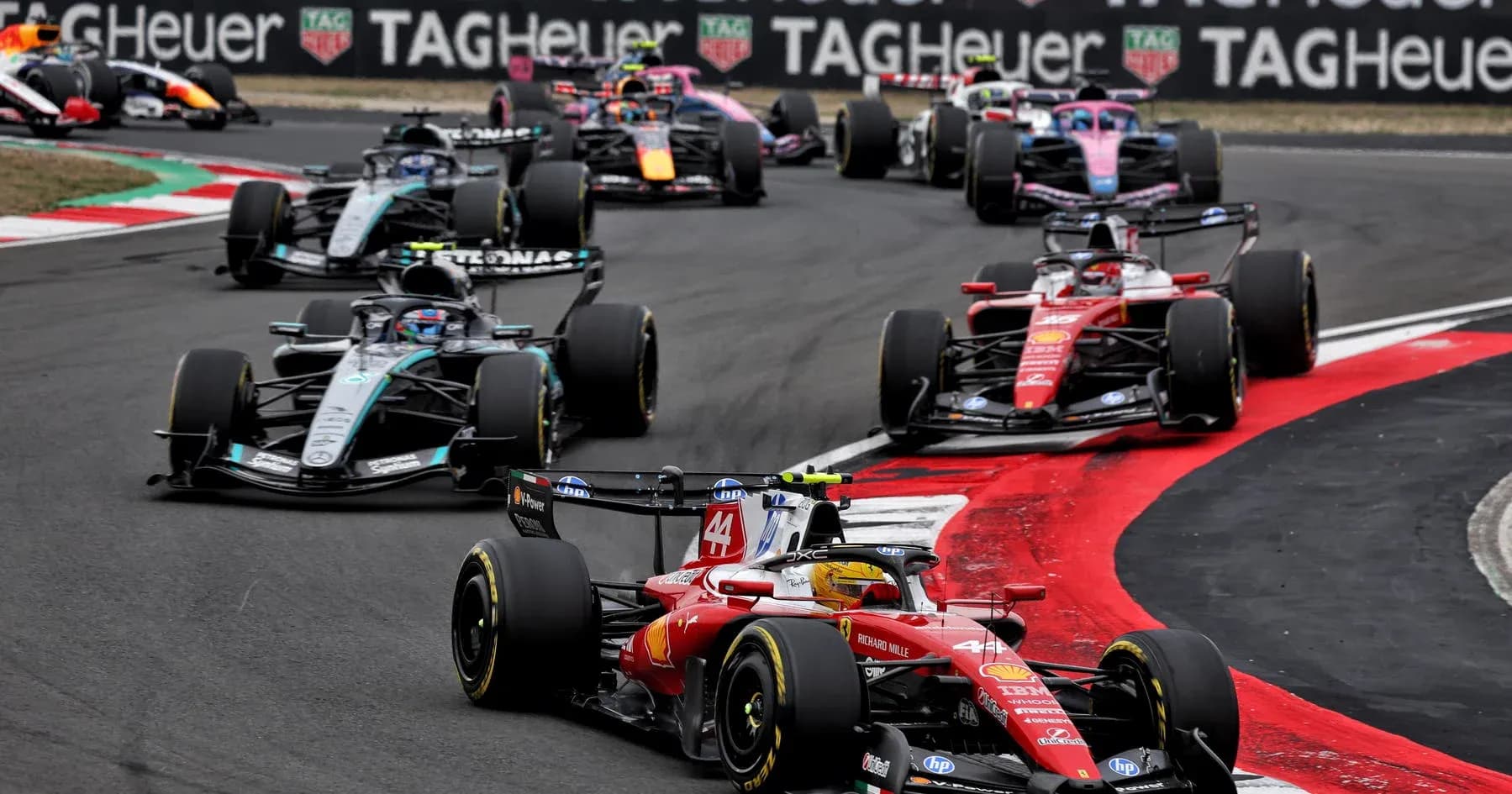
Lewis Hamilton – now in Ferrari colours and carrying the weight of expectation at Monza – only just escaped Q2, scraping through by 0.001 seconds as Audi’s Gabriel Bortoleto missed out by a breath. Hamilton’s radio response, laced with an expletive, said enough about how close it had been.
In Q3, both Ferraris hit their ceiling. Charles Leclerc sat fourth after his first run and stayed there after his second. Hamilton, ninth initially, improved but could not get ahead of his team‑mate, ending up 0.007 seconds behind.
Fourth and fifth, with an upgraded engine, felt underwhelming in front of the tifosi. The raw numbers told the story: they were not quick enough.
Verstappen off‑colour, Antonelli sent to the back
Max Verstappen’s session matched his season’s odd rhythm. The Red Bull driver never looked like a serious pole contender and wound up only sixth, caught in the middle of the tow games and traffic but lacking the usual Monza menace.
Antonelli, leading the championship but paying for his engine change, qualified seventh on pace yet will start from the back. For much of qualifying, his job was to sit ahead of Russell, offering that vital slipstream. The irony is brutal: he did his part for the team and still carries a 30‑place penalty that opens the door for his rivals.
Russell could not fully walk through it.
Alpine’s gamble pays off
Gasly’s pole is not just a personal milestone. It is the sharpest proof yet that Alpine’s strategic gamble might be working.
Under executive adviser Flavio Briatore, Renault pulled the plug on their works engine programme at the end of last year and switched to customer Mercedes power‑units. They also effectively abandoned development of their 2025 car, throwing everything at the new rules for this season.
It looked reckless when they slumped to the back of the field. The early races this year hinted at progress, then the team slid backwards again as rivals rolled out upgrade after upgrade.
The major update that arrived in Zandvoort did not immediately sparkle. The car was better, but not transformative. Gasly’s 11th place in qualifying there suggested a step, not a leap.
Monza was the leap.
The Alpine looked planted all weekend, but even inside the garage, they did not seriously talk about pole on merit. A strong top‑six result? Yes. A front row if the slipstream roulette fell kindly? Maybe. But this?
“It exceeded all our expectations,” Gasly admitted.
He lives in nearby Milan. He spoke in Italian to the crowd in the trackside interviews, basking in cheers that once belonged almost exclusively to red cars. For a driver who has spent much of his career labouring in the midfield, shuffled out of Red Bull and forced to reinvent himself, this pole at this circuit carries a different weight.
On Sunday, he will lead a field that includes a wounded Russell, a resurgent Piastri, two Ferraris desperate for more, and a world champion buried in sixth. Behind them, a title leader will launch from the back with nothing to lose.
Monza has seen Gasly win from the chaos before. Now he starts from the front. What does he do with clean air and a second chance at the circuit that has already changed his life once?