.svg&w=384&q=75 "logo")
Pierre Gasly's Monaco Podium Stripped Away After Court Ruling
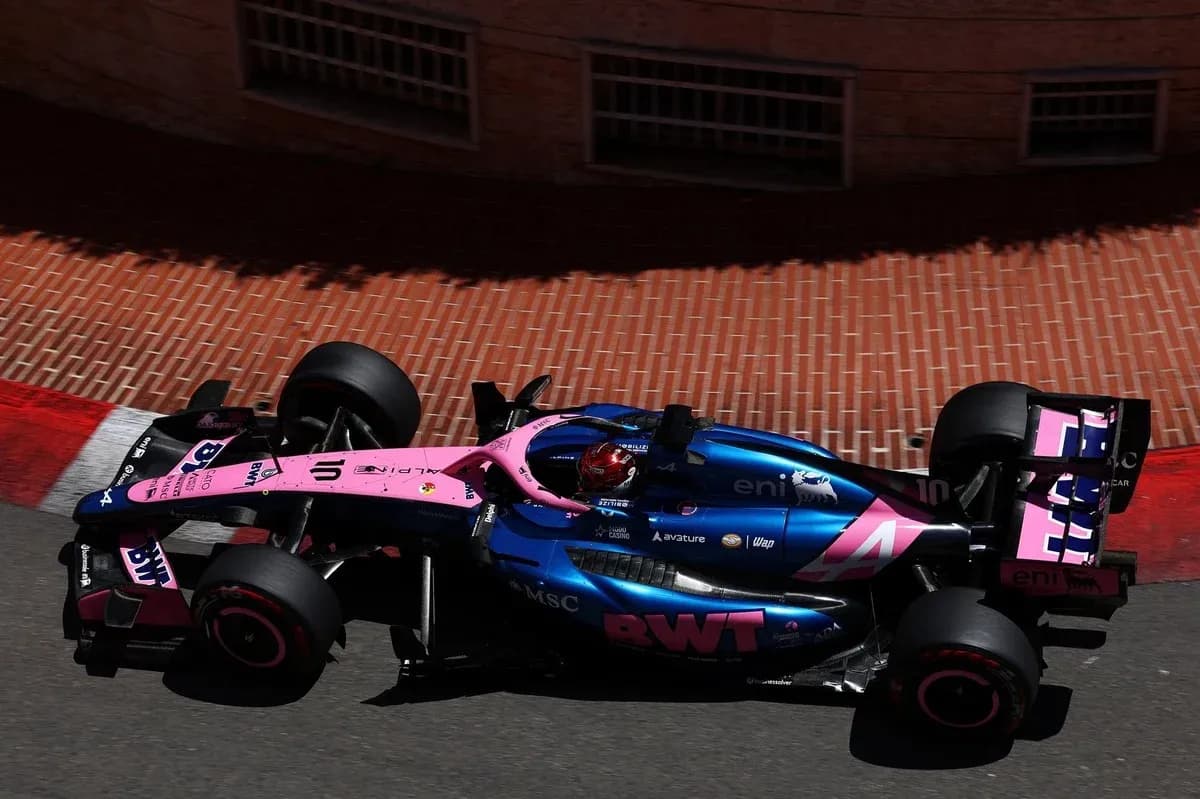
Pierre Gasly’s Monaco podium has vanished for a second – and this time, it’s final.
The Alpine driver has been pushed back down to seventh place after the FIA’s International Court of Appeal ruled that his pitlane speeding penalties from the 2026 Monaco Grand Prix will stand, overturning the stewards’ earlier decision to scrap them.
What had briefly looked like a rare high point in Alpine’s troubled season has been stripped away in a courtroom rather than on track.
From street hero to courtroom casualty
Gasly was one of several drivers flagged for pitlane speeding in Monte Carlo, in a race that quickly became as much about timing loops as tyre strategy. An error in the pitlane measurement – a 77cm discrepancy between the first two timing loops – triggered a flurry of penalties and confusion up and down the pitlane.
Oscar Piastri, George Russell, Isack Hadjar and the Racing Bulls drivers all got caught up in it. Some served their penalties during the race. Gasly did not. His two five-second sanctions were added to his race time, dropping him from a hard-earned third to seventh.
That timing opened a door for Alpine.
Because the penalties were applied after the chequered flag, the team could request a right of review. The stewards accepted Alpine’s case on 12 June and annulled Gasly’s sanctions, restoring him to third place. The Frenchman had his podium back. On paper, at least.
But the others had no such lifeline. Piastri, Hadjar and others had already served their penalties in-race, losing track position that could not be undone. McLaren and Red Bull were never going to let that stand without a fight.
They appealed to the ICA, backed by Racing Bulls and Motorsport UK. The sense of sporting imbalance – one driver regaining a podium while others stayed punished for the same underlying issue – became the core of the challenge.
On Friday, the Court sided with the appellants.
Gasly’s penalties were reinstated. He drops back to seventh. Hadjar, who had originally celebrated third place before the first reversal, inherits the final podium spot again.
The Monaco classification has changed yet another time, but this ruling closes the book.
The Court’s logic – and Alpine’s anger
The ICA’s reasoning cut straight to the heart of Alpine’s argument. The team claimed Gasly had not exceeded the pitlane speed limit at any point, pointing to the timing loop discrepancy as evidence that the data could not be trusted.
The Court did not fully buy it.
Alpine, the ICA said, could not prove “with full certainty” that Gasly had travelled a longer distance in the pitlane than the system recorded. The shorter time between the two loops, the Court concluded, could be the result of “a shorter path, greater speed, or a combination of both.”
In other words: the data was imperfect, but not conclusively wrong in a way that cleared Gasly.
On the broader question of fairness, the ICA took a firm stance. The fact that other drivers had already served their penalties during the race “cannot be an obstacle to the cancellation of an illegitimate sanction,” it stated. Those penalties, it argued, were served at the discretion and choice of the teams themselves.
To reverse Gasly’s penalty purely to avoid perceived unfairness to others, the Court said, would itself be “inconsistent with sporting fairness.”
Alpine did not hide its displeasure.
In a team statement, it spoke of “disappointment and frustration” with the verdict and reiterated its belief that Gasly had done nothing wrong and never exceeded the pitlane limit. The team said it “fully maintain[s] that Car #10 did not exceed the Pit Lane speed limit at any point during the race,” but accepted the judging panel’s decision from the Paris hearing.
The message then turned inward. Alpine insisted it feels “unjustly punished” but stressed its focus remains on improving performance and staying in what it called a “close and very competitive Championship fight.” The statement closed on a defiant note: this outcome, it said, “will not deter the team’s efforts and motivation in achieving its objectives by the end of the season.”
The podium is gone. The fight, they insist, is not.
FIA under scrutiny – but backing its stewards
The fallout doesn’t stop with Alpine.
The FIA itself moved quickly to frame the decision, stressing that the ICA’s ruling does not automatically mean the original stewards were wrong, while still acknowledging the need for change.
In its statement, the federation confirmed that the ICA had upheld the appeals of McLaren and Red Bull against the stewards’ document 99 from Monaco, overturning that earlier call and restoring the original penalties.
The FIA also promised to take a hard look at the tools and processes that led to the mess in the first place. It is “reviewing the methodology and operation of the current Formula 1 timing system and the related regulatory matters,” and will also examine judicial procedures such as the right of review and the appeal process.
At the same time, the governing body closed ranks around its stewards. It underlined its “full” support for the stewarding process and highlighted the independence and objectivity of the panels that officiate at grands prix worldwide.
The FIA drew a line between the race stewards and the Court. Stewards, it pointed out, operate in a very different environment, without the extensive legal counsel, detailed argument and depth of evidence available to the ICA. Their decisions, the federation stressed, are constantly reviewed, with stewards undergoing ongoing professional development and studying every ICA decision as part of a “continuous improvement” cycle.
The message is clear: the system will be refined, not torn down.
Monaco 2026 will not be remembered for a fairytale Alpine podium, nor simply for a rookie Red Bull driver back on the rostrum. It will be remembered as the race where 77 centimetres in a pitlane triggered a legal chain reaction that reshaped the result months later.
For Gasly, the trophy is gone. For Hadjar, the podium is back. For the FIA, the spotlight now lingers on a question it cannot ignore: in an era decided by thousandths of a second, how precise – and how transparent – does its timing and justice system need to be?