.svg&w=384&q=75 "logo")
Patrick Beverley Challenges NBA Superstars: Can They Thrive in Europe?
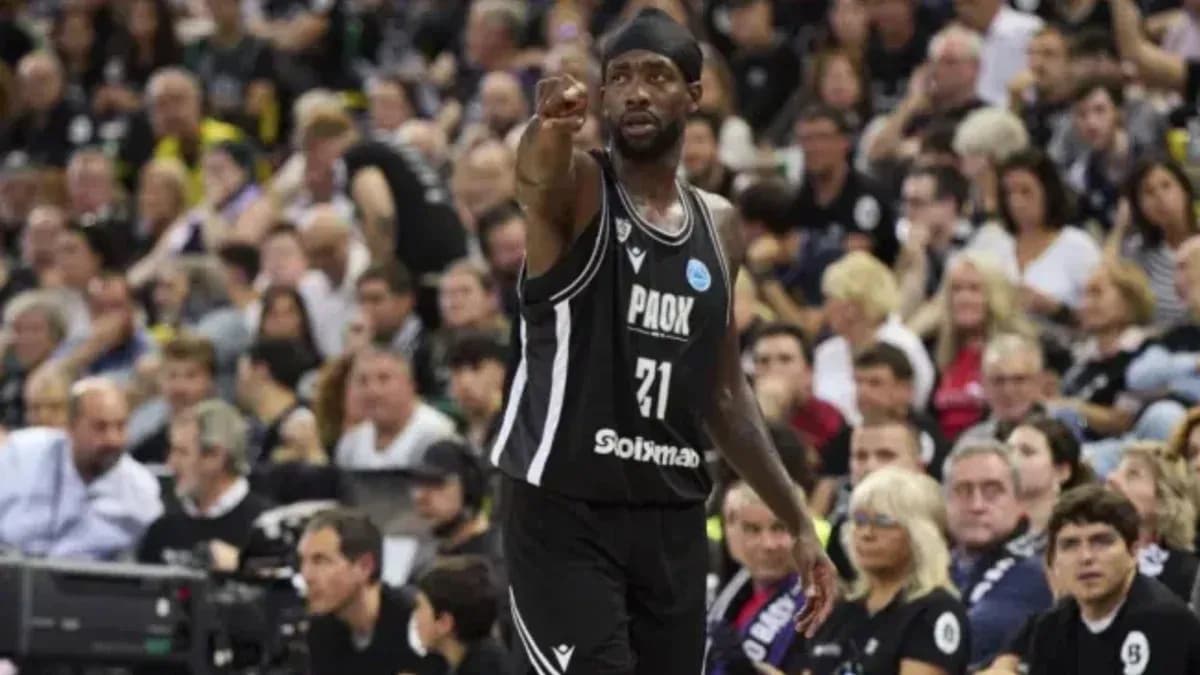
Patrick Beverley has never been shy with an opinion. Now, as he prepares to swap the NBA spotlight for the quieter gyms of the French league with Boulazac, he’s lit a fresh fuse under one of basketball’s oldest arguments: NBA vs. Europe.
And he didn’t bother softening the edges.
“There are NBA superstars right now who couldn’t play in Europe. I firmly believe that. They simply couldn’t,” Beverley said on the YouTube show Thanalysis, hosted by Thanasis Antetokounmpo.
This isn’t a retired role player sniping from the sidelines. Beverley is 38, a 12-year NBA veteran who carved out a career with the Rockets, Clippers, Wolves, Lakers, Bulls, Sixers and Bucks. Before that, he survived and thrived in Europe, then fought his way back to the NBA in 2013. He’s lived both versions of the sport.
So when he draws a line between the two, he’s not talking about who can jump higher.
“It’s not a lack of respect for each individual’s physical ability, but for their mentality,” he explained. That’s the heart of his argument: Europe doesn’t test your vertical. It tests your brain and your willingness to shrink your ego.
A different kind of star test
Beverley’s point cuts against the usual narrative. The NBA is sold as the peak: the best athletes, the brightest stars, the highest level. Europe, in that storyline, becomes the proving ground or the fallback option.
He flips it.
For him, the challenge in Europe isn’t that players are less talented. It’s that the game strips away the comfort that NBA superstars often enjoy. The ball doesn’t find you because your name is on the marquee. You earn every touch within a rigid structure.
“In Europe everything revolves around the team. The coach controls everything. It’s almost like a college team made up of adults,” Beverley said.
That’s not a romantic description. It’s a warning. In that environment, the coach’s word is law. The playbook is king. The system comes first, second and third. Individual freedom, the oxygen of many NBA scorers, gets rationed.
Beverley believes that’s where some of today’s NBA elite would struggle. Not with the physical grind, but with the radical role reversal. Stars used to 20 shots a night and an offense built around their strengths would be asked to screen, cut, defend, and sometimes stand in the corner as decoys. And accept it.
“The team is above each individual,” he stressed. For some, that’s a slogan. In Europe, it’s a job description.
Control vs. freedom
The contrast he draws is stark. In the NBA, even in structured systems, stars often have the leverage. They bend schemes to their will. Coaches design around them, not over them. Possessions break down and talent takes over.
In Europe, Beverley says, there is far less room for improvisation. The coach “controls everything,” as he put it, and that control shapes every possession. Offenses are choreographed. Defenses are drilled to suffocate space. The margin for freelancing shrinks.
For a role player, that can be a comfort. You know your tasks. You know your minutes depend on execution, not reputation. For a superstar, it can feel like a cage.
Beverley isn’t attacking athleticism. He’s questioning adaptability. Could a player who dominates with the ball in his hands accept being just another moving part in a tightly wound machine? Could he embrace fewer touches, more structure, and a coach who doesn’t blink at benching him?
That’s the gauntlet Beverley has thrown down.
He’ll now step back into that European world with Boulazac, carrying the scars and certainty of someone who’s seen both sides. And as he does, his challenge hangs over the debate: in a game that keeps growing globally, where does the real test of a superstar truly begin—under the NBA lights, or inside a European system that doesn’t care how famous you are?