.svg&w=384&q=75 "logo")
Opals' World Cup Campaign Ends with Defeat and Injury
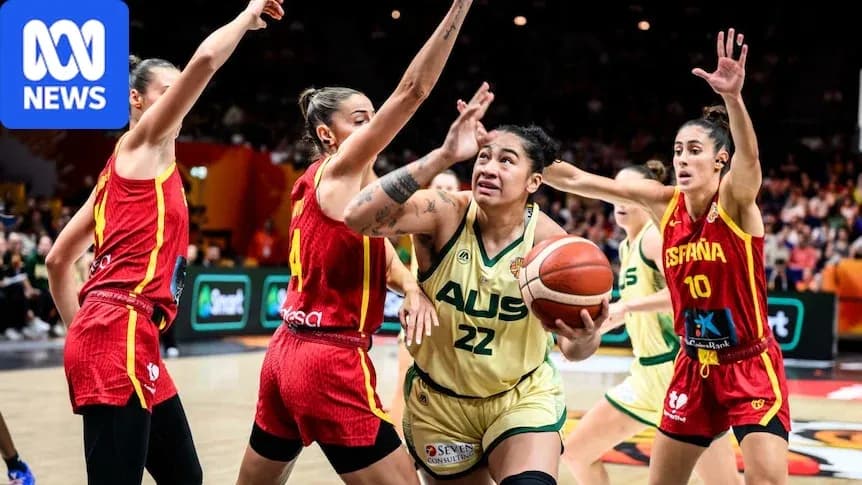
Australia’s World Cup campaign collapsed in a brutal double blow: a 23-point quarterfinal defeat to Spain and confirmation that captain Ezi Magbegor has torn her ACL.
Spain rolled to an 89–66 win, but the real gut punch landed half an hour before tip-off. That was when Magbegor’s WNBA franchise, the Seattle Storm, announced the 24-year-old had suffered a torn ACL in her right knee.
She had only just come back.
Magbegor returned to the court in early July after a partial Achilles tear in March. Then, in Australia’s qualification final win over Italy, she took a knock to the same right leg and went down early. The worst was confirmed on the very day the Opals needed her most.
“It makes me emotional when I see anyone go down,” coach Sandy Brondello said after the loss. “But Ezi’s come back from an injury and it’s just another injury. [It’s] just really unfortunate. She’s a key part of what we want to do. It sucks, but that’s sport isn’t it?
“She’s got to have a great recovery and she’ll get back, I don’t have a doubt about that. Just disappointed for Ezi that she’s going through another rehabilitation.”
A roster stripped bare
Magbegor’s absence added to an already savage casualty list. Alanna Smith (leg injury) and Jade Melbourne (illness) were also sidelined, while veteran guard Sami Whitcomb never made it to the tournament because of injury. Cayla George was unavailable due to pregnancy.
Smith went down with a lower-leg injury in the opening game of the tournament. Melbourne managed only three minutes against Italy and was unable to suit up for the quarterfinal.
By the time Australia walked out to face Spain, Brondello was effectively coaching with one hand tied behind her back.
The Opals had survived a scare against Italy, blowing a 20-point lead at three-quarter time before 21-year-old Izzy Borlase erupted for 30 points to drag them over the line. That kind of miracle never looked like arriving against Spain. The missing experience, the missing size, the missing captain – it all told.
Spain controlled the tempo, punished mistakes and pulled away with a professionalism that left no room for another great escape.
Turnovers and inexperience bite
Ally Wilson led Australia with 13 points, but the offensive numbers told a stark story. The Opals shot just 40 per cent from the field and coughed up 23 turnovers, repeatedly gifting Spain easy looks and momentum.
Veteran Steph Talbot admitted the occasion exposed the inexperience of a squad that featured seven players at their first major international tournament.
She also painted a vivid picture of just how stretched the Opals were.
“It’s very weird. It was very quiet, very unusual. We were all looking around like, ‘Is this it?’” she said of stepping onto the court with only eight teammates available.
“But a job’s a job and we fought hard to the end. I’m really proud of the effort they put in. It’s definitely a different experience.”
Spain kept their foot down, Australia kept swinging, but the gap never truly closed. Every mini-run from the Opals seemed to be met with a composed response from a Spanish side that smelled weakness and never let it off the hook.
Pain now, lessons for later
Brondello refused to gloss over how difficult the World Cup had been, but she also saw the value in the struggle. Seven debutants have now felt the heat of a major tournament, taken their hits and seen what the top level demands.
This was not the ending the Opals imagined when they gathered for this campaign. Not with their captain on crutches, their bench thinned to the bone, and their tournament stopped in the last eight.
Yet for a program already casting an eye toward the 2028 Los Angeles Olympics, the scars from this week may prove as important as any medal.
The question now is simple: how quickly can this wounded core grow into a team ready to contend on the biggest stage again?