.svg&w=384&q=75 "logo")
Novak Djokovic's Shocking First Round Exit at US Open
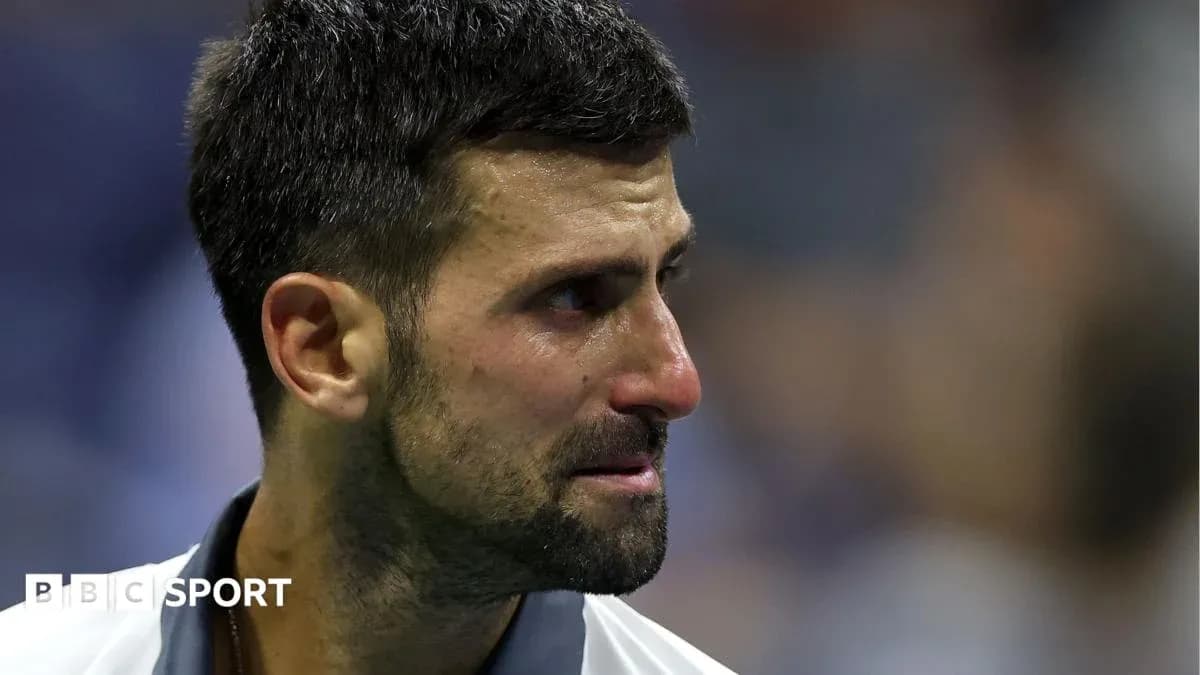
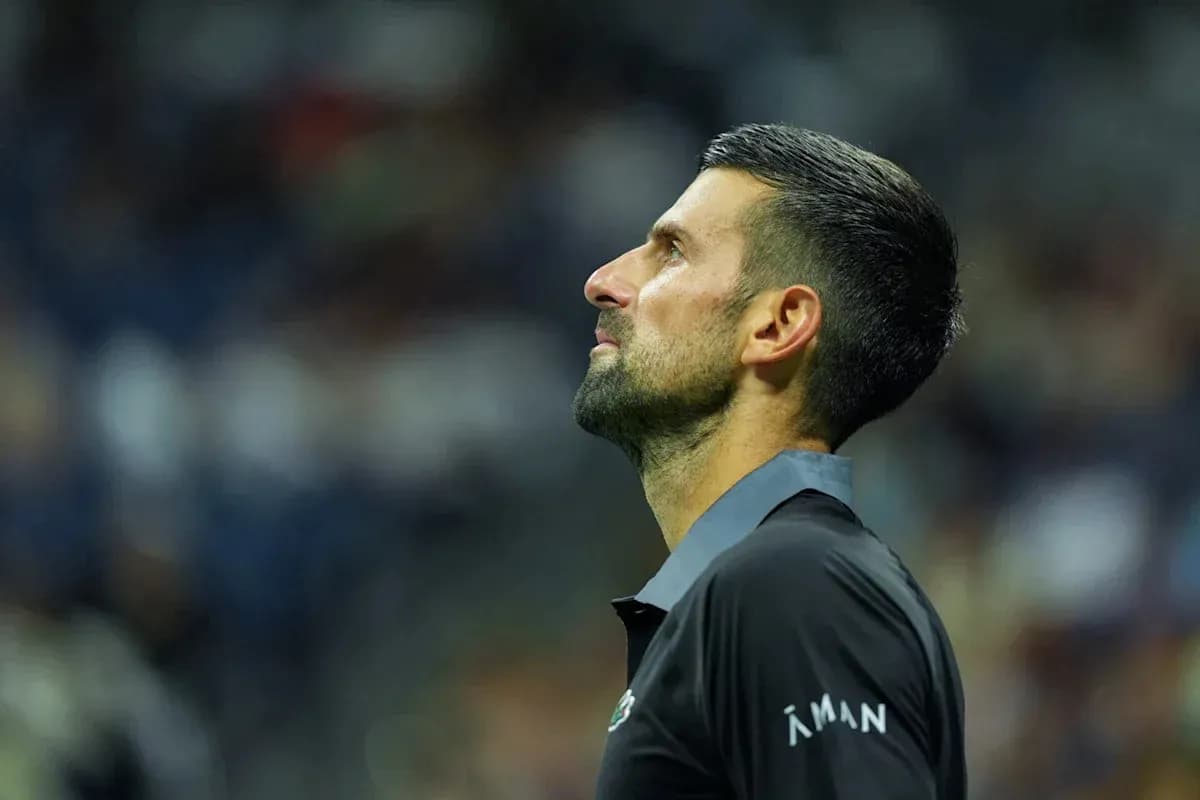
Novak Djokovic stood on Arthur Ashe Stadium, eyes wet, shoulders sagging, and for once there was no escape route, no late twist, no familiar act of defiance to save him.
At 39, the greatest returner the sport has known had nothing left to retrieve.
The 24-time Grand Slam champion crashed out of the US Open in the first round, beaten 7-6 (7-5) 5-7 4-6 6-2 6-1 by Argentina’s Mariano Navone, a world number 49 playing the match of his life against a legend running on fumes.
It was a night that felt like more than a defeat. It felt like a line in the story.
A champion brought to his knees
Djokovic, seeded fourth in New York, has built a career on turning crisis into theatre and theatre into victory. This time, the body said no.
He vomited into a towel bin. He bent double between points, gasping in the humid New York air. He called for the doctor after the ninth game of the opening set, took tablets, searched for a second wind that never truly came.
The first set had started like so many of his nights here. A break at the first attempt, a 2-0 lead, the familiar sense that the favourite had settled and the outsider would soon be pushed aside.
Then came the rally that changed everything.
A long, punishing exchange drained him. From that moment, Djokovic’s movement dulled, his serve lost bite, his groundstrokes lost their usual venom. Navone sensed it, broke back in the seventh game and dragged the set into a tie-break.
Arthur Ashe, used to roaring for Djokovic in the big moments, fell into an uneasy hush as the Serb laboured. Navone stayed calm, took the breaker 7-5 after 73 minutes, and suddenly the scoreboard, the stadium and the story all felt different.
One last surge
Djokovic has lived off nights like this. The questions were familiar. Was this just another crisis to be solved? Another five-set epic to be added to the archive?
The signs, briefly, said yes.
Helped by cooler conditions under the closed roof, he sharpened up in the second set. The legs still looked heavy, the face drawn, but the mind stayed sharp. He created the only break points of the set, missed chances in the third and fifth games, then finally broke for 6-5 and held to love.
The roar returned. The fist pump came back. For a flicker, so did the old aura.
In the third set he grew more animated, barking at himself, gesturing to his box, fighting to stay plugged into the contest. At 3-3, though, the wobble returned; his footwork faltered, his balance looked fragile. Even so, he pounced when Navone played a poor service game, broke for 5-4 and served out to lead two sets to one.
These are the positions from which prime Djokovic closed the door. Opponents knew it. Crowds knew it. Deep down, he did too.
Not tonight.
The fall
From a tight contest, the match suddenly unravelled for Djokovic. The fourth set raced away. Navone, 25 years old and unburdened by history, sprinted through it 6-2 as the four-time US Open champion’s resistance thinned to threads.
Djokovic’s shoulders slumped. His movement shrank. The rallies he once relished became ordeals.
By the time the fifth set began, the atmosphere had turned almost funereal. Local time crept towards midnight, but there was no late-night miracle coming, only the slow realisation that this was going to end in a way Flushing Meadows had never seen before: Djokovic losing in the first round.
Navone ran away with the decider 6-1, hammering home one of the biggest wins of his career while the crowd wrestled with what they were watching. The Serb’s record of avoiding opening-round defeats at the majors, intact since 2006, was gone.
So too, for now, his latest push for a standalone 25th Grand Slam singles title and clear daylight over Margaret Court.
Tears on Ashe
At the net, Djokovic managed a smile. He offered Navone warm congratulations, the touch of class that has accompanied so many of his greatest nights and now one of his hardest.
Then the mask slipped.
As he trudged towards the locker room, the emotion that had been bubbling all evening finally broke the surface. He looked close to tears, the weight of the night – of the years, perhaps – pressing down.
This was not just a loss to a lower-ranked opponent who had never gone beyond the second round in New York. It was a brutal reminder that even for Novak Djokovic, the clock does not stop.
For almost two decades, he has found ways out of every corner, every crisis, every suffocating moment. On this suffocating night, there was no way out.
The question now is not what went wrong on Arthur Ashe, but how many more times he can ask his body to go to war on these stages – and how many more times it will still say yes.