.svg&w=384&q=75 "logo")
Novak Djokovic's Shocking US Open Exit: A Farewell to a Legend?
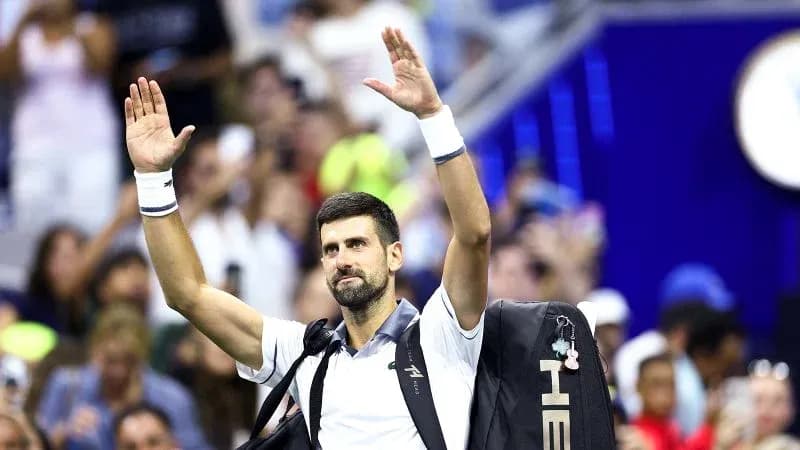
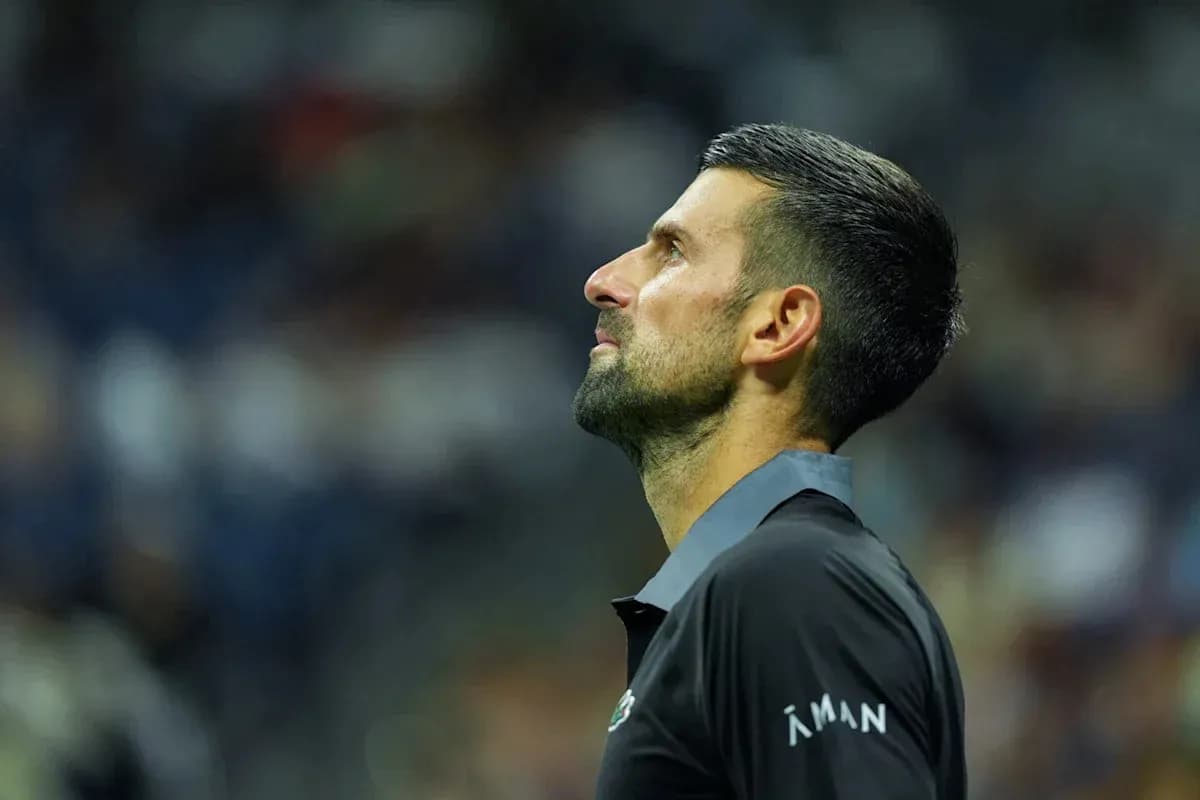
Under the Arthur Ashe lights where he has ruled for a generation, Novak Djokovic looked mortal, then vulnerable, then spent.
The 39-year-old, owner of a men’s record 24 Grand Slam titles, crashed out of the US Open in the first round on Sunday night, beaten 7-6 (5), 5-7, 4-6, 6-2, 6-1 by Argentina’s Mariano Navone in a four-hour, 36-minute epic that felt, at times, like a farewell tour turning into a wake.
It was the longest opening match of Djokovic’s Grand Slam career. It was also his earliest exit at a major in 20 years, dating back to the 2006 Australian Open. He had never before lost in the first round in New York.
On the 21st anniversary of his US Open debut, the obvious question now hangs in the humid night air: was this his last match here, or at any major at all?
A legend suffering, a newcomer unafraid
Djokovic did not just lose. He unraveled.
He sprayed 70 unforced errors. He doubled over and threw up at least once. He grabbed at his left foot, clearly cramping. He called for pills from the doctor, had his lower back worked on during a medical timeout between the fourth and fifth sets, and winced after routine shots that once came so easily.
This was not the iron man who has bent five-setters to his will for a decade and a half. This was a champion fighting his body, his timing, his age — and a 25-year-old across the net who refused to blink.
Navone, who grew up idolizing Djokovic and won his first ATP singles title earlier this year, walked into Ashe Stadium and treated it as a stage, not a shrine.
“(It) was very tough for me because you are playing with the ‘GOAT’ on this court,” Navone said. “For sure it’s the best thing I’ve had on court. This is an amazing court and the biggest stage. It’s amazing, the way we play. I mean, five sets. … I’m very happy. I don’t know. What can I say?”
What he did said plenty.
Early control, then a slow collapse
For a while, the script looked familiar. Djokovic, the No. 4 seed, jumped out to 3-0 and 4-1 in the opening set. Under the Ashe roof, with his wife Jelena watching anxiously from the stands, he seemed to be easing into the tournament the way he has so many times before.
Then the grip loosened.
He let the first set slip away — the first time since 2006 he had coughed up an early lead like that in a US Open first round. The errors mounted, the rhythm deserted him, and Navone sensed the crack in the door.
Djokovic responded with flashes of the old ferocity. He clawed back to take the second set, punctuating it with a trademark fist pump. In the third, he cupped his hand to his ear, demanding more from the crowd and from himself, and rode that surge to a two-sets-to-one lead.
For a moment, it felt like the familiar Djokovic arc: suffer, adjust, suffocate. One more five-set escape. One more young challenger pushed aside.
Navone refused to play his part.
Body gives way, history tilts
The turning point came in the fourth set. After firing a shot wide, Djokovic landed awkwardly, dropped his racket and looked every bit his 39 years. The movement dulled. The shoulders sagged. The fight, always his greatest weapon, flickered.
He effectively surrendered the fourth, conserving whatever he had left for one last charge in a deciding set that has so often belonged to him. He came into the night chasing a 43rd five-set victory at the majors.
Instead, Navone claimed his first.
The Argentine ran away with the fifth, 6-1, as Djokovic’s legs betrayed him and his shots lost their bite. The rallies that once tilted inexorably toward the Serb now tilted the other way. Navone’s belief grew with every point; Djokovic’s body language told the rest of the story.
“It’s unbelievable,” Navone said. “This means a lot. It’s a dream come true.”
A nightmare stretch and an uncertain horizon
For Djokovic, it extends a troubling run. He lost in the first round of the hardcourt event in Cincinnati earlier this month, his first outing since falling to world No. 1 Jannik Sinner in the Wimbledon semifinals.
He had tried to spin that early Cincinnati exit as extra preparation time for New York. At the same time, he admitted that opening matches have become a hurdle in recent years — the rust, the nerves, the weight of expectation all compressed into those first few hours of a tournament.
This time, there is no chance to play his way into form. No second week to grow into. No late-night comeback to add to the legend.
Just a long walk off Ashe, the clock ticking toward midnight, and an arena that has seen him at his most invincible now watching him at his most fragile.
The sport will wait for his answer, but the question is already here: how many more of these nights does Novak Djokovic have left?