.svg&w=384&q=75 "logo")
Novak Djokovic's Nightmarish US Open Exit
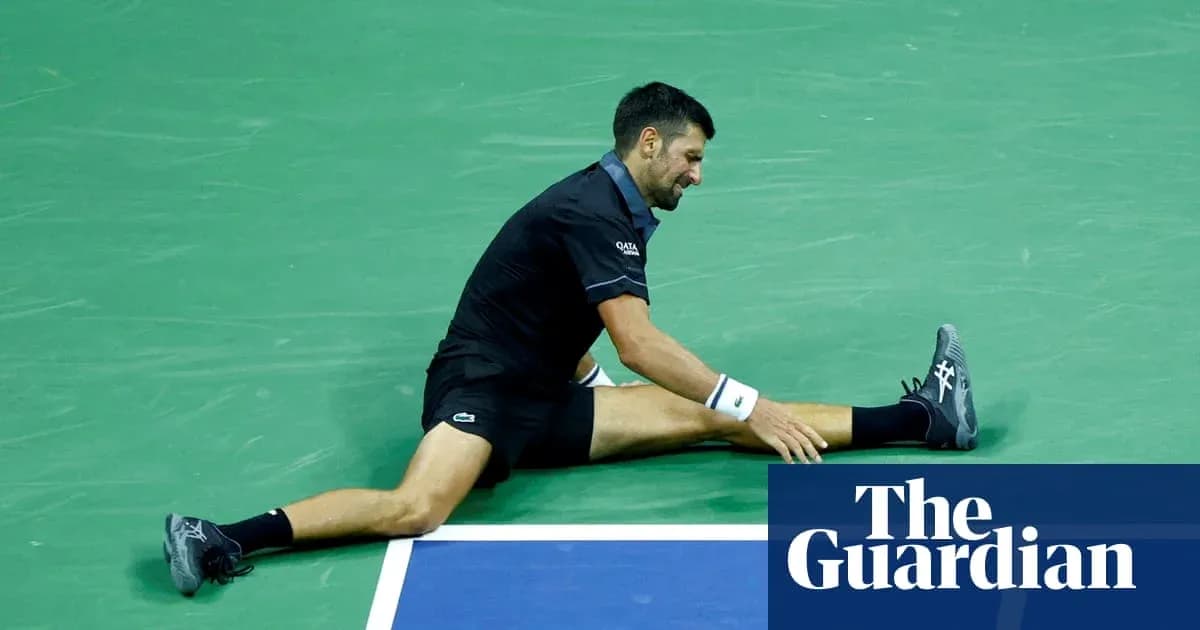
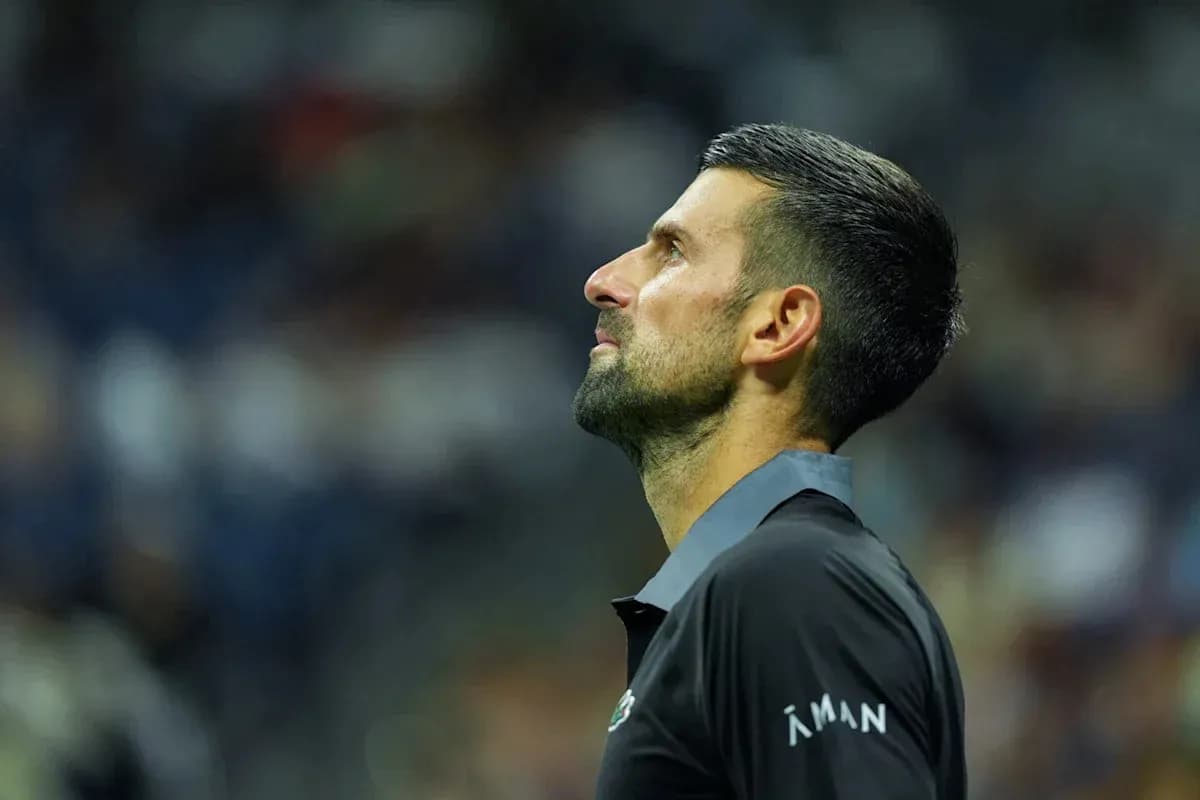
Novak Djokovic has spent a career turning Arthur Ashe Stadium into his stage. On Monday night, it became his infirmary.
Barely three hours into the first night session of this year’s US Open, the 24-time grand slam champion strode to the corner of the vast court, bent over the towel bin and vomited. Not once. Not for the last time. It was the most brutal, public snapshot of a night that reduced one of tennis’s great iron men to tears and, ultimately, to a first-round exit.
By 12am in New York, Djokovic was out – beaten 7-6 (5), 5-7, 4-6, 6-2, 6-1 by Mariano Navone after four hours and 36 minutes of attrition that often felt less like a tennis match and more like a medical ordeal.
A giant brought low
This was Djokovic’s record-extending 84th grand slam main draw. It delivered one of the most harrowing defeats of his career.
He has now lost in the opening round of a major just three times. The previous two came in a different era: Roland Garros 2005 and the 2006 Australian Open, when he was an 18-year-old still learning how to survive best-of-five. To see the 39-year-old version, with all that experience and all those trophies, staggering through the humidity and fighting his own body was jarring.
The problems started almost immediately. Djokovic broke for 2-0 in the opening set and, within 15 minutes, was already labouring. He bent over between points, gasped for air, struggled with the sticky New York night even under the lights. The conditions were not the suffocating daytime heat that often defines this tournament, yet his body rebelled anyway.
From there, the match became a grim loop: Djokovic panting behind the baseline, Djokovic losing his balance, Djokovic vomiting again, Djokovic stretching out cramping legs. The world No 1’s aura remained; his body did not.
By the end, there was simply nothing left to give.
A pattern, not a one-off
This was not an isolated episode. Just weeks ago in Cincinnati, Djokovic had wilted in similar evening humidity against another Argentinian, Thiago Agustín Tirante, who handled the conditions without visible distress and beat him in three sets.
After that defeat, Djokovic pointed to an underlying health condition that, he said, flares in heat and humidity. He repeated the explanation in New York.
“I think it was obvious that [it was] an awful feeling on the court for me,” he said. “It is something that I’ve been carrying, unfortunately, pretty much every match this year. You know, vomiting, throwing up, serious issue there, and then my whole body starts to collapse, basically cramping and pain, and the back just gave up in the end, and shoulder, and I couldn’t close it out, break up in the fourth, but just struggled all the way since the fourth game of the match. And again, don’t want to take too much out of his win. Congrats to him; he’s a nice guy, fighter, but you know, I didn’t enjoy myself.”
The words matched what everyone inside Arthur Ashe had just watched. This was not a champion caught cold by a hot opponent. This was a champion trapped in a body that refused to cooperate.
Navone’s dream, Djokovic’s nightmare
On paper, this looked like a generous first-round draw. Navone, 25, is a gritty competitor who has rebuilt himself impressively back into the top 50 after flirting with a slide out of the top 100, but almost all of his best work has come on clay. For Djokovic, it seemed a chance to settle quickly, conserve energy, and let the tournament open up around him.
Instead, the drama arrived after 20 minutes.
Midway through the first set, Djokovic started coughing and spluttering behind the baseline, repeatedly folding at the waist between points. At 4-3, rain forced the roof on Arthur Ashe to close. The air grew heavier. The spectacle grew more uncomfortable.
Navone, by contrast, looked untouched by the conditions. While Djokovic draped himself in ice towels and sought relief from the doctor – who handed him pills at 5-4 in the first set – the Argentinian kept his head down and his feet moving.
For Navone, this was not just a big match. It was a surreal collision of dream and reality. He has long idolised Djokovic; within hours of the draw, fans had dug up a 13-year-old Navone’s social media posts from 2014, a feed littered with messages of support for the Serb. His parents had not planned to be in New York at all. The draw changed that, pulling them off a Caribbean holiday and into the stands of the sport’s biggest arena.
On the biggest night of his career, Navone played with the clarity of someone who understood the opportunity and refused to blink. He chased everything. He pinned Djokovic back with deep, relentless groundstrokes off both wings. He dragged the match into long, bruising rallies that the struggling top seed could no longer dominate.
The fight, then the fall
For long stretches, Djokovic survived on muscle memory and serve. His delivery remained sharp enough, for long enough, to keep him in the contest. Even as he vomited repeatedly and began to fend off cramps in the fourth set, his competitive instinct would not let go.
He clawed his way into a two-sets-to-one lead and then broke early in the fourth. For a few minutes, it felt like the old script might return: Djokovic, wounded but defiant, squeezing his way out of another five-set trap.
Then his body slammed the door.
His legs turned heavy. The first serve that had propped him up began to falter. The rallies grew shorter, not because Navone backed off, but because Djokovic could no longer stay with him. The Argentinian sensed it and surged, rattling through the fourth set 6-2, then running away with the fifth 6-1 as Djokovic’s resistance finally crumbled.
There was no late miracle, no last stand. Just a 39-year-old legend walking off Arthur Ashe in tears, beaten by an opponent who played the match of his life and by a body that, on this suffocating New York night, refused to behave like it used to.
For Djokovic, who has made a career out of defying time and physics, this was another brutal reminder: at the highest level, with a fragile body and a relentless tour, how many more of these nights can he afford?