.svg&w=384&q=75 "logo")
Novak Djokovic Faces a Turning Point After US Open Defeat
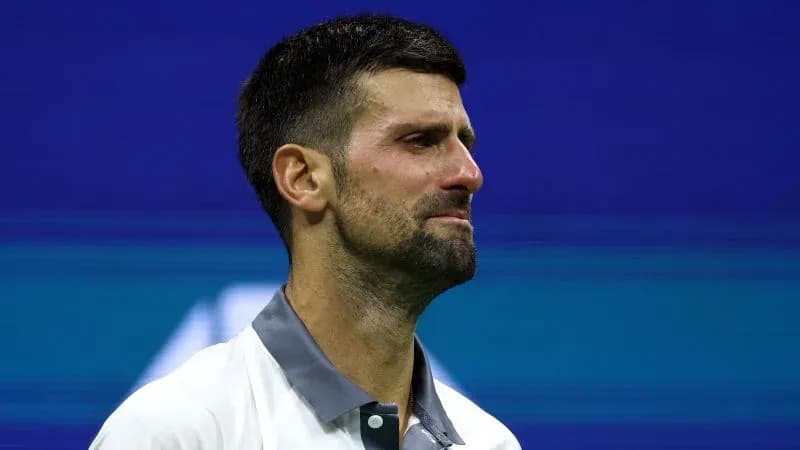
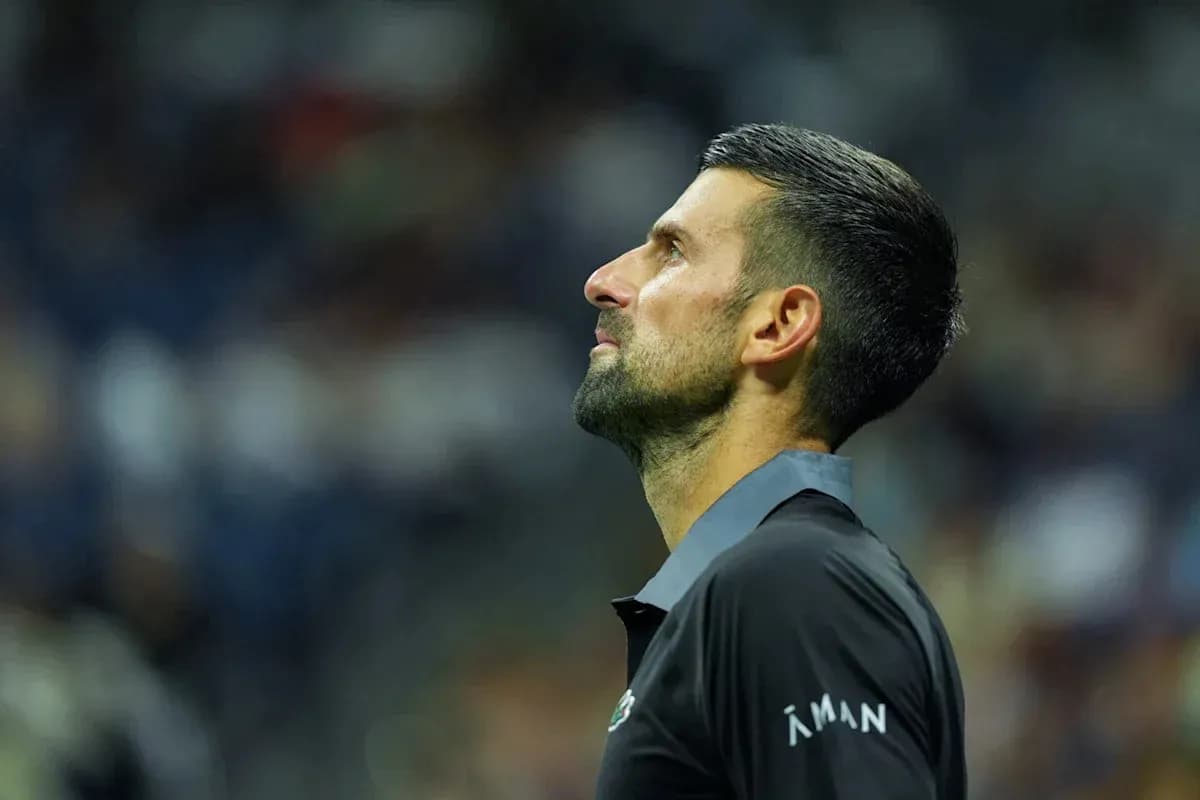
By the end, Novak Djokovic could barely stand.
His legs buckled between points, his shoulders sagged, his chest heaved in the thick New York air. Tears gathered in his eyes as Mariano Navone, a qualifier ranked miles beneath his legend, closed in on a first-round win that felt far bigger than a simple upset.
It felt like a crack in the armour of a man who has spent two decades pretending time did not apply to him.
For 20 years, Djokovic has treated early exits at grand slams as something that happens to other people. This one, at the US Open, was his worst major result in two decades. It was also one of the rare occasions when the sport’s ultimate fighter looked powerless, his movement unsure, his body rigid, his aura punctured.
This defeat did not look like a blip. It looked like a warning.
Only seven months ago, Djokovic was walking out for yet another Australian Open final, still the immovable object in the path of Carlos Alcaraz and Jannik Sinner. At 39, he was not just hanging on; he was shaping seasons, dictating narratives, and reaching a Wimbledon semifinal in July that kept alive the idea of a record 25th major singles title.
That dream now feels distant. Not impossible, because nothing with Djokovic ever is, but as remote as it has ever been.
The reality is that Djokovic no longer lives the life of a full-time road warrior. He has become a grand slam specialist, building his year around four fortnights, dipping into other events mainly to sharpen the edges. It has been a clever, ruthless strategy, one that preserved his body long enough to rewrite the record books.
But even that finely tuned plan cannot hide what is happening now.
Earlier this month, he revealed he has been wrestling with an underlying health issue for some time, one that flares in heat and humidity. In New York, it roared back. He vomited between points. He staggered. By the end, he could barely move, his body visibly rebelling against him.
The tears in that final set did not look like frustration over a bad day. They looked like the recognition that his greatest opponent has finally stepped onto the other side of the net: time.
“I didn’t enjoy myself,” he admitted afterward. “I think it was obvious that it was an awful feeling on the court for me.”
He did not sugarcoat what has been happening this season.
“It’s something that I’ve been carrying, unfortunately, pretty much every match this year: vomiting, throwing up, a serious issue there.
“Then my whole body starts to collapse, basically cramping and pain. Yeah, the back just gave up in the end and shoulder.”
Those are not the words of a man nursing a minor niggle. They are the words of a champion wondering how many more times he can drag himself through this.
Djokovic left New York talking about needing time, space to think about his future and whether he can keep subjecting his body to this level of punishment. After what the world saw on Sunday, how could retirement not be on his mind?
Yet this is Djokovic. The same player who has spoken of a dream to keep going until the Los Angeles Olympics in 2028, to finish his career wearing his country’s colours one last time. After this US Open, that ambition looks wildly optimistic to many. But doubting him has always been a dangerous sport.
He has spent his career turning scepticism into fuel. In 2017, an elbow injury left him looking lost, his game frayed, his dominance questioned. By the end of 2018, he had won two of the four majors and was back on top of the world.
The retirement drumbeat has followed him around for years. Every January, the same script: this will be the season he finally fades. Every defeat, a supposed sign that the window is closing for good.
And yet he kept adjusting, reshaping his game as the legs slowed, leaning more on precision, angles, and suffocating consistency. At the start of this year he outlasted Sinner in a brutal five-setter at the Australian Open, another night when he seemed to bend time back in his favour.
But there is a harsher truth now. Djokovic has not won a grand slam since 2023. That should surprise no one. Roger Federer and Rafael Nadal both claimed their final majors at 36. The physical demands of the modern game are unforgiving, and the new generation does not just run; it sprints, slides, and hammers from the baseline for hours without blinking.
For Djokovic, to win another major from here would require not only brilliance but luck: the right draw, the right conditions, the right week for his body to cooperate.
So was Sunday a final, brutal false alarm? Another chapter in the long-running saga of “the end” that never quite arrives? Possibly. But this time, the odds feel different. The expression on his face as he tried to summon one last surge told its own story. Djokovic has always been the master of his surroundings, the one bending chaos to his will.
In New York, he looked like a man suddenly aware that the court, the clock, and his own body were no longer listening.
Whatever comes next, his place in history is secure. Twenty-four majors. Years spent at No. 1. A career defined by comebacks, confrontations, and an iron will that outlasted almost everyone.
He will not be the last great champion to stay a little longer than his body wants. Perhaps the path forward lies in redefining what success means: fewer tournaments, different goals, a quieter kind of excellence.
But the real question now sits with Djokovic alone: after everything he has won, would he ever be satisfied with that?