.svg&w=384&q=75 "logo")
Novak Djokovic's Heartbreaking US Open Exit: A New Reality
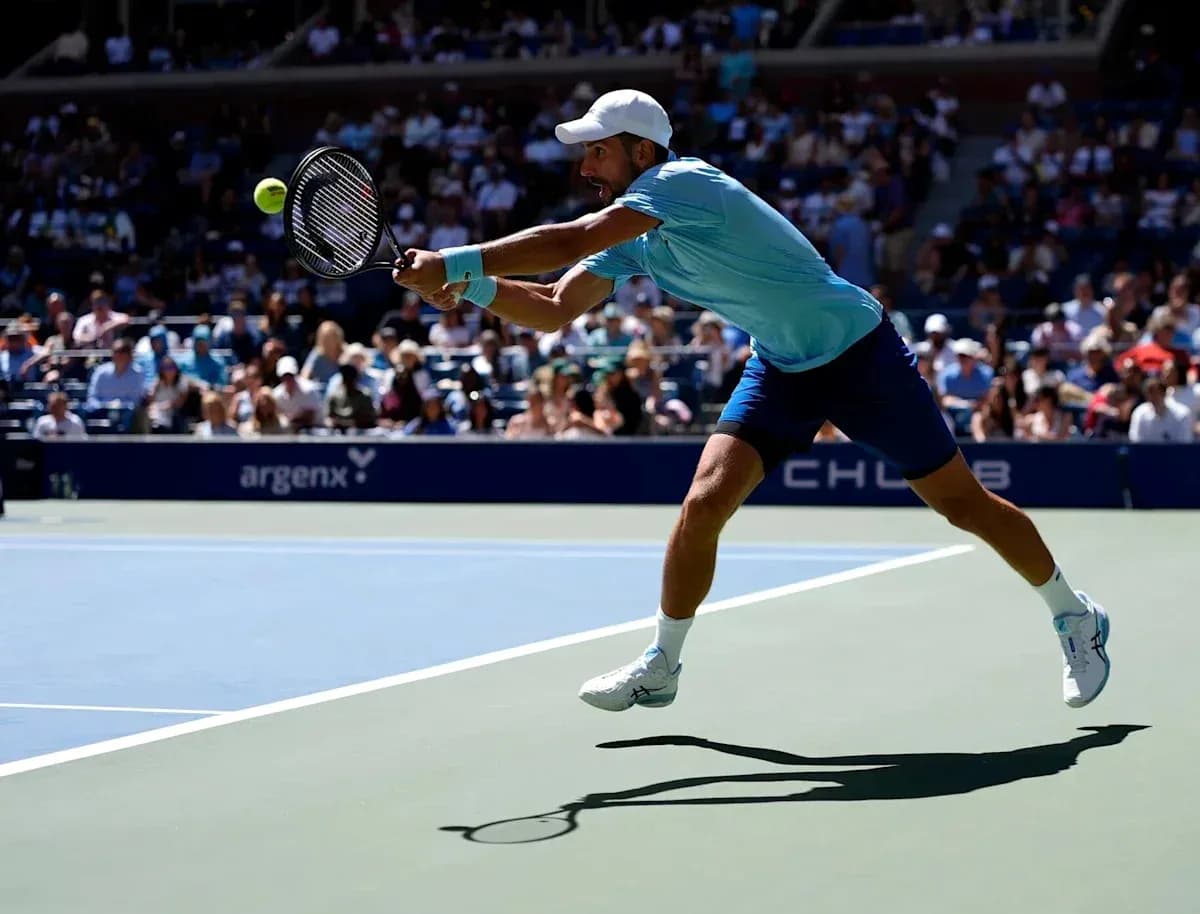
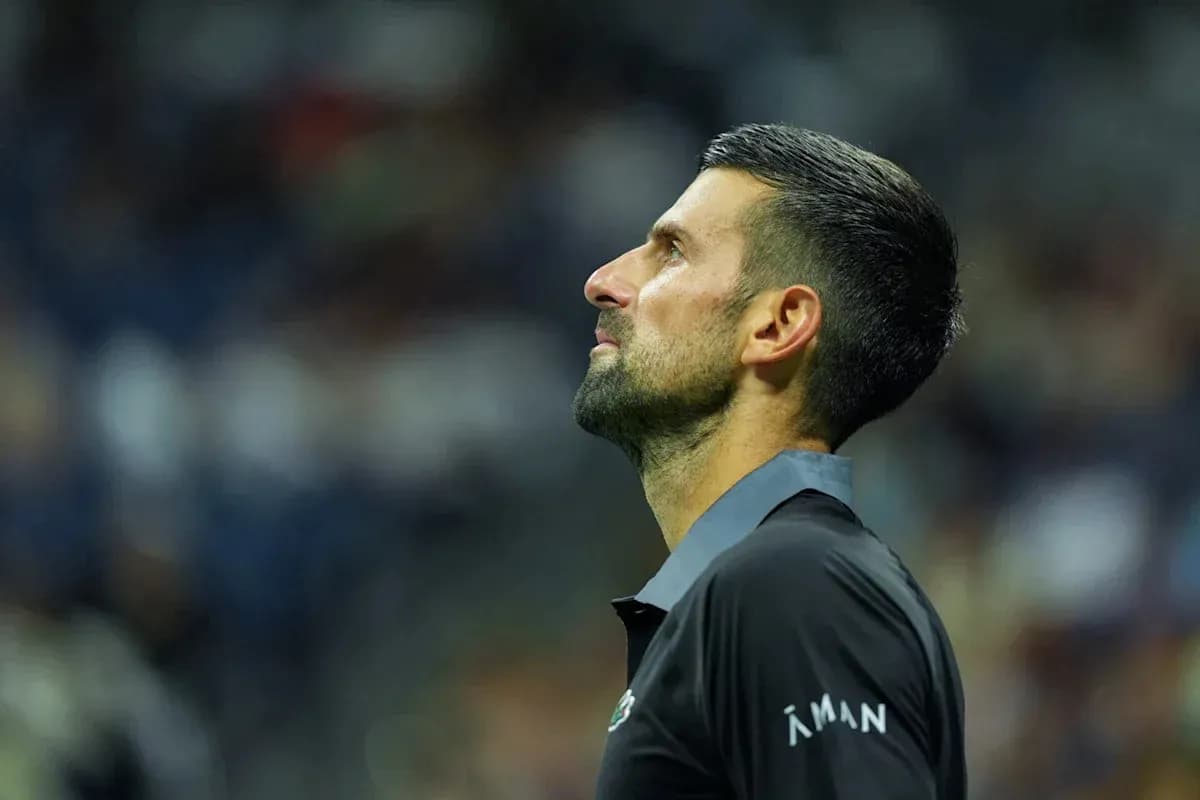
Novak Djokovic’s New York crossroads arrived with tears in his eyes and a broken body, not a broken will.
Late in the fifth set on Sunday night, serving just to stay alive in a US Open first round he once would have strangled into submission, Djokovic wiped his face and stared at the court as if willing his legs to respond. Four years ago, this is where he would have tightened the screws, raised the level, and reminded a younger opponent what greatness looks like under pressure.
This time, his body answered back with a hard no.
The 24-time Grand Slam champion fell 7-6 (5), 5-7, 4-6, 6-2, 6-1 to Mariano Navone, a 25-year-old Argentine still at the front end of his career. It was Djokovic’s first opening-round defeat at a major since 2006, a statistic that says as much about his era-defining dominance as it does about the magnitude of this loss. At 39, he will now slip out of the Top 10, and the questions he’s kept at arm’s length for years are suddenly unavoidable.
A night when everything shut down
The conditions were supposed to help him. The brutal New York sun had dipped, the heat relented, and the night session at Flushing Meadows offered a softer stage. Djokovic even sprinted out to a 3-0 lead in the opening set, the kind of start that usually signals routine business.
Then the alarms started.
Less than an hour into the match, he felt sick. The early control vanished. The nausea hit, the legs dulled, and the familiar patterns of dominance gave way to survival. He lost that first set in a tiebreak. He threw up during the third. By the fourth and fifth, the cramps arrived, his back and shoulder tightened, and the serve that once bailed him out of every crisis no longer had its usual bite.
Four hours and 36 minutes drained everything he had. The flashes were still there—clean winners, sharp changes of direction, the occasional roar—but they came wrapped in 70 unforced errors, a number that told the real story of a night spent wrestling his own body.
“I think it was obvious that it was an awful feeling on the court for me,” he said afterward, speaking to a small group of reporters instead of holding a full press conference. “This is something that, unfortunately, I’ve been dragging along in practically every match this year.”
Then came the line that cut through the noise: his “whole body” started to collapse, he said, “basically cramping and pain,” with his back and shoulder having “gave up.”
For two decades, Djokovic built a career on outlasting everyone—physically, mentally, emotionally. On Sunday, that foundation cracked.
Navone holds his nerve as Father Time leans in
This was Djokovic’s crisis, but Navone did more than simply wait for the great man to fall. The Argentine, who claimed his first ATP Tour title in 2026, stayed stubbornly present as the match stretched and twisted. He drove his groundstrokes deep, refused to blink on big points, and won over 70 percent of his first-serve points—numbers that kept Djokovic under constant pressure.
He converted when the openings came. That’s what the best do, no matter who is across the net.
Still, the match was framed by Djokovic’s battle with his own limits. Just a year ago, he had reached the second week of the 2025 US Open and bowed out in straight sets to eventual champion Carlos Alcaraz in the semifinals—a loss that felt like the natural passing of a torch, not a physical breakdown. He wasn’t expected to trouble Alcaraz much then, but his presence deep into the tournament still fit the old script: underestimate Djokovic at your peril.
Even then, the warnings were there. “As all sportsmen discover, Father Time is an opponent that no one can beat,” one piece observed in September 2025. Twelve months on, that line reads less like philosophy and more like a match report.
The alarms now are louder. Djokovic isn’t used to seeing his body desert him this early in an event, especially at a Grand Slam, the stage he has always ring-fenced as his true priority.
A schedule that no longer bends to his will
In August, he had already felt the strain. At the Cincinnati ATP 1000, he lost his opening match 2-6, 6-4, 6-4 to Thiago Agustin Tirante in draining conditions. In New York, he tried to spin that defeat as a blessing in disguise: an early exit, more time to recover, more time to prepare for best-of-five.
For most of his career, that logic worked. Djokovic could pick his spots, trim his schedule, and still arrive at the majors like a force of nature. But at 39, the calculation has changed. Skipping events to protect the body and then asking it to endure four and a half hours in a first-round slugfest is a different gamble.
He has played only seven tournaments in 2026. On paper, that looks like prudence. On court, 30 minutes into a Grand Slam match, he was already fighting his own legs.
That’s not a scheduling issue. That’s wear and tear.
What comes next?
The speculation started before Djokovic had even left the grounds. Will he be back next year? Has New York seen him at a major for the last time? Those questions will echo around Flushing Meadows for the rest of the fortnight, but only one person can answer them.
He has options. He could keep going on the ATP Tour as a world No. 20, playing for the love of competition, the rhythm of the locker room, the simple act of stepping onto a court with a racket in his hand. Fans would embrace that version of Djokovic, the legend playing on his own terms.
Or he could decide that life as anything other than a genuine Grand Slam contender is a line he doesn’t want to cross. If the body can no longer sustain two weeks of best-of-five at the highest level, the calculus shifts quickly.
For now, retirement talk has to coexist with a more mundane fact: he has already been confirmed on the entry list for the ATP 500 in Beijing. The story isn’t over yet, not officially.
What this loss to Navone does underline, though, is a new reality. At this stage of his career, Djokovic’s Grand Slam prospects hinge less on his famous mental steel and more on whether his body can keep pace. For years, his mind and competitive fury dragged him through matches he had no business winning. On Sunday night, that edge wasn’t enough.
He left a final message on social media after the defeat: “Forever grateful, New York.”
The gratitude is real. The question now is whether he will get, or even want, one more chance to say goodbye on his own terms.